

 Sophie Schwinghammer
The Krones Security Operations Center keeps an eye on customers’ IT systems around the clock to prevent cyberattacks.
In the office and in production, digital tools and processes are everywhere. But with increasing dependence on digital technologies comes a heightened risk of cyberattacks – and that, in turn, makes cybersecurity and resilience all the more essential.
That is why, in 2019, the Krones Security Operations Center (SOC) was established in Bengaluru, India. Its job is to protect IT systems run by Krones. Systematic monitoring makes it possible to detect and analyze anomalies and verify attacks and incidents.
What does that have to do with sustainability?
Krones’ sustainability strategy through to 2030 covers environmental, social and governance aspects. Under the latter point, Krones has stated the following goal:
“Ensure the confidentiality of personal data and establish a state-of-the-art IT security architecture along our value chain.”
When it was established, the SOC consisted of four IT specialists whose focus at the time was exclusively on managed security services for customer installations. Over time, however, both the team and its remit have grown considerably. The team, which has doubled in size to eight experts, is now also responsible for securing Krones’ internal IT infrastructure worldwide.
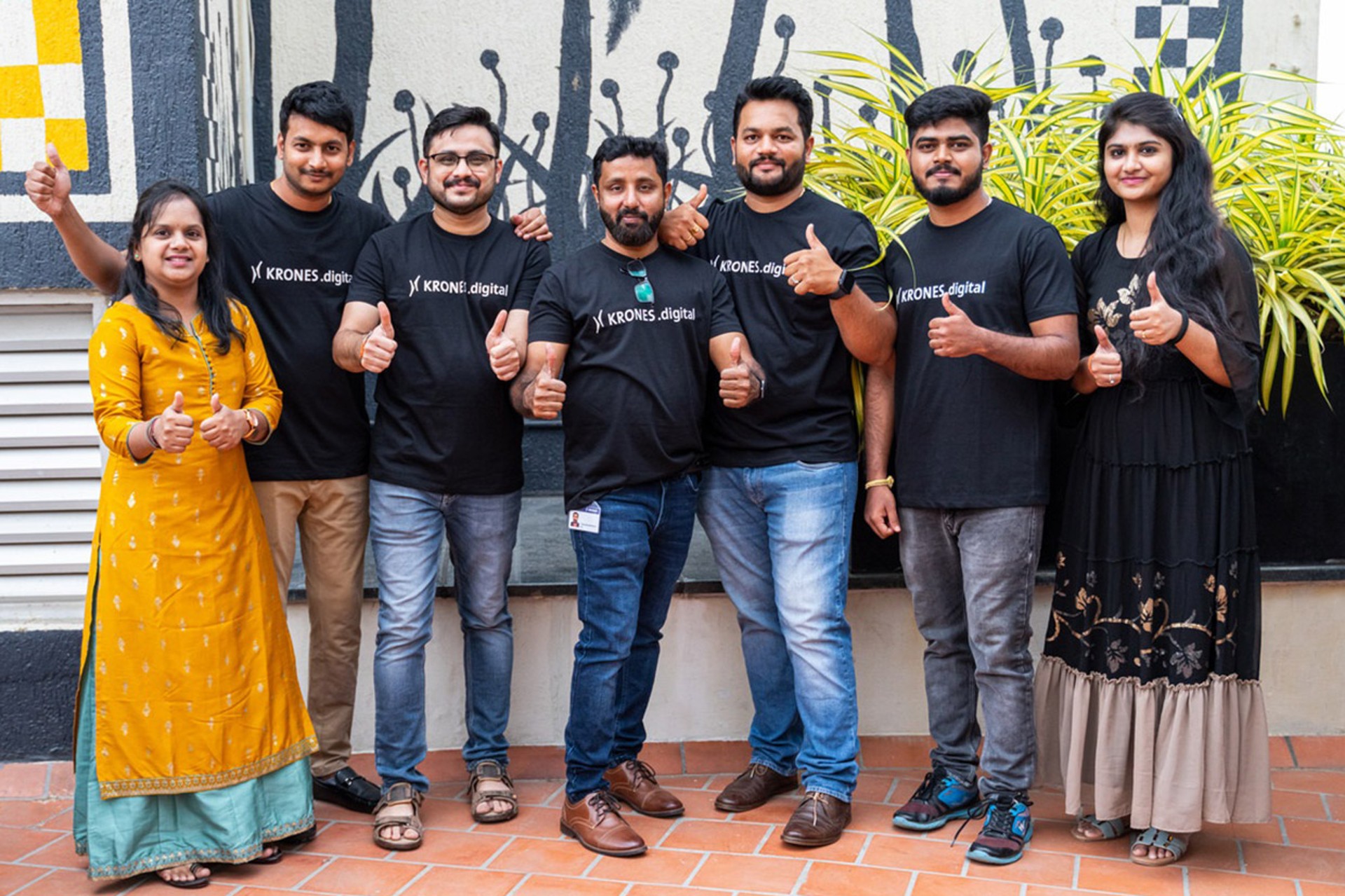
Beginning this year, the team operates in three shifts, thus ensuring 24/7 monitoring of all IT systems – another milestone in the history of the still-young SOC.
Human intelligence is essential
In the event of an attack, for instance by way of a phishing email, the SOC team follows a standardized procedure. First, the sender is immediately blocked. The mails are then reported and placed in quarantine. If it is a bigger cybersecurity incident, the Information Security Incident Response Team (ISIRT) is immediately notified.
If a system registers an unusual number of failed logins or a login from an unusual location, manual measures are taken. The SOC immediately contacts the affected user and team lead. If they did not initiate the login, they are given specific instructions for what to do next depending on the case at hand. As essential as automated processes and protective measures may be, they can only achieve complete security when they are combined with human intelligence.
We value your opinion!
Feel free to join in our discussion on LinkedIn
Do you have any questions? Or would you like to share your thoughts on this subject with us? We welcome you to post your comments and remarks!
Hier geht's zum LinkedIn-Post(opens external link in a new tab)