

 Julia Leserer
This October, Krones ran a breast cancer awareness campaign featuring several events aimed at fostering prevention and education.
It’s a topic that we rarely speak about openly. Which is why I’m going to come right out and ask the women among us: Hand on your heart, how often do your breasts get checked for lumps? Men, feel free to ask your wife, your girlfriend or your mom. It is important that we talk about breast health. Read on to find out why.
A woman who gets regular gynecological (“well woman”) exams will likely respond with “once a year”. And while that is better than never, it’s not nearly often enough. Did you know that more frequent check-ups make it possible to detect breast cancer in its earliest stage, when it can usually be successfully treated?
Countless organizations worldwide work to raise awareness among women in particular. The pink ribbon is recognized around the globe and seems to pop up everywhere during the month of October. That’s because October is breast cancer awareness month, when many organizations around the world run campaigns focused on breast cancer prevention and education.
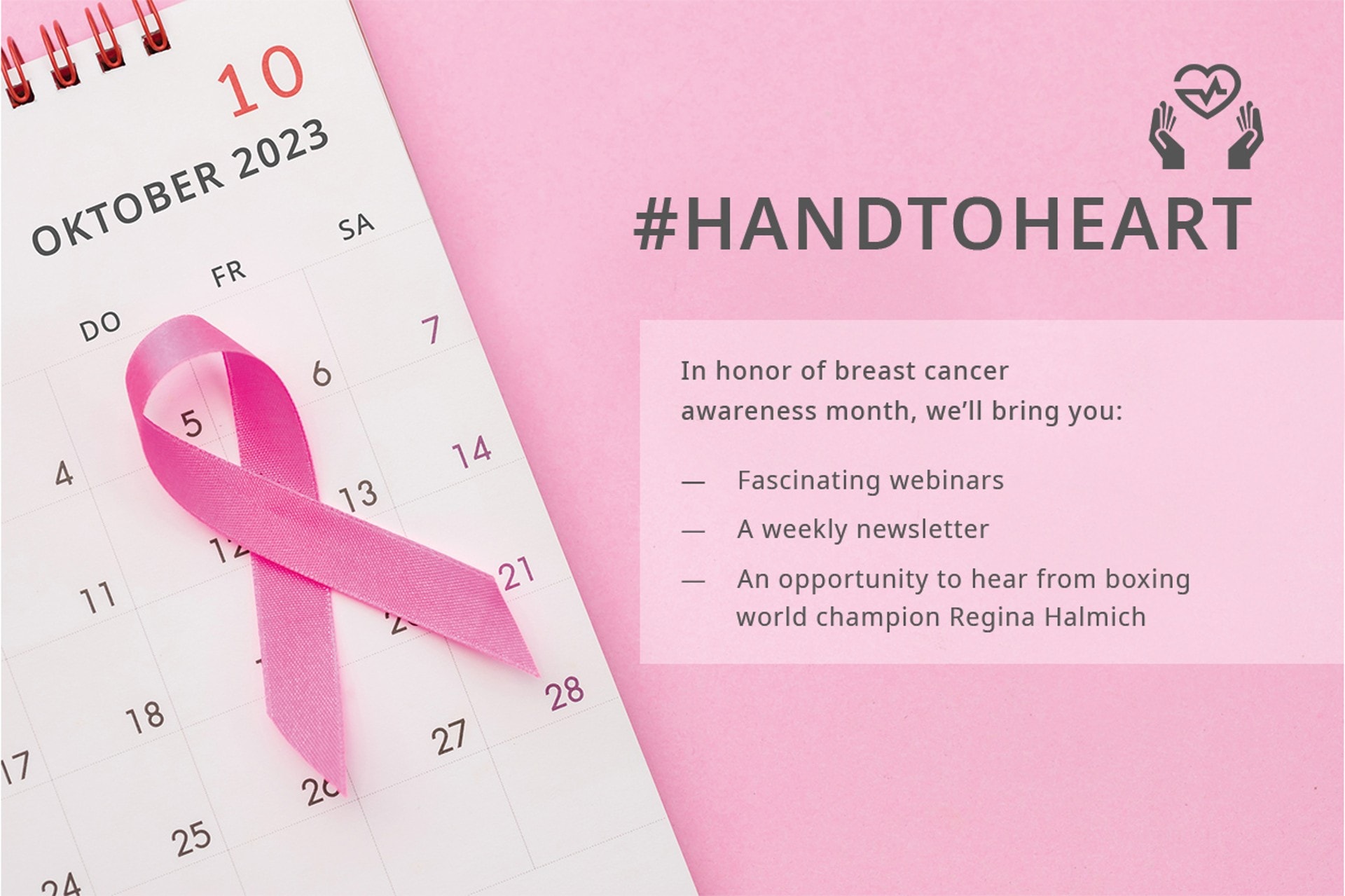
Krones’ Health Management department, together with the company health insurance fund, Krones BKK, took the opportunity to establish our own breast cancer awareness month, offering a variety of learning opportunities and events:
- In a four-part newsletter series, the project team shared information about many aspects of breast health. These ranged from risk factors and common myths to steps you can take to detect cancer early right through to tips for supporting people with cancer and talking about cancer with kids. The newsletter covered a broad spectrum of topics and served as a valuable resource.
- The project team also offered a webinar in mid-October for those wanting to dive deeper. Prof. Dr. Häusler of the Brustzentrum Regensburg breast health center spoke about the prevention, early detection and treatment of breast cancer from a medical perspective.
- Tactile breast examinations leveraged the heightened sense of touch of visually impaired women to provide a supplementary breast cancer screening. Medical-tactile examiners (MTEs) are able to feel even the smallest changes in breast tissue. In these individual appointments, participants also learned how to properly perform a breast self-exam.
- The end of the month brought a real highlight: Regina Halmich, former boxing world champion and ambassador for Pink Ribbon Germany, visited the Neutraubling plant and delivered a powerful motivational speech. In it, she offered insights into her career as a female professional athlete in a male-dominated sport and explained why breast cancer awareness is especially near to her heart.
“We are pleased that our breast cancer awareness campaign has been so well received among our female colleagues and that we’ve been able to see so many appreciative faces at all of our events. Our goal is to continue to raise awareness about the many and varied aspects of health and wellness and to remind all employees, male and female alike, of their most vital asset,” says Stefanie Drenda, who teamed up with her Health Management colleagues and Theresa Fleischer of Krones BKK to lead the organization of our breast cancer awareness month.
Participants also had overwhelmingly positive feedback. Dr. Antonina Prignitz, for example, had some great takeaways from the campaign: “After taking part in Prof. Dr. Sebastian Häusler’s webinar and the discovering hands exam, I feel much more competent and confident that I will be able to detect early signs of a tumor myself. The knowledge they provided and the skills I learned in the 60-minute exam, which was truly a unique experience, are an incredible gift to all women at Krones. Many thanks for that.”
Breast cancer facts*
- Breast cancer is the most common form of cancer: Statistically, one in eight women will develop it.
- Men can get breast cancer, too, though their risk is far lower: Out of 100 diagnoses, 99 will be women and just one will be a man.
- Risk factors include an unhealthy lifestyle as well as genetic predisposition, for instance if multiple family members have been diagnosed with breast cancer.
Ways to reduce your risk
- Gynecological check-up, including a clinical breast examination (health insurance typically covers one exam per year)
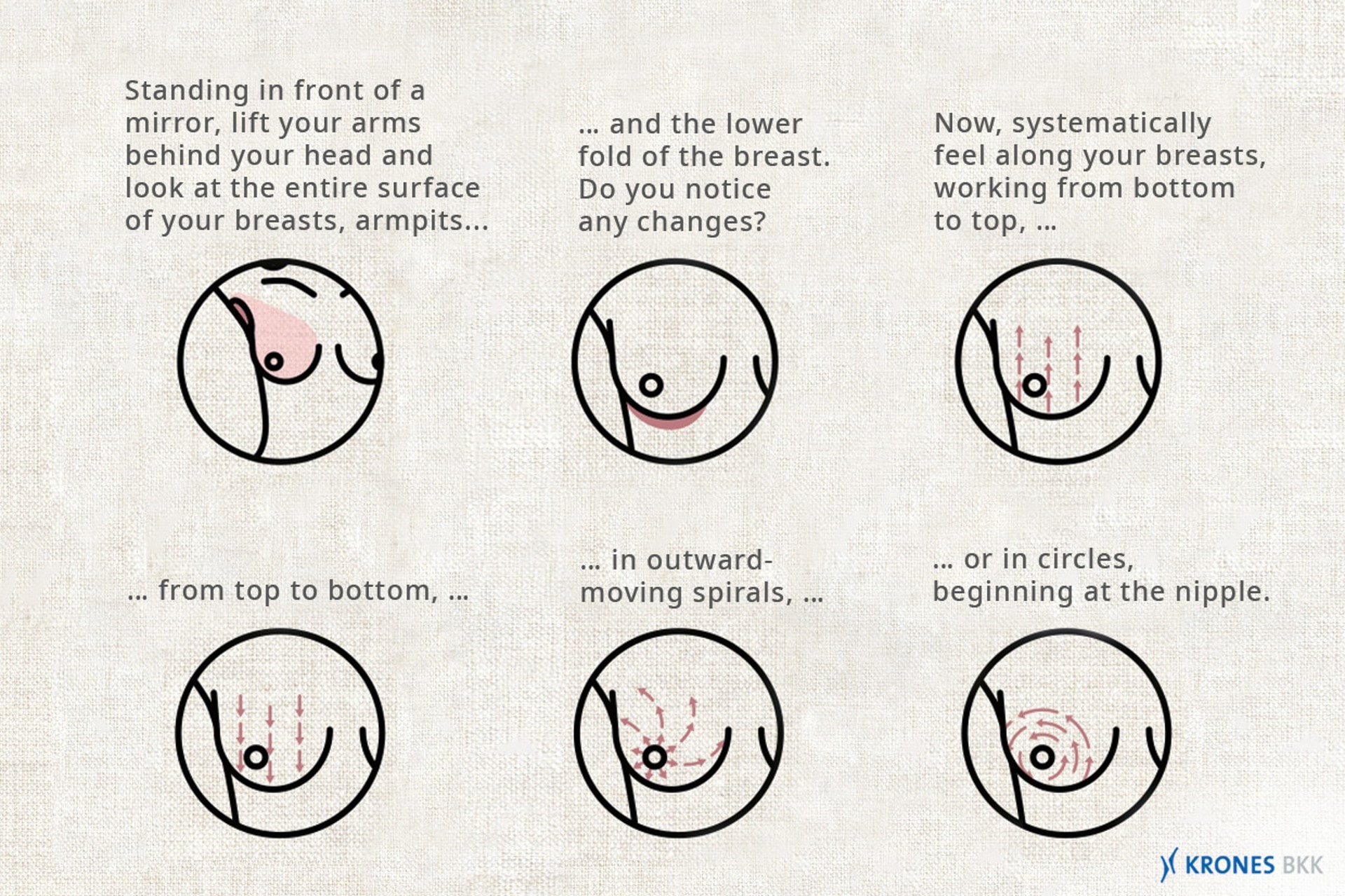
- Regular self-exams: see page 2 for instructions on how to perform one (it is recommended that these be done monthly)
- Mammogram screening: X-ray imaging of the breast (health insurance covers this once every two years for women between the ages of 50 and 69)
- Medical-tactile breast examination and BRCA genetic testing (supplementary benefit, covered by some but not all health insurance funds)
“Every statutory health insurance fund covers regular general wellness exams such as a clinical breast examination or mammogram screening from a certain age onward. Additional exams can be done on a self-pay basis. Depending on the results, the insurance fund may cover them retroactively. In other words, there are many options and it’s definitely worth finding out what your health insurance will cover,” recommends Theresa Fleischer of Krones BKK.
* Excerpted from the newsletter series published by Health Management and Krones BKK.“Seeing hands” teach women how to perform a breast self-exam
To close the awareness campaign at the end of October, we hosted a special prevention week at our Neutraubling plant, which was supported by a special four-legged companion.
But first things first: A tactile breast examination is a preventive screening performed by a specially trained visually impaired woman, a medical-tactile examiner (MTE). The organization “discovering hands” trains and certifies MTEs, who also teach women how to perform a breast self-exam. Women at our Neutraubling plant had the opportunity to book individual appointments for the tactile examination and self-exam training with MTE Marie Schenk, who was on site all week long with her seeing eye dog Kio. Marie Schenk is visually impaired. And because of that, she has a heightened sense of touch, which puts the ability to detect even the most subtle lumps at a very early stage, literally, at her fingertips. Marie also showed participants, step by step, how to perform a breast self-exam: “Breast health requires a certain level of personal responsibility, because breast cancer is highly treatable. It’s so important to get to know your own breasts – many women don’t even know what their breasts feel like. So, kudos to everyone who has taken this step and decided to take active responsibility for their own health,” says Marie Schenk, stressing the significance of this preventive measure.
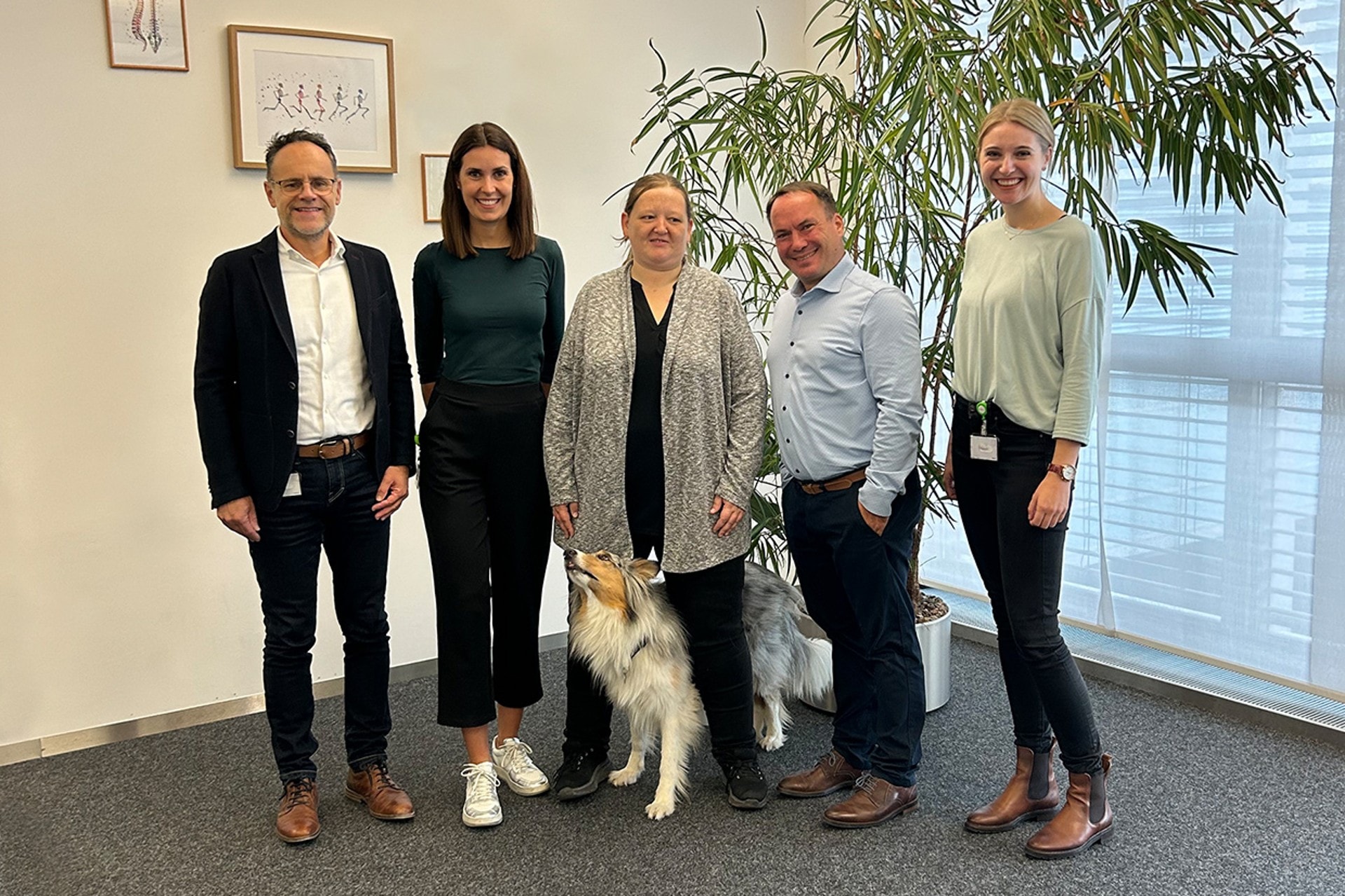
The participants, too, had only good things to say about the program. Here’s Bettina: “After a family member was diagnosed with breast cancer a few weeks ago, I had begun to research breast cancer and prevention on my own. So, this campaign came at just the right time for me. The tactile exam was completely new for me, and the instruction in how to perform a self-exam was very interesting,” she says.
The presentations also helped allay a lot of fears and uncertainty. I can certainly recommend to everyone: Get educated about this now!
Motivational speech by Regina Halmich
Krones closed the breast cancer awareness month with a real highlight. The women’s network Women@Krones teamed up with Health Management and Krones BKK to invite a celebrity speaker to Neutraubling, who inspired and empowered listeners and once again drew their awareness to the importance of taking their breast health into their own hands. But before our speaker took the stage, Claudia Mack of Women@Krones welcomed those in attendance – and immediately caught their attention with these opening words: “There are about 100 women in this room right now. Statistically, that means that twelve of us will, at some point in our lives, be diagnosed with breast cancer. Brutal, isn’t it?” You could feel the sense of community and shared purpose building in the room, and it grew even stronger when Regina Halmich spoke.
That’s because the former professional boxer knows how to get her point across and how to make herself heard. Halmich’s words were clear: “Breast cancer is an issue that we have to talk about openly.” She herself has had a special connection to the topic since supporting a friend through her diagnosis, chemotherapy and healing. “Breast cancer is an illness that comes out of nowhere and turns your entire life upside down. Chemo changes your entire body – and the processes of diagnosis and treatment have a huge impact on a person’s mental health. Breast cancer is often curable, but it has to be found early,” says Regina Halmich, calling on her audience to understand that: “Preventive care has to be a permanent part of our lives – at the doctor’s office but also at home!”
But Regina Halmich didn’t limit her encouragement to the topic of breast health. In her 45 minutes at the podium, she also shared her own story of becoming Germany’s first female professional boxer. She frequently drew parallels between the challenges she overcame in the male-dominated world of boxing and the day-to-day career challenges facing women at Krones. She spoke of taking risks, of commitment, respect and solidarity, and of mental strength and the ability to give and receive criticism.
Regina Halmich’s inspiring, empowering talk was emblematic of the entire awareness campaign, and the events and engagement it entailed. Listening in on conversations following the presentation, we heard, once again, only words of praise.
Stefanie Drenda sums it up this way: “We wanted this campaign at Krones to draw attention to the importance of breast health, and especially to increase women’s awareness and empower them to speak openly about it. Judging by the level of enthusiasm we’ve seen and the feedback we have received, I’d say this campaign was a resounding success.”
We value your opinion!
Feel free to join in our discussion on LinkedIn
Do you have any questions? Or would you like to share your thoughts on this subject with us? We welcome you to post your comments and remarks!
Hier geht's zum LinkedIn-Post(opens external link in a new tab)