
 Christine Rüth
Steinecker’s history of innovation, with a special focus on the years 2000 to 2025
Steinecker has played a distinctive role in the development of brewing technology since 1875. In this article, we will look at the company’s history of innovation, with a focus on the past 25 years.
Combining progress and quality in the brewing process – Steinecker(opens external link in a new tab) has remained true to this ambition of its founder Anton Steinecker to the present day. And world events during the 150 years of its history presented the company with quite a few challenges: the First and Second World Wars, with the Great Depression in between, later on the fall of the Iron Curtain and then ever-accelerating globalisation. Over all these years, Steinecker has remained a strong brand for brewing technology – whether as Anton Steinecker Machine Factory, as a limited partnership and later on as a stock corporation, whether under the umbrella of the Krones family, as part of Krones AG or as the independent limited liability company that it is today.
1875 to 2000 – a brief overview
Two years after he had set up his company, Anton Steinecker had already obtained his first patent on a “Mechanical malthouse with aeration of the developing malt”. After that, a steady stream of innovations followed, and when Steinecker celebrated its 125th anniversary in 2000, the company held a total of 381 patents, utility models and patent applications. Steinecker has invariably been among the leading players when it comes to innovations in brewing technology, whether it’s quality-enhancing brewing processes, control systems or solutions aimed at energy and resource efficiency. The overview below takes a look back at the most seminal moments in technology development work and the company’s history between 1875 and 2000.
From 2000 to the present day: 25 years of innovations centred around the brewing process
Backed by 125 years of innovative vigour, Steinecker has in the past quarter of a century kept on coming up with significant technological advances in the field of brewing. We’ll now illuminate the company’s most important milestones, starting with the grist mill. Steinecker’s solution to the requirements of milling large loads of grist in a single mill and achieving high brew rates was premiered in 2004: the Powermill(opens external link in a new tab) that can handle up to 40 tons of grist per hour.
Short and gentle mashing process
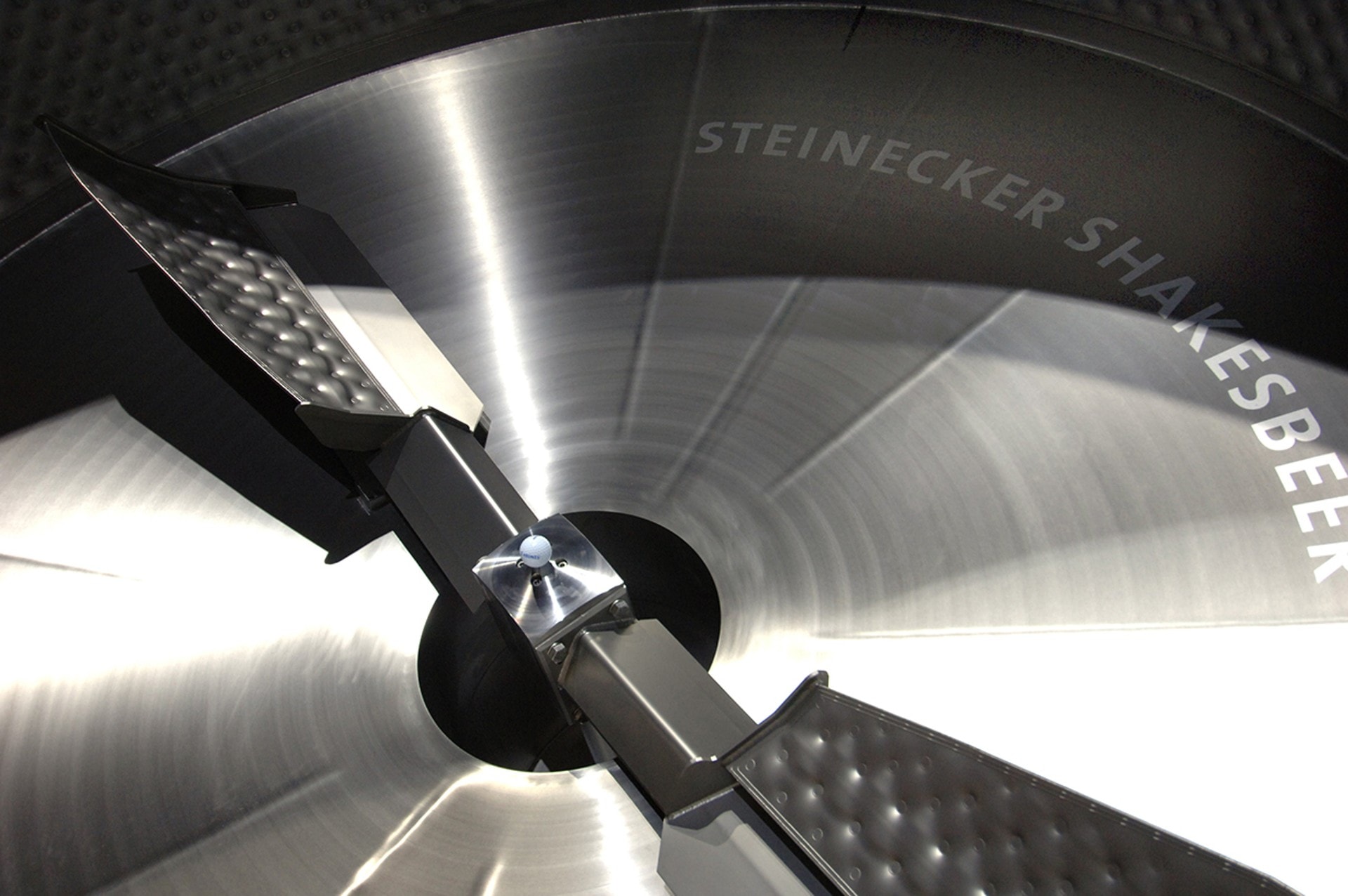
The next step is mashing. Gentle heat-up, uniform heat distribution and creating a homogeneous blend are absolutely essential to ensuring an optimum environment for the enzymes’ work. The ShakesBeer(opens external link in a new tab) mash tun launched in 2005 set a new landmark here. Highly efficient heating surfaces in pillow-plate design permit maximum heat transfer, resulting in several benefits at once: significantly faster heat-ups, smaller heating surfaces, and a lower heating-medium temperature. The risk of the mash “caking” and thus causing fouling was reduced, product quality improved and intervals between cleaning routines extended. Optional, easily retrofittable vibration units created additional technological advantages, for example in regard to filtration and better product quality. ShakesBeer marked the beginning of the low-temperature brewery at Steinecker and has been a bestseller ever since.
The Pegasus generation of lauter tuns
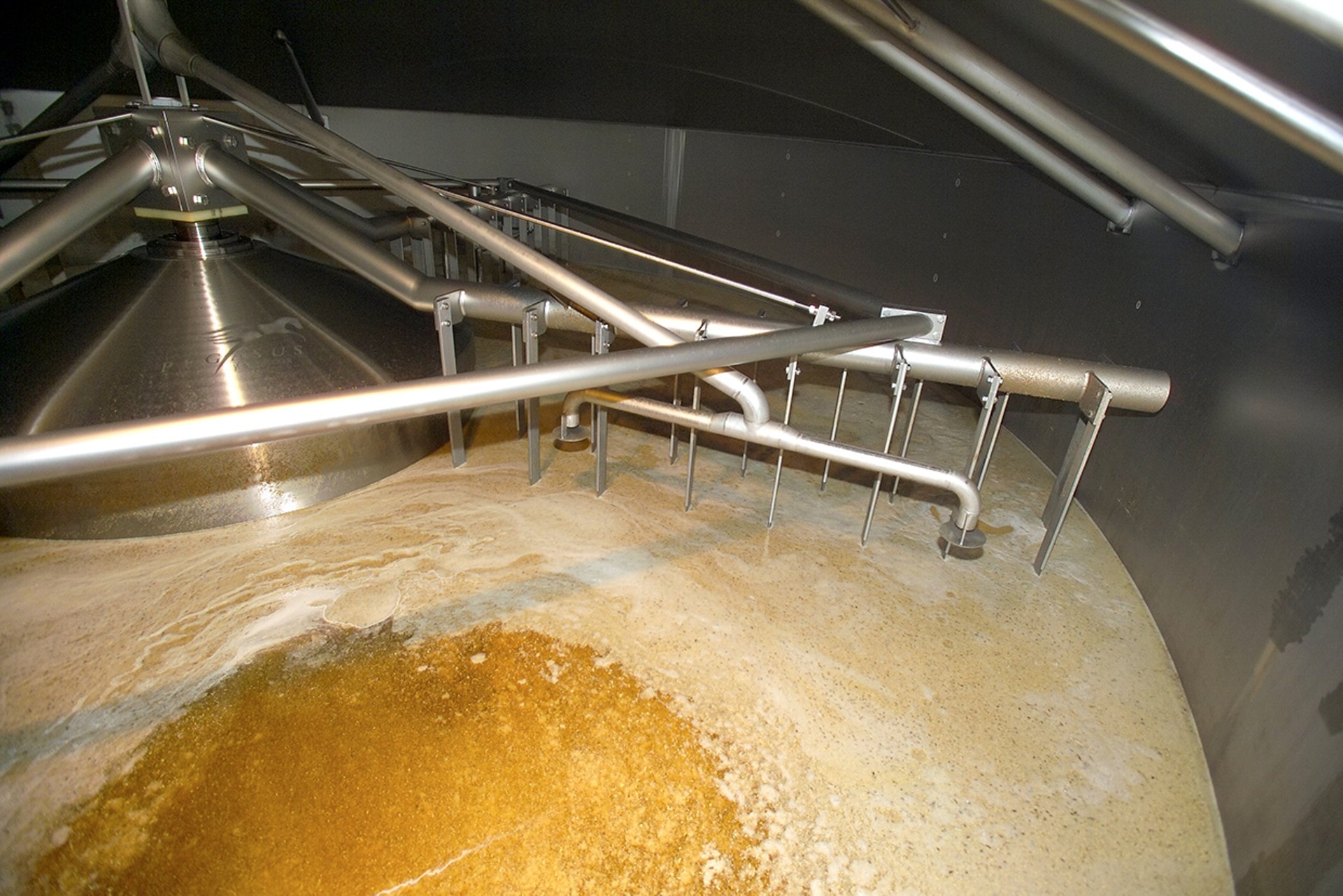
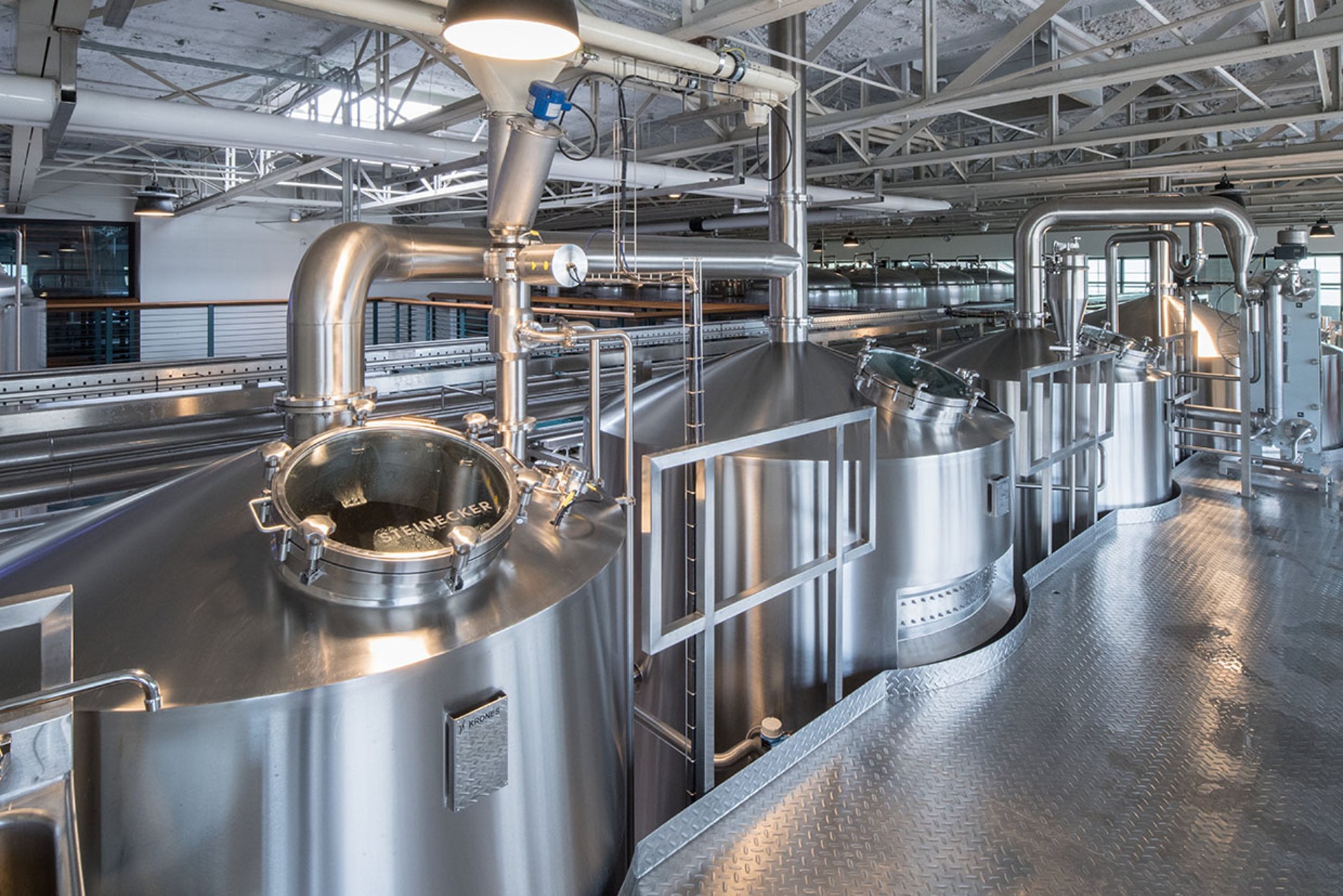
The lautering process is aimed at creating a clear wort containing no solids, leaching out the spent grains evenly, achieving a maximum extract yield and a high brew rate. The high-performance Pegasus(opens external link in a new tab) lauter tun launched by Steinecker in 2003 not only speeded the process up but also rendered it more cost-efficient thanks to higher yields. One of the problems tackled was that, due to a lauter tun’s design, the mash was not optimally raked at its centre. To put an end to that, the team developing Pegasus placed a domed structure over its centre and used the space thus created for other purposes such as mash storage. In the same year, Steinecker won the Bavarian State Award for this innovation. Since then, Pegasus has been continually improved and upgraded and remains highly successful on the market to the present day. It is now available in the third generation, which thanks to optimised raking blades and other design upgrades no longer needs the domed structure.
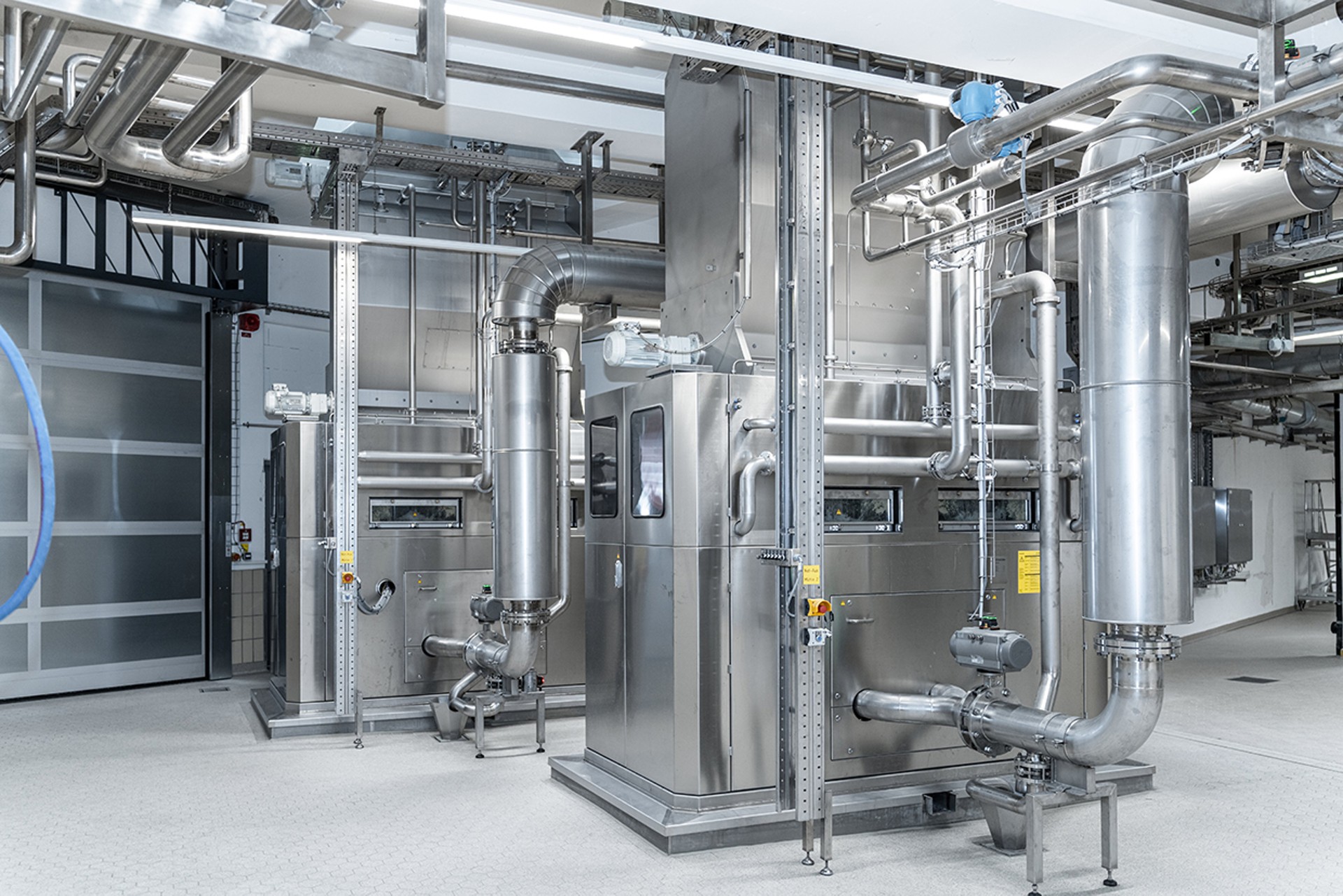
The mash filter is an alternative to the lauter tun. It offers some advantages especially with hulled raw materials. In 2014, Steinecker entered into a partnership with the mash filter(opens external link in a new tab) manufacturer Landaluce in order to be able to offer more flexible options in this field. A mash filter with completely redesigned filter plates was then presented in 2022.
Saving energy during wort boiling
It is imperative that wort be boiled gently, keeping thermal stress low. The aim here, among other things, is to evaporate base aromatics while at the same time minimising overall evaporation. The entire industry had been working on developing energy-economical wort boiling systems since the early 2000s. Back then, overall evaporation came to at least eight per cent. In 1999, Steinecker led the revolution of low evaporation with its multiple-award-winning Merlin wort boiling system and went one better in 2003 with its Stromboli(opens external link in a new tab) internal boiler, whose salient feature is a Venturi jet for thermal convection. That means the system, which also features a field-proven Ecotherm circulation pump, possesses two recirculation loops. From a technological viewpoint, overall evaporation can be reduced down to two to three per cent. The system’s particular success is surely due not least to the fact that it can be easily retrofitted. The tried-and-tested Stromboli Venturi jet is also used in the external boiler.
In 2022, Steinecker launched the Hopnomic(opens external link in a new tab) system for an increased yield of bittering substances during wort boiling. In parallel to wort boiling, the hops are here dissolved in an alkaline medium in a separate container, enabling the brewery to save up to 30 per cent bittering hops.
Ingenuity for the cold section
In 2008, Steinecker resumed the construction of large tanks(opens external link in a new tab). Since then, tanks of any kind with diameters of up to 4.25 metres and overall heights of 9 metres have in their entirety been manufactured in the Steinecker plant, with specimens bigger than that being completed on site.
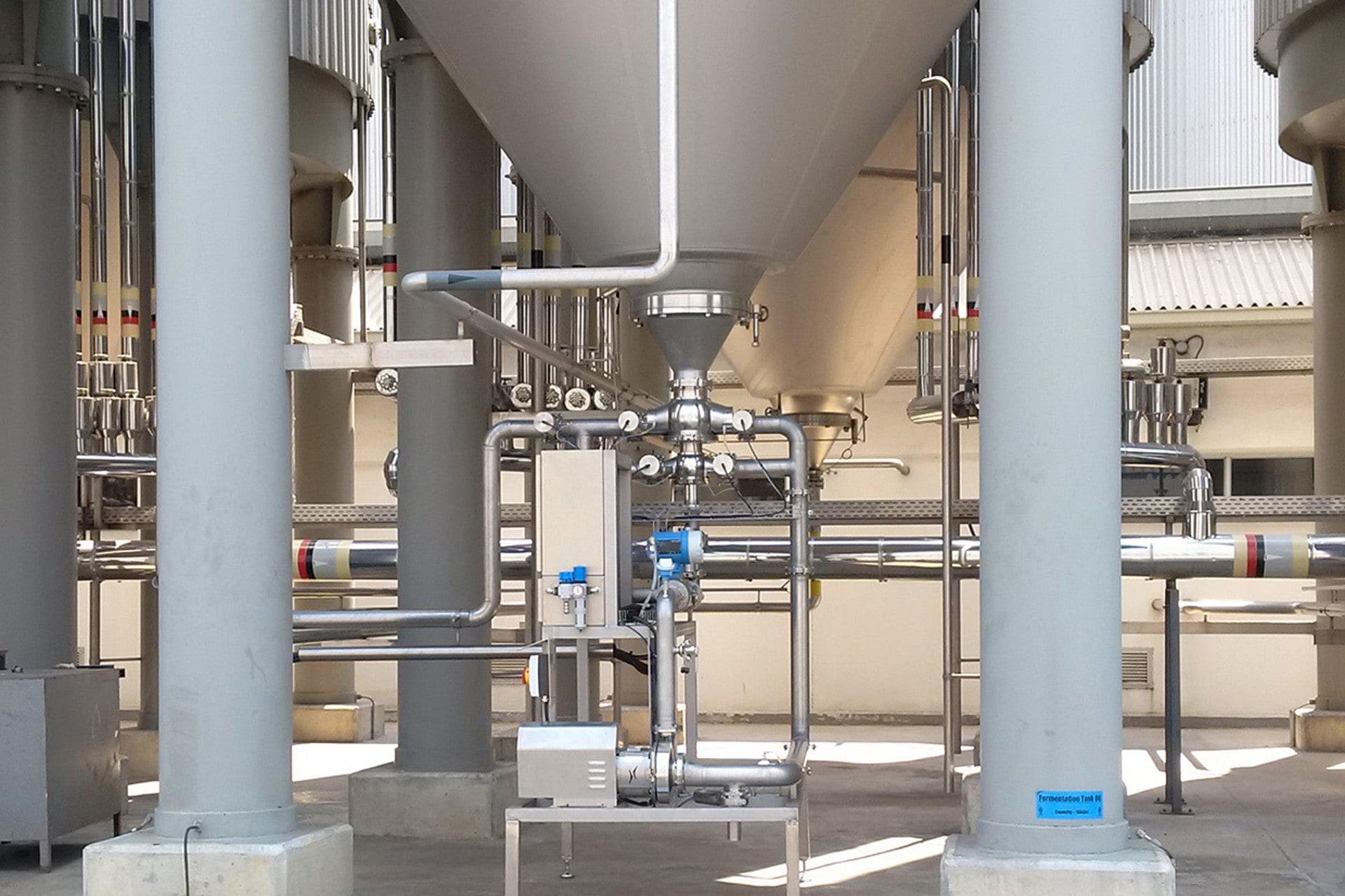
In 2009, Steinecker introduced TwinPro(opens external link in a new tab), a new fully automated concept for the cellar pipe system. It can be expanded as needed and is based on two valve blocks, one for filling the tanks and one for draining them, which are linked to each other by a bypass. Up to four tanks can be grouped together in a tank loop, which makes for substantially shorter pipe lengths and concomitantly lower investment and operating costs. The same year saw the development of the route management system DynaRoute, a software that uses a set of predefined criteria for automatically finding the most suitable route for the product handled in each case.
Poseidon gets things moving in the tank
The Poseidon(opens external link in a new tab) system for recirculating beer in the tank was launched in 2017. Thanks to three inlet and outlet ports fitted at different heights in the tank’s centre, the circulation flows can be selectively adjusted, thus establishing various circulation zones within the tank. For example, it is possible to blend the tank’s entire contents into a homogeneous mixture during fermentation or to create a relatively calm sedimentation zone in the tank’s lower section during yeast harvesting. Poseidon was originally developed to speed up fermentation, but it also supports green-beer cooling and is frequently used for dry-hopping as well.
The technology is also particularly well suited for breweries that work with crabtree-negative yeasts for making their non-alcoholic beers and therefore have to aerate the tank under controlled conditions. Poseidon can likewise be found in bioreactors(opens external link in a new tab), like those used for producing alternative proteins, instead of an agitator. In short: The unit, which can easily be retrofitted through the tank opening, has become a fast-seller.
A new era of beer filtration
The aim of filtration is to produce a brilliant, clear product with high biological stability. In 2002, Steinecker developed the Twin Flow System (TFS)(opens external link in a new tab), a new generation of precoat candle filters that feature a register, a bypass and an optimised inlet manifold, thus setting new benchmarks in beer filtration. The new unit can be used for filtration and for stabilising the beer by means of PVPP, which binds unwanted, turbidity-forming tannins in the beer, and is also suitable for alternative filter aids(opens external link in a new tab) that can be employed instead of kieselguhr.
Special equipment for small breweries and craft brewers
In 2009, Steinecker presented the CombiCube(opens external link in a new tab), a brewery concept for brew sizes from 50 to 130 hectolitres. The target group for this new product included not only relatively small breweries but also craft breweries that were gaining increasingly in popularity at that time. Since 2015, Steinecker has produced compactly dimensioned turnkey systems for brew sizes starting at just five hectolitres in order to accommodate this trend.
Botec F1 – the industry-specific process control system
Steinecker is a complete-system vendor that has for about 40 years now been offering breweries not only solutions for brewhouse and cellar but also for system automation. Even today, the company is the only brewing-technology specialist on the market with its own process control system.
Development work on electronic automation systems started way back in the 1980s and was based on the then-new programmable logic control (PLC). 1993 saw its integration at PC level, which was a huge improvement in the field of process control and monitoring. In 1994, the first process control system called Botec (which is short for batch-oriented technology) was introduced in combination with the S5 control system from Siemens. Ever since then, it has been steadily refined in line with the advances made in automation technology and computer science.
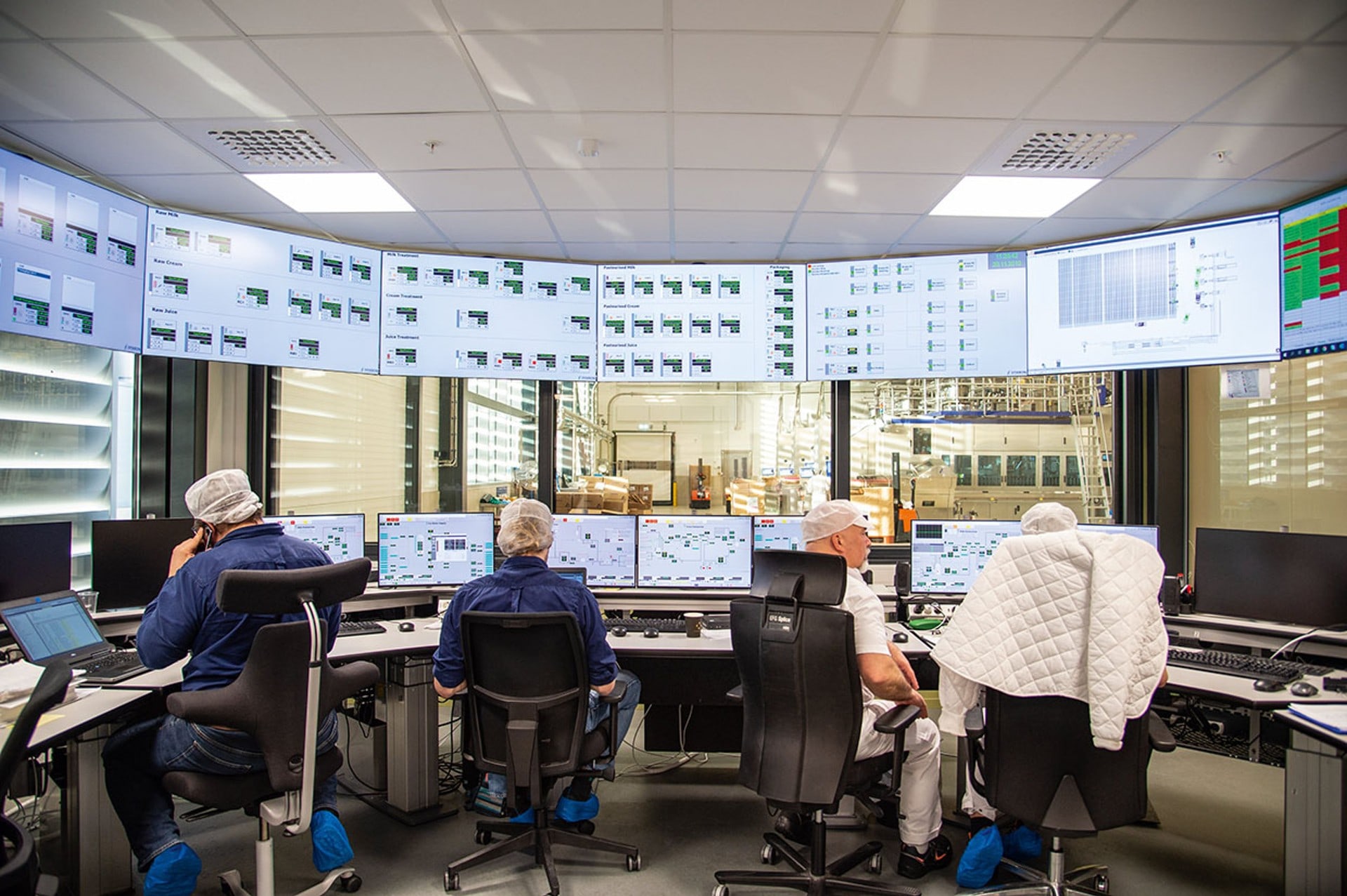
Around 2001, development work on Botec F1(opens external link in a new tab) started. Featuring visualisation and a database to what was then state of the art, it was much more user-friendly and gave an enormous boost to process monitoring and control. Botec F1 was also designed for use with Allen Bradley control systems, which was of particular importance for customers in the USA and the countries of Latin America and Africa. Each new generation of Botec F1 incorporated new technological advances and has to the present day provided its users with the highest ease of operation based on cutting-edge functionality. So far, breweries have taken delivery of more than 3,500 Botec F1 control systems. And since 2023, the entry-level Botec Visu has been available for smaller companies.
In 2024, Steinecker took over the ILTIS process control system from IST Systemtechnik, thus adding a second pillar to its automation system portfolio. That has opened up further markets in other sectors for Steinecker, like water and wastewater, healthcare and biotechnology.
From beer to oat drinks and vegan burgers
Companies operating in the growing market for alternative foods have for some time now taken processes from the brewing industry as models for their own production systems. As Steinecker possesses in-depth expertise in process technology for food and beverage manufacturing and has gained plenty of experience in this sector, they are able to provide fit-for-purpose know-how and suitable systems for creating alternative foods. Entry into this market began in the field of plant-based drinks because, depending on the process variant involved, mashing technology can be used for making them. In 2017, Steinecker built its first system for blending rice flour with water for further processing into rice drink. It was based on a mash tun used as a cereal cooker in combination with a mash mixer. In 2022, Krones and Steinecker started to focus their technology portfolio on milk alternatives based on oats. In 2023, Steinecker demonstrated that a well-thought-out combination of systems even makes it possible to produce both beer and oat drinks in the same brewhouse.
Brewing technology likewise offers many options for producers of alternative proteins. In 2022, Steinecker developed a solution for turning brewer’s grains into a plant-based meat substitute for a craft brewery. Creating alternative proteins through fermentation is yet another field of application. For this purpose, Steinecker adapted its Poseidon recirculation unit to work in a sterile environment in 2023 and developed a bioreactor(opens external link in a new tab). A 500-litre pilot system for plant cell cultivation was implemented in the same year, to be followed one year later by a fully automated industrial bioreactor, including upstream process and downstream link. Today, Steinecker supplies companies operating in this market through its Alternative Food Processing business line and is expanding its portfolio to also cover further applications in biotechnology.
This most recent development yet again validates Steinecker’s recipe for success: identifying new lines of business and picking them up in their development work drawing upon in-house expertise, skills and experience while at the same time remaining true to their core business, which is process technology. Steinecker has realised that sustainability will be an important driving force in the world of tomorrow and continues to upgrade their solutions in line with this imperative – boosting sustainability in energy supply and nutrition. That ensures the company will remain a reliable partner for future and prospective customers in the next 150 years as well.