

As a visitor at the Krones stand: PureCycle Technologies
Does his company do chemical recycling or mechanical recycling? This is a question Dustin Olsen, CEO of PureCycle Technologies, hears again and again. His answer: "Basically, we just wash molecules." Find out what that means in concrete terms and how Krones' technology comes into play in this interview – conducted by our US sales colleague Jon Larson.

Because we love a challenge
When it comes to plastic recycling, this case is especially hard to crack. But crack it we will. We're talking, of course, about multilayer materials made of PET and PE. Together with the Spanish company REPETCO, a Krones customer, Krones has taken up the challenge – and mastered it brilliantly.
What is the mood in the industry?
Many German exhibitors at K 2022 have this in common: They are – just like Krones – members of the industry association VDMA. Thorsten Kühmann is in close contact with them: as Managing Director of Plastics and Rubber Machinery at the VDMA, he knows very well what the state of the industry is and where it is heading. In this interview, he explains to us what machine manufacturers are contributing to the Circular Economy – and why he is very optimistic about the future.
Promoting the circular economy – some things every one of us can do
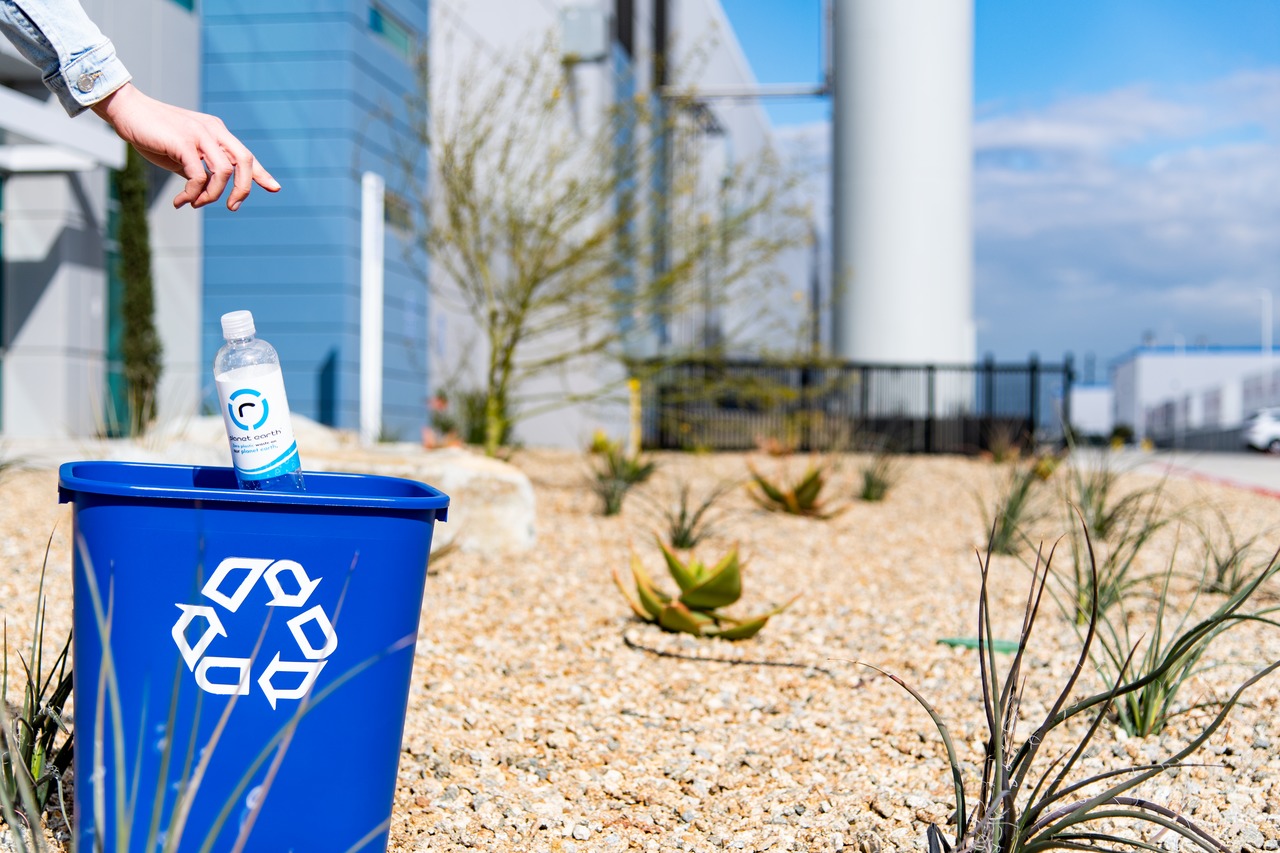
A sustainable circular economy can only work if everyone does their part. Of course, policymakers and business leaders play an important role here, but every individual also has to contribute. Even though the structures and options for disposing of waste vary widely from one region to another, the following applies without exception: Everything that is released into the environment in an uncontrolled manner weakens the circular economy. Either because it is irretrievably lost to the material stream and must be replaced by virgin materials or because returning it to the loop would entail greater climate costs, for instance, due to the energy consumed in collecting and transporting it. Fill your karma bank Incidentally, the "environment" in this context isn't limited to nature. Waste that is lying about in urban areas won't make its way to the proper collection bins on its own. In the worst case, it is carried into rivers, meadows, and forests by rain and wind. We all can prevent that from happening – simply by keeping an eye out and picking up some trash, even if it's not "our own". Because most likely, we've all accidentally lost a candy bar wrapper, a to-go cup, or something similar without even noticing. So, by picking up and pitching in, we can balance out own karma. And the more ambitious among us can even keep some small trash bags in their backpack or purse and commit to picking up at least three things each day. Separate it! How we deliver waste for recycling also has a significant impact on whether and how well it can be recycled. No matter what the material, the following applies almost universally: The more process steps required for recycling a material and the more complex those steps are, the worse it is for overall climate performance and the quality of the finished product. For example, if plastic packaging winds up in the paper bin, it will not only be lost to its own cycle but will contaminate the paper cycle. The situation is similar when it comes to packaging that is tossed along with its contents. At the very least, organic waste increases the amount of energy and water required for recycling. It can also negatively impact the quality of the recycling process. A lot can be accomplished on this front with some very simple measures. For instance, make sure to scrape out all of the yoghurt before tossing the cup into the bin. And completely separate the lid from the cup – even if both items will ultimately go into the same bin. In that way, you increase the likelihood that the automated sorting system at the recycler's can feed them into the right streams.