
Can and bottle: Craft brewery in Budapest relies on combined filler from Kosme
 Christine Rüth
As part of its expansion thrust, Monyo Brewing has invested in a Barifill Canto, the new combined filler for cans and bottles from Kosme.
No compromising on beer quality – That is the motto of the Monyo craft brewery from Budapest. So when it started its expansion programme last year, the requirements for the new filling line were correspondingly stringent. Monyo opted for a Barifill Canto, the combined can and bottle filler from Kosme.
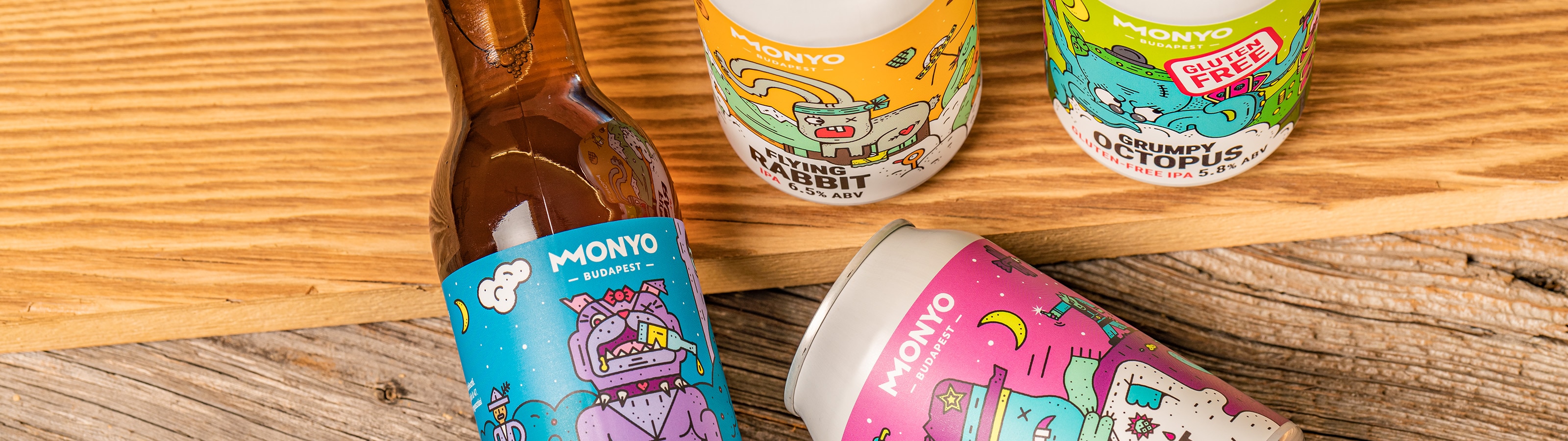
Fun is the watchword at Monyo Brewing, something you notice immediately when you enter the courtyard. There is a stage, an arena and a bar, the perfect setting for summer parties and concerts, and garish cartoon scenes on the cars, which are THE hallmark of the young brewery. Their cans and bottles are also adorned with cartoon characters in vivid colours and with names to match: you can drink Mango Hero, Flying Rabbit, Grumpy Octopus or Lazy Pirate, to list just a few. Botond Prischetzky is Monyo’s brand manager who took a hand in developing the attention-grabbing design: “Fun is part of our DNA, and we want that to be immediately obvious in the way we present ourselves, our products and our world. Besides, we need an endless stream of variations for the huge number of beverages we offer, for our bar, the concerts, and who knows what we will come up with next. The cartoon characters are ideal vehicles for communicating our ‘Have fun’ philosophy.”
Craft brewing in Hungary
Over the past 20 years, a vibrant craft-beer scene has evolved in Hungary. Nowadays the country has about 60 craft breweries, with five to six new beers being launched each week. Monyo has been part of the craft-brewing community since 2014, assuming a pioneering role right from the start, in terms of special beer types like fruit sour, spicy stout or barley wine.

But the biggest fun potential is offered by the beer itself. The brewery’s regular core products include IPA, New England IPA, porter and fruit beers and, most recently, flavoured soft drinks including maracuja, strawberry-lime and ginger-pear lemonade. The top seller and Monyo’s house beer is Flying Rabbit, one of Hungary’s best-known IPAs. Monyo likewise launches an endless stream of beers brewed to new recipes. “We keep on experimenting and trying to find the perfect formula for almost any ingredient,” says David Schüszler, the head brewer, adding: “It’s the individual batches that we most enjoy, and we pour all our love for beer into them. They make our work at Monyo unique.” That is especially true for the “collaboration beers”, meaning those made together with other craft brewers from all over the world. In the craft-beer community, people know each other from festivals, they visit each other, brew beers to new recipes, and above all they have plenty of fun together. Monyo has never been shy to use exotic ingredients, quite the contrary – it was one of the first craft breweries in Hungary to experiment with fruits. Today Monyo offers a sour cherry ale called Party Animal Meggy Ale as part of its Party Animal Series.
Wine before beer, beer before wine … why not both together?
Monyo’s enthusiastic brewing fans stop at nothing, not even wine. For their Hungarian Terroir series, they have joined forces with regional winemakers. “We wanted to be different from other craft breweries. You can brew a good IPA anywhere. We asked ourselves: What can we produce that is typically Hungarian? Our country is famous for its wine-growing, and we had some contacts in this community – so working together was the obvious choice,” says Botond. As a result, beer-type wines or wine-type beers called grape ales are now produced four times a year. They often resemble dessert wines in both taste and alcohol content.
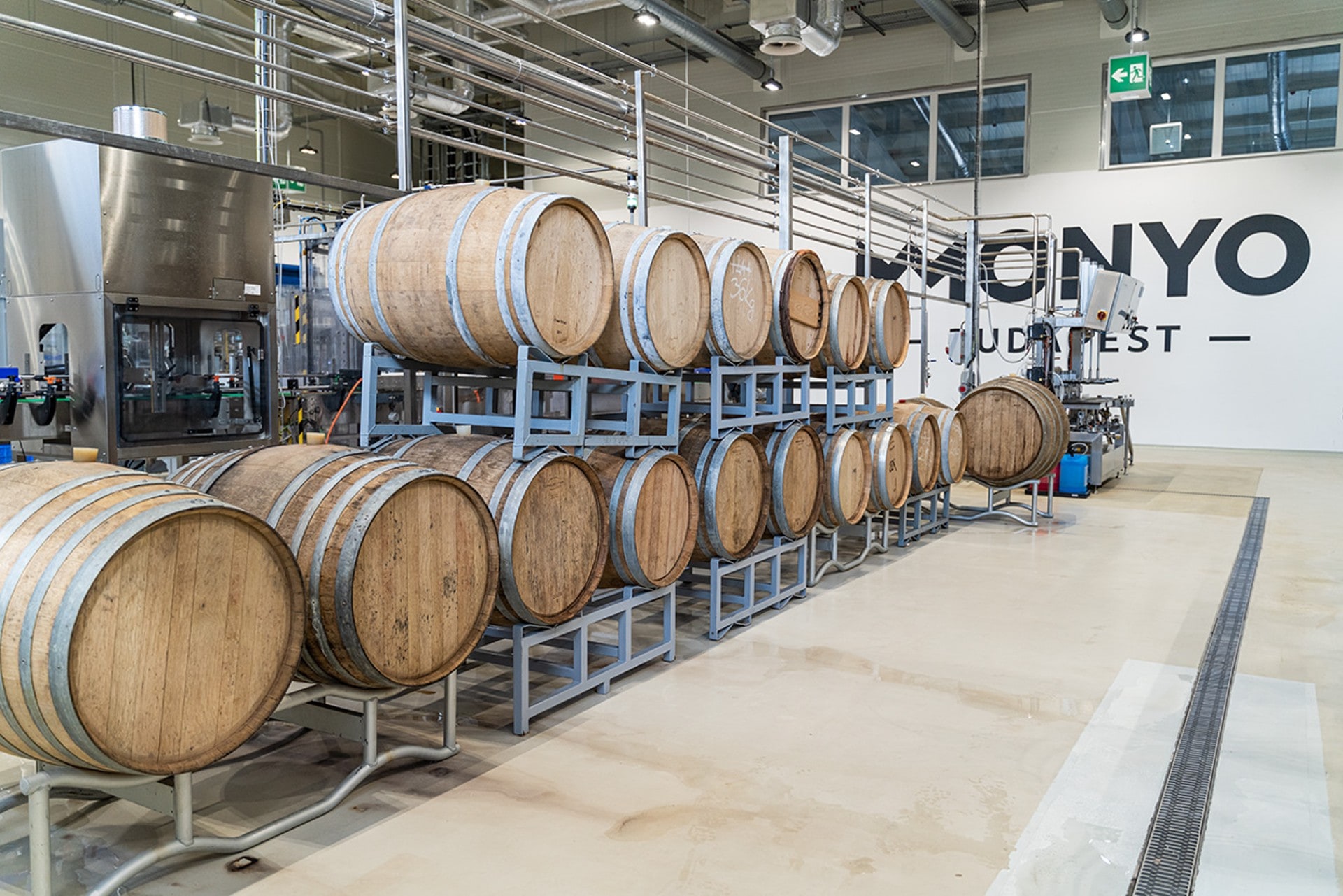
The winemakers suggest a grape variety or a wine, and Monyo develops a matching recipe. Some of the grape ales mature in specifically selected wine barrels, sometimes grapes are added at the end of the fermentation process. There are many options. For the current Szekszárd Hungarian grape ale – the lightest so far with only 4.8 per cent abv – Kadarka grape must and grape marc from the Szekszárd red-wine region were fermented together with the base beer. The wine yeast also comes from the winemaker. “I know of no other brewery that brings together wine and beer in this way,” says David.
Beer quality is crucially important
In line with the brewery’s motto “We take brewing seriously – everything else is fun”, Monyo never compromises on brewing and beer quality. After all, the only reason why the brewery was set up was its founder Pein Ádám’s dissatisfaction with the inconsistent quality of the Hungarian craft beer he was serving in his Monyo Bar. So he joined forces with Németh Anti in 2014, who was one of the first hobby brewers in this country. Together, they established Monyo Brewing to show how things can be done better.
And their success has proved them right, so much so that their old location with its annual production volume of around 200,000 litres could no longer keep up with demand. A good twelve months ago, Monyo started to expand and can meanwhile produce roughly six times as much as before. 6,000-litre tanks for the standard range were added in the brewhouse, with the old 2,000-litre tanks used for the special brews. And the products are now filled not only in the traditional 0.33-litre beer bottles but in cans as well. “Cans don’t break and are easier to recycle. They simplify the logistics, too. What’s more, they are impervious to light, thus protecting the beer better, and they also reach the requisite temperature in the cold store faster,” emphasises David, who is also head of production. “But many pubs prefer bottles, and therefore we need a filling line which permits us to switch between container types.”

Besides flexibility, the most important criteria for the new filling line were good process stability, automation and beer quality, of course. “We wanted to reduce TPO (Total Packaged Oxygen) still further,” says David. “The less oxygen the beer picks up, the longer it retains its full-bodied taste of hops and fruits.” While looking for equipment that would meet their high standards, the Monyo team also visited breweries that were using Krones or Kosme lines. They eventually opted for the Barifill Canto(opens external link in a new tab) from Kosme, a machine able to handle both cans and bottles. “What tipped the scales in its favour was the combination of stability, automation and low oxygen pick-up,” explains David. “No other manufacturer was able to offer that.”
Cans are more cost-efficient than bottles but many pubs prefer bottles. Therefore, we needed a filling line that can handle both container types alternately.

One of the first Barifill Canto machines
Kosme designed and supplied the entire line – including a fully automatic depalletiser, the Barifill Canto(opens external link in a new tab) filler and the Flexa Sensicol(opens external link in a new tab) labeller right through to the packer. The full cartons are still palletised by hand. The new line went into production in the autumn of 2021.
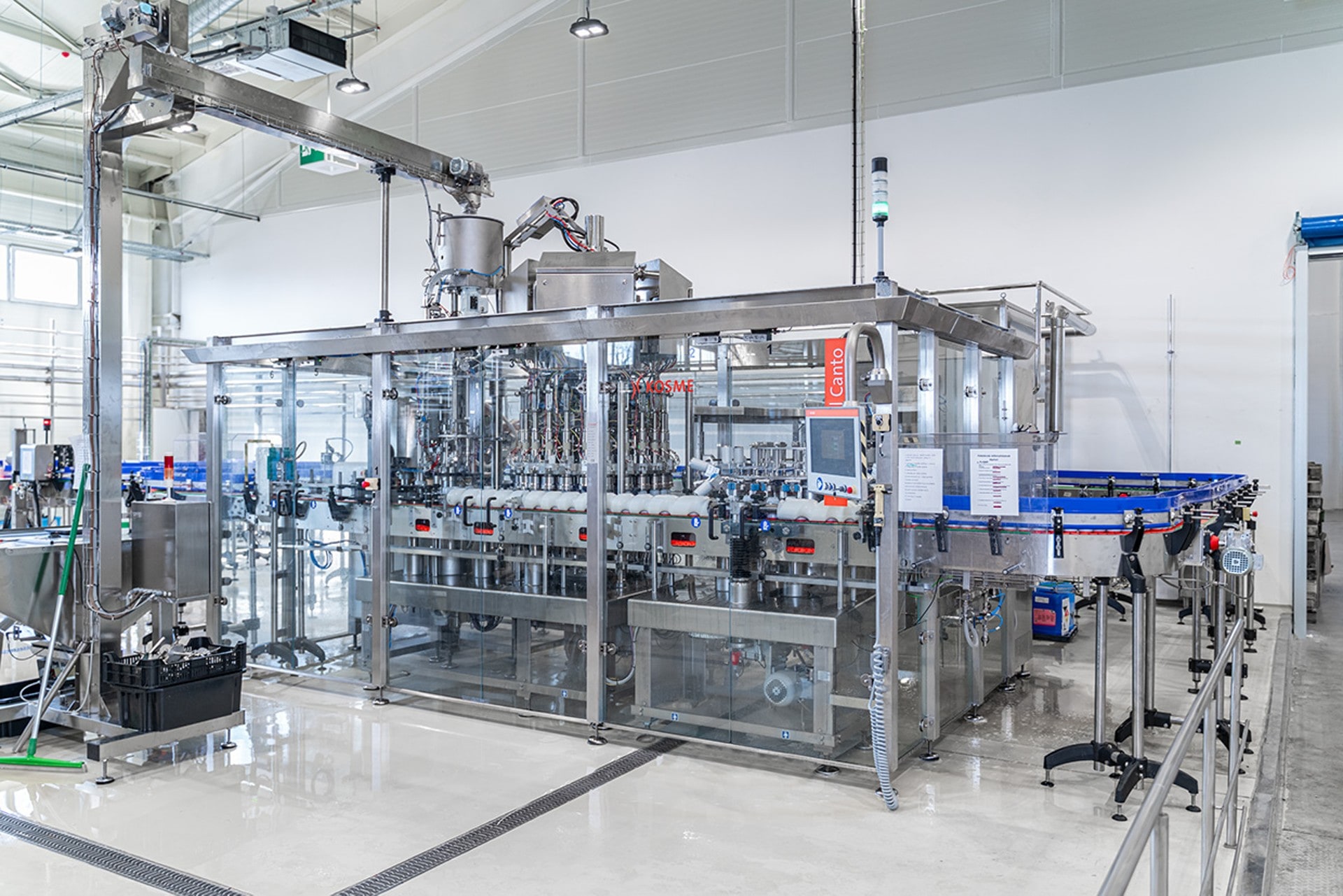
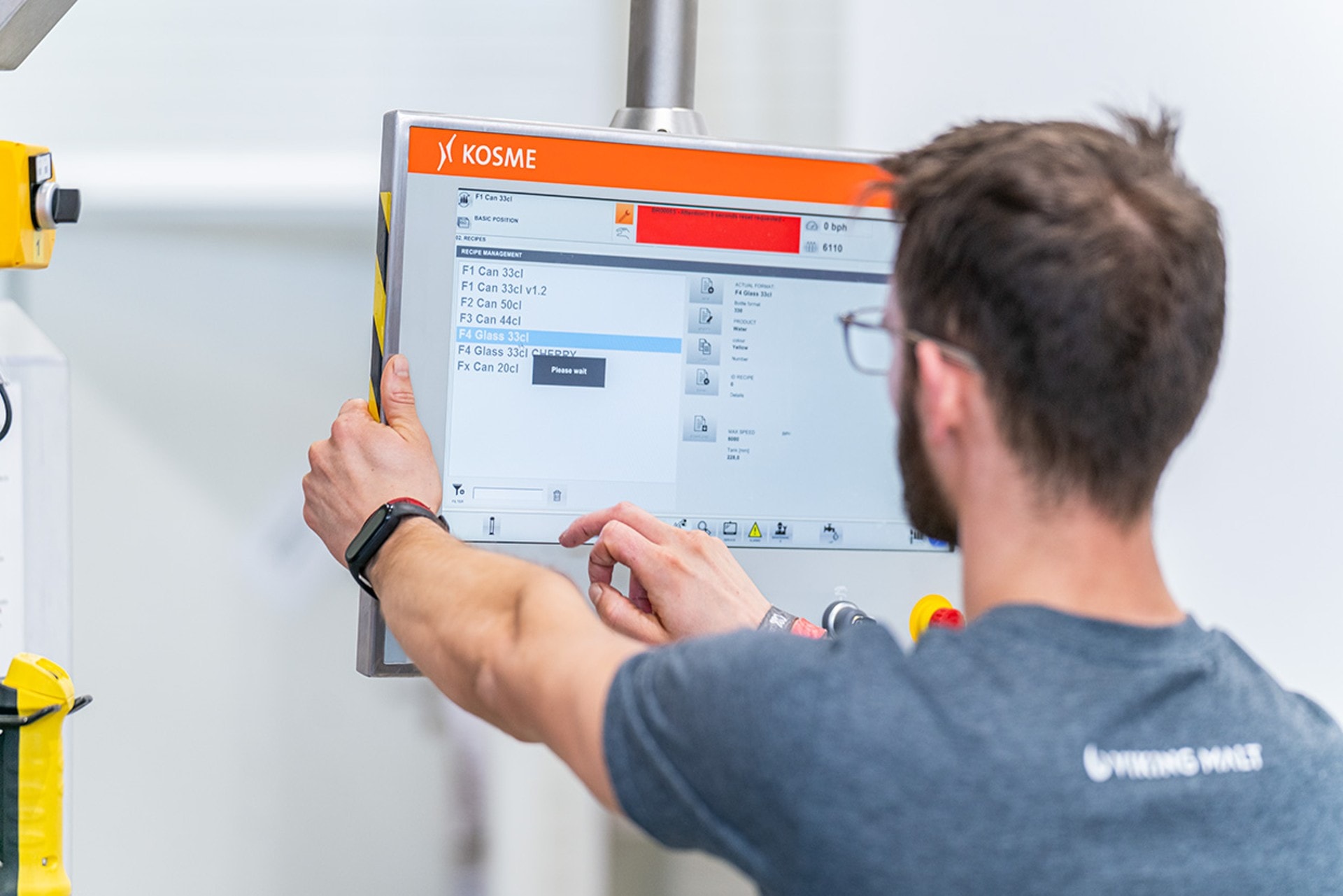
A combined filler able to handle both cans and bottles is a new departure for the Krones Group as well. The Barifill Canto at Monyo is thus one of the first of its kind that Kosme has put into operation, consisting of a rinser, filler, crowner and seamer. Kosme has devised a special combined filling valve for it, based on the high standards of Krones’ Modulfill systems. Thanks to its specific design, it is possible to switch the line over from one type of container to another using the control menu on the touchscreen. The valve itself does not have to be touched, and therefore the line meets the most stringent standards of hygiene.
Barifill Canto – the flexible filler for small batches
The combined Barifill Canto filler enables small beverage producers like craft breweries or winemakers to fill their products in cans or in bottles without having to invest in two machines. The machine’s design keeps the time needed for a container switch to a minimum.
The Barifill Canto fills beer, wine or CSDs in cans, or in wine or beer bottles. It can handle the following container sizes: 0.15 – 0.66-litre cans, 0.25 – 1.5-litre bottles (wine), and 0.25 – 0.75-litre bottles (beer). The machine’s speed is variable. Outputs of between 2,500 and 16,000 containers per hour are possible for 0.33-litre beer containers, for example.
The Barifill Canto is also the first combined filler that integrates two optimum measuring methods for fill volume in the same filling valve, one each for bottles and cans. An inductive flow meter provides volumetric measuring for cans while the fill volume for bottles is measured by a probe. Thanks to the integrated crowner/seamer, the containers are closed immediately after having been filled, thus minimising oxygen pick-up. This concept for assuring top beer quality has also proved highly effective in practical operation. Monyo’s head of production is most satisfied with the very low TPO values achieved – below 80 ppb for both bottles and cans.
Switching between containers is simple
Monyo’s Barifill Canto has been configured for 6,000 containers per hour and can fill 0.33-litre cans and bottles. Larger bottles like those for the grape ales are still processed on the old filling line. The scope of supply also included the CIP system for line cleaning installed right next to the filler. The inspector downstream of the Barifill Canto uses X-rays to check the correct fill level of the bottles and cans.
The can seamer was a pleasant surprise for David: “I used to work with canning lines before, and we always had problems with the seamer. Never once did we have such difficulties in the new line. We never have to re-adjust it, it always runs to specification. That is a huge plus.”
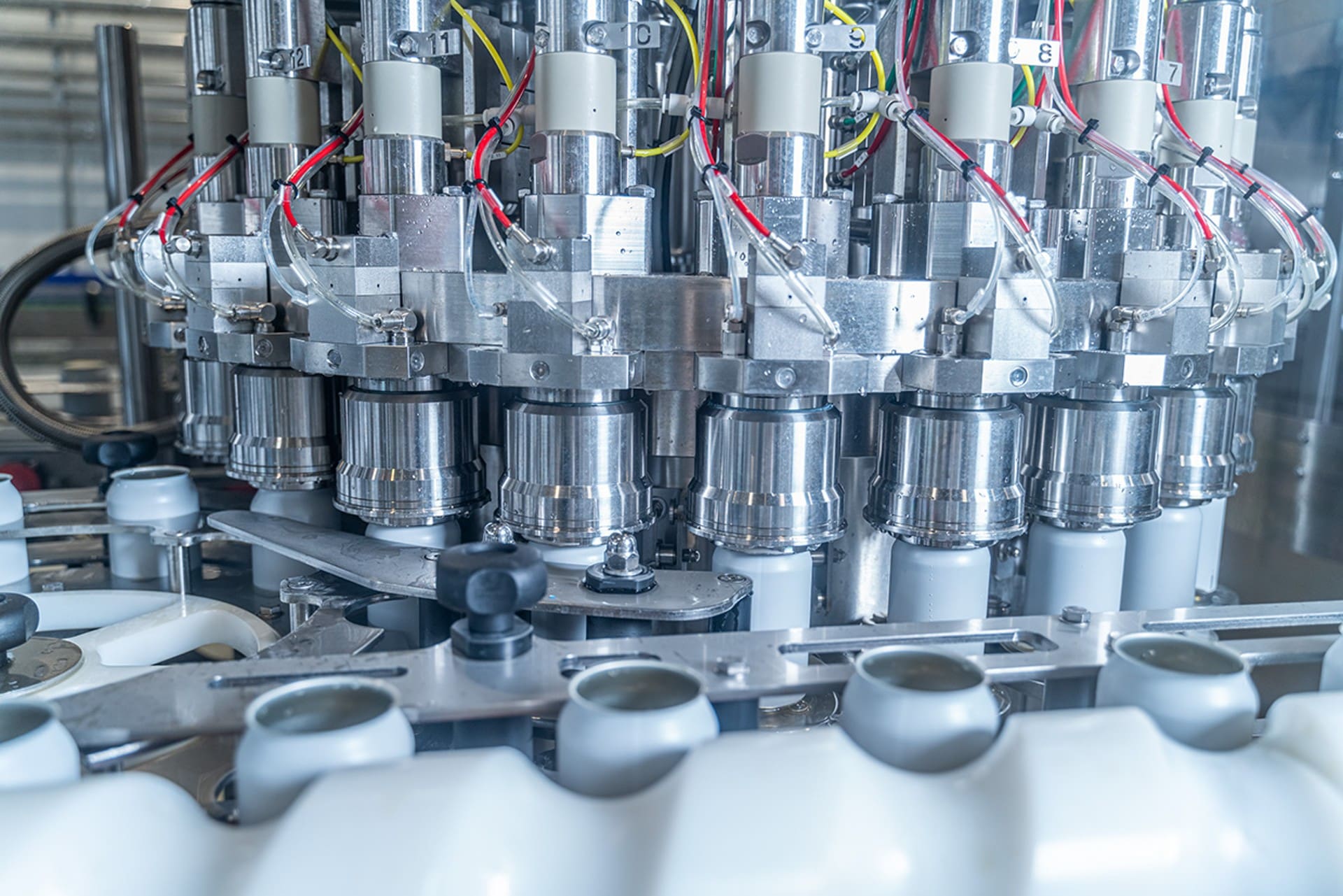
Monyo is currently filling more cans than bottles. Therefore, the team has only switched the line over three or four times to date – and was pleasantly surprised. “It was much easier than we’d thought,” says a gratified David. “We’re still learning, obviously, but it has become more of a routine lately. If we follow the process step by step as described, it’s actually impossible to make mistakes. It’s more or less foolproof,” he says.
No other manufacturer was able to offer us this combination of stability, automation and low oxygen pick-up.
Once filled and dried, the cans and bottles are dressed in pressure-sensitive labels in a Flexa Sensicol machine. “We brew many different beers, so it’s easiest to use blank cans which are then dressed in the appropriate label,” is how David explains the choice of machine. Its speed is also something new. The old labeller used to stop the containers in order to apply the label. The new rotary Flexa Sensicol(opens external link in a new tab), by contrast, dresses the containers while they are moving, at speeds of up to 6,000 containers per hour. What David likes best are the two label stations: “When one reel is nearly empty, we switch directly over to the other station. Then we have time to top up the labels in the first station while the machine continues to run.”
Focussing all attention on the beer
When speaking with the Monyo team, you notice that the six-fold increase in capacity and working with all the complex new equipment was a big step for them. So the support given by Kosme is greatly appreciated, as David explains: “We can ask very uncomplicated at short notice. In most cases, we get a prompt answer that solves our problem. We’re quickly establishing our own routines. But right now, in the start-up phase, that sort of support is really valuable.”
All in all, he is very satisfied with the new line. “What was important to me was to automate as much as possible,” he explains. “In the old line, we still had to do many things by hand – in the depalletising and palletising zones, for example. Now, we only need two people to look after the entire line, that’s a huge step forward.” It is no longer necessary to place each individual bottle manually on the line, that’s another big plus, not least in terms of hygiene.
But the most important aspect of all is, of course, the beer. “We were keen to automate the process not least in order to give our people the time they need to focus on our beers. To check that everything is okay and to come up with new ideas. Automation frees your mind for things like that,” emphasises David.
The machines are not yet running at full speed. However, in view of the raised capacities, Monyo intends to develop its export business. There are plans to significantly increase the production volume of the core series and to create plenty of new beers, of course. 27 new beverages are scheduled to be released this year alone: six beers and three flavoured soft drinks in the core product line, four seasonal specials, twelve beers brewed under the collaboration system, three extra-strong New England IPAs, four Hungarian Terroir grape ales, and the Party Animal series, consisting of a sour cherry ale, an IPA, a witbeer and a lager. Moreover, Monyo offers contract brewing, welcoming home brewers and craft breweries in need of more capacity. Thanks to the high capacity and quality Monyo is now extending its contract brewing services to professional breweries and already has various partners from both, Hungary and abroad.
So we can definitely look forward to seeing what these enthusiastic experimenters will be coming up with next. It’s easiest to taste their creations in the convivial atmosphere of the Monyo Tap House right in the heart of Budapest – exactly where Ádám Pein was once so unhappy about the quality of the craft beers he served, prompting him to set up Monyo Brewing. And where you can now sit on a swing at the bar or make yourself comfortable at one of the tables in order to savour the full range of genuine craft beer creativity.
Project details
| Project: | Line for depalletising, filling, labelling and packaging bottles and cans |
| Client: | Monyo Brewing |
| Location: | Budapest, Hungary |
| Commissioning: | Summer 2021 |
| Scope: | Combined line for glass bottles and cans, rated at 6,000 containers an hour, including: |
- Combined Kosme Barifill Canto(opens external link in a new tab) filler for bottles and cans
- Integrated CIP system
- Kosme Flexa Sensicol(opens external link in a new tab) labeller for pressure-sensitive labels
We value your opinion!
Feel free to join in our discussion on LinkedIn
Do you have any questions? Or would you like to share your thoughts on this subject with us? We welcome you to post your comments and remarks!
Hier geht's zum LinkedIn-Post(opens external link in a new tab)