
 Dennis Wang
The Paulaner brand is known worldwide as a prime example of Munich’s brewing tradition. Thanks to EquiTherm technology, intelligent heat recovery and the brewery’s integration into the existing Botec F1 process control system, the world-famous Oktoberfest Bier and all other Paulaner beers are now being produced using considerably less energy and on a far smaller carbon footprint.
The jovial buzz of voices, clinking beer mugs, exuberant revelers from every continent – millions of visitors on Munich’s Theresienwiese: Every year for two weeks in mid-September, Munich becomes the epicenter of the world’s festival culture as the beer begins to flow. This year marks the 191st “Wiesn”, as Munich’s Oktoberfest is called locally in Bavaria. For Munich’s breweries, the weeks leading up to Oktoberfest are traditionally an all-hands-on-deck affair, with the lines running at full capacity. That is certainly true for Paulaner Brauerei. Each year, millions of liters of their Oktoberfest Bier lager leave the brewhouse in the Langwied district of Munich and find their way to the tables on the Theresienwiese.
Most visitors don’t see what goes on behind the scenes: Paulaner working tirelessly to make its beer production more sustainable. “We strive to strike a balance between tradition and the future. We wanted to further enhance the energy efficiency of our brewhouse – without cutting any corners when it comes to product quality or the reliability of our processes,” explains Christian Dahncke, Plant Manager and Head Brewmaster at Paulaner.
Using energy where it is generated
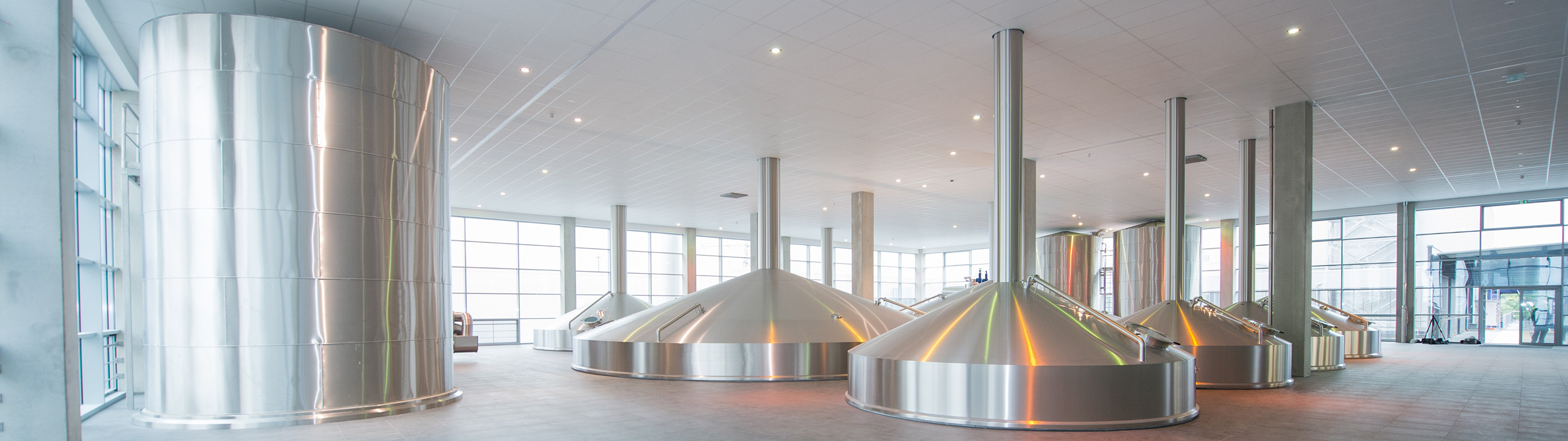
In collaboration with Steinecker(opens external link in a new tab), Paulaner developed a concept to vastly improve energy efficiency. The heart of the solution is the EquiTherm Brew(opens external link in a new tab), a tried-and-tested system that recovers thermal energy from the wort cooling and feeds it back into the brewing process. As a result, the same energy is used several times over within the brewhouse.
“What makes EquiTherm special is that we are able to recover energy right where it is being generated anyway,” explains Wolfgang Müller of Steinecker’s sales team. “Instead of having to supply additional energy, we use existing energy more systematically and thereby increase the overall efficiency of the brewhouse.”
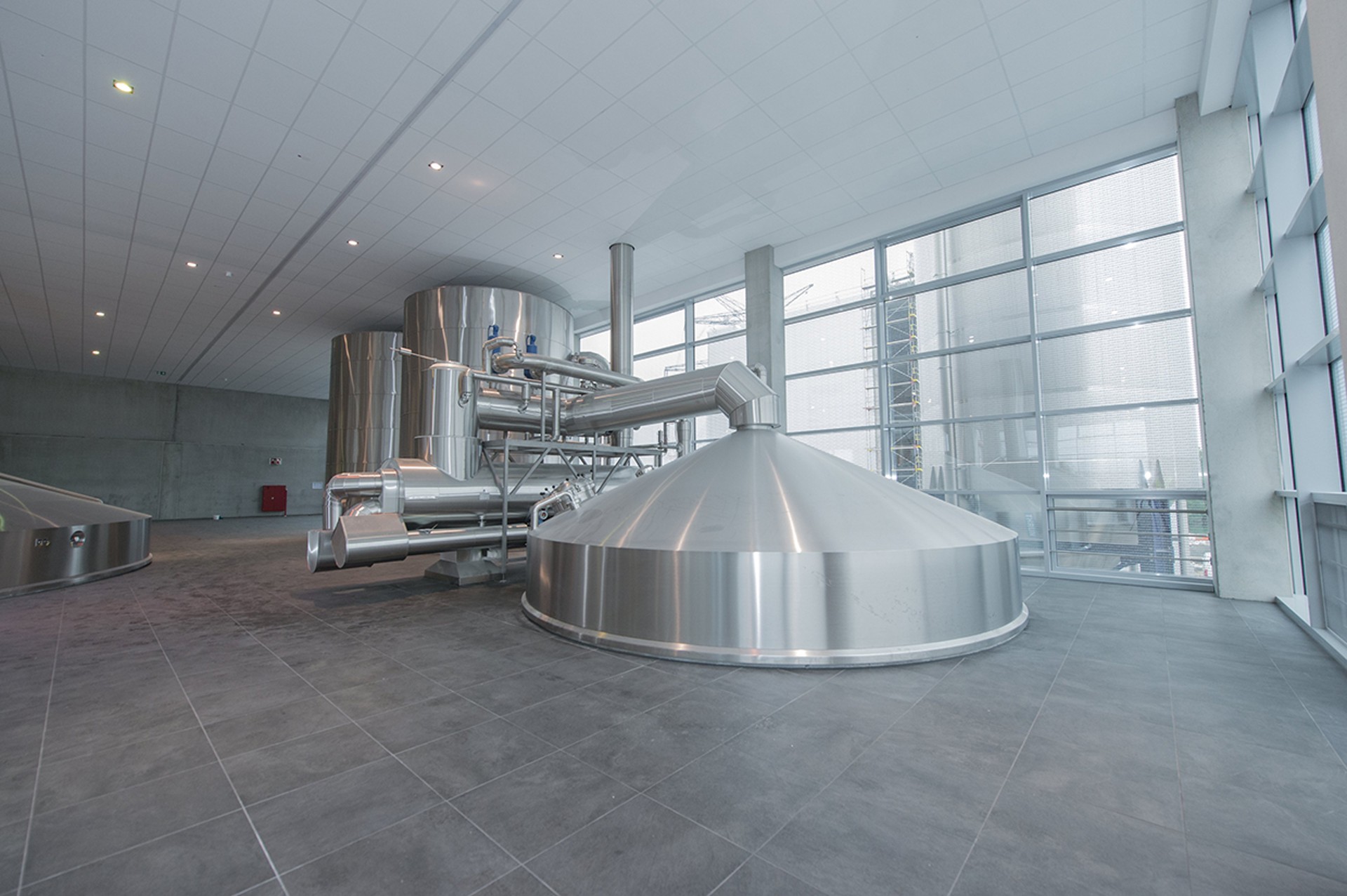
In a conventional brewhouse, enormous quantities of heat arise during wort cooling. Some of this energy is used, but much of it simply goes to waste or results in surplus warm water. EquiTherm Brew changes that. In the first stage of wort cooling, high-temperature energy is recovered, held temporarily in energy storage tanks and then supplied to the mashing process. That significantly reduces the demand for primary resources. It also flattens peak loads in the brewhouse and enables optimal utilization of available energy.
Another advantage lies in the lower heating-medium temperatures for the mashing process, which means thermal stress on the mash is significantly reduced, enzymes remain more active and the risk of heating-surface fouling is lower. The concept also improves the warm-water balance in the brewhouse since the system generates only as much warm water as is actually needed.
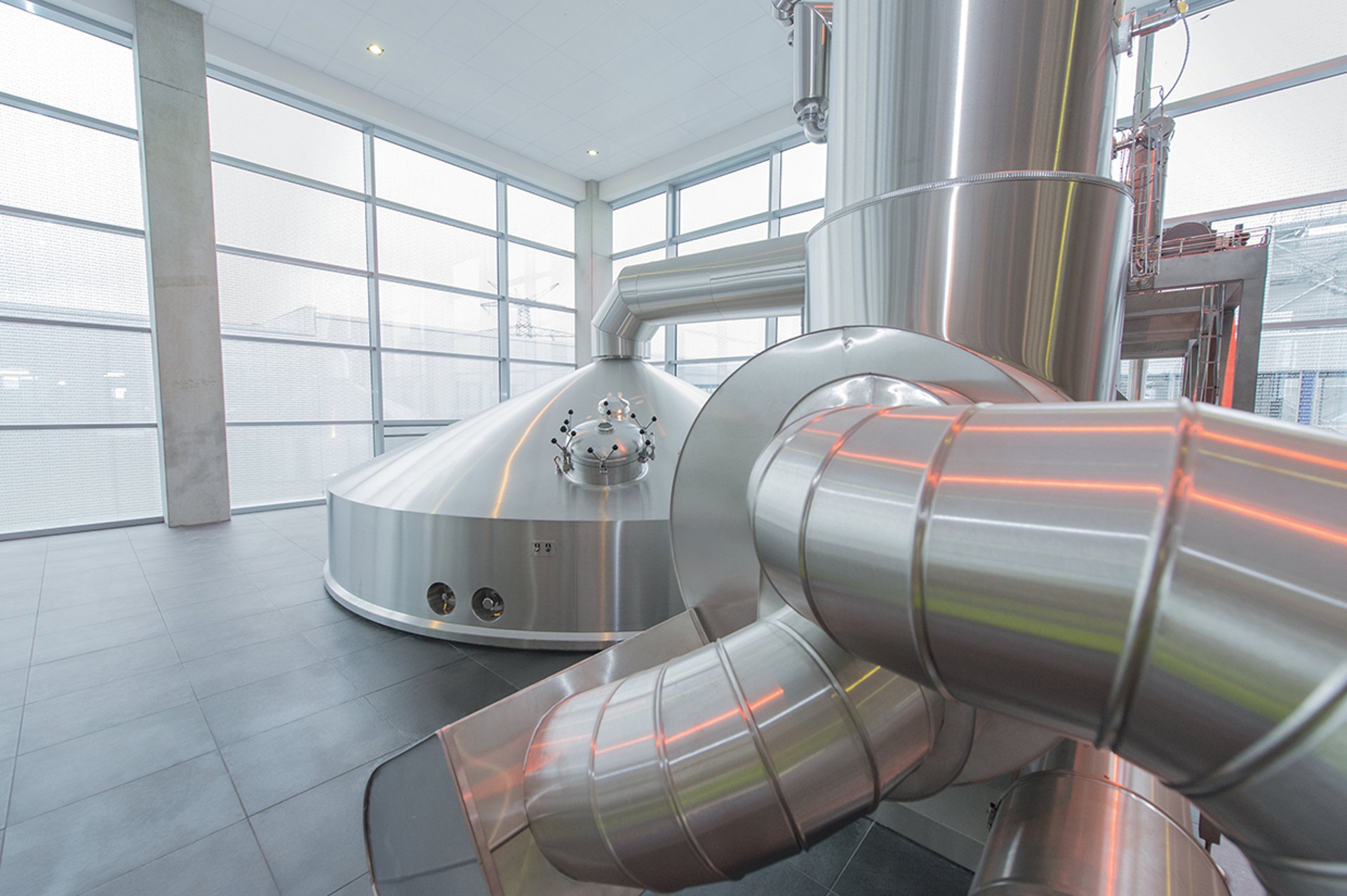
As part of the project, both mashing groups were reconfigured so that, instead of running on high-pressure hot water, they now run on water from the energy storage tank. The project team also integrated the lauter wort heater into the circuit with the energy storage tank and installed two new wort chillers, which are designed to work with EquiTherm Brew. One important change was also that the respective lines’ – previously separate – energy storage units were connected to form a single, shared system. This lends flexibility since the available energy can now be used by both brewing lines as needed, thus optimizing the energy flows across the entire brewhouse.
This particular task presented the team with one of the biggest challenges of the entire project.
Open-heart surgery
In order to link the two systems, the team had to integrate the new piping into an existing environment. The work was done in a very tight space and largely during ongoing production.
“At times, it was like performing open-heart surgery,” is how Andreas Heidenreich, Steinecker’s project lead, describes the situation in retrospect. “We had to intervene deep into existing structures while at the same time ensuring that the brewery could continue production.”
Exceptionally precise engineering and a meticulously planned schedule made it possible. “When you’re doing a retrofit project, planning is everything,” he adds. “The fact that we were already familiar with the line was a huge help.”
Botec F1 ties it all together
Just as important as energy recovery was the intelligent integration of all the new components into the existing production environment.
And Botec F1(opens external link in a new tab) played a crucial role here. The process control system from Steinecker controls and monitors all production sequences in real time, seamlessly documents batches and provides transparency across all process steps. From recipe management to process control right through to the analysis of historical production data, the system has been the brewery’s digital backbone for years now.
None of this was new territory for Paulaner. The brewery has relied on Botec F1 for more than ten years, operating and even expanding the system on their own. New line components and processes are continually being integrated into the existing automation environment. The system’s openness and flexibility enable the Paulaner team to implement many engineering tasks themselves and continually grow and develop their production environment.
This established automation standard proved a significant advantage in the current update project. All new energy and process flows could be directly integrated into the existing control system. The biggest benefit for the operators is that they didn’t have to find their way around a new system environment. Instead, the new energy flows can be monitored and controlled with the same level of transparency as all the other processes in the brewhouse – and on the same system.
Despite the technical complexity, this particular part of the project was also completed in a very short time. Paulaner and Steinecker needed to schedule only two downtimes for the brewing lines – just a few days – in which to implement all the necessary changes and get the lines up and running again. “Maintaining line uptime was our top priority,” recalls Paulaner project lead Christian Dahncke. “So it was all the more impressive that the teams were able to perform the retrofit within this tight timeline.”
Exceeded expectations
The results speak for themselves. The contractually agreed savings were a 20.8 percent reduction in thermal energy consumption and a 26 percent reduction in primary energy consumed. Steinecker didn’t just meet these targets, they surpassed them! “Projects like this one are especially successful when technical innovation and collaborative partnership come together. And that is precisely what we experienced here,” says Rainer Kansy, Director of Operations. Kansy is responsible for advancing the decarbonization of the entire Paulaner Brewery Group.
“Many breweries associate sustainability first and foremost with greenfield projects. Paulaner has shown impressively that the modernization of existing lines can also contribute substantially to energy efficiency,” explains Johannes Pfennig of Steinecker’s sales team.
Increased energy efficiency for all Paulaner beers worldwide
For visitors to Oktoberfest – and all Paulaner fans for that matter – the change remains invisible. The taste, quality and character of the beers are the same. Behind the scenes, though, much has changed. Today, all Paulaner beers are brewed using far less energy and on a much smaller carbon footprint. “For traditions to survive across centuries, they have to continually evolve. And that is what this project is all about,” says Dahncke.