
 Julia Leserer
Sustainability in the brewing process is one of the most topical issues in the sector. Here EquiTherm scores in terms of customer feedback and impressive results.
In times of climate change, energy-efficiency and CO2 savings are top priorities – not least for breweries. The brewing process, in particular, offers numerous possibilities for reducing the consumption of both thermal and electrical energy, for recovering and re-using surplus energy and for deploying alternative energy sources – ultimately making for proactive resource-economy and less environmental impact.
For a large majority of beverage companies, the first thing that springs to mind when recycling is mentioned is the re-use of materials like PET, HDPE or aluminium. But recycling is possible in the brewing process, too. Only here, it is the energy that is recycled. This is because beer-brewing is an inherently energy-intensive process, which requires large amounts of thermal energy.
A classic energy recovery process in the brewhouse helps recover a large amount of the energy used for wort boiling. This is then either fed directly back into the brewing process in the lautered-wort heater, or used to make warm mash liquor. But there is usually a surplus of this anyway, more than is needed in the brewing process.
Over ten years ago, the brewing experts at Steinecker(opens external link in a new tab) therefore began to develop an integrated approach for re-using the surplus thermal energy from the hot wort. This culminated in the launch of EquiTherm(opens external link in a new tab) in 2011.
EquiTherm’s advantages briefly explained
The EquiTherm system recovers the surplus energy from the hot wort, thus replacing primary energy in the mashing process. This makes for a substantial reduction in the resources required, saving up to 55 per cent of thermal energy and 40 per cent of electrical energy in the brewhouse.
Improving the energy utilisation balance, thanks to EquiTherm
The EquiTherm’s(opens external link in a new tab) underlying principle is easily summed up: Thanks to the energy recovery system, breweries often require primary energy only for wort boiling. This is because the system in the first stage recovers surplus energy at the wort cooler and puts it into an energy storage tank in the form of hot water (95 to 96 degrees Celsius), which is then used to heat the mash tun – at significantly lower temperatures than with steam as the heating medium.
The required amount of warm mash liquor is then produced in the second stage of wort cooling. It can be adjusted to the optimum volume by raising the iced-water temperature.
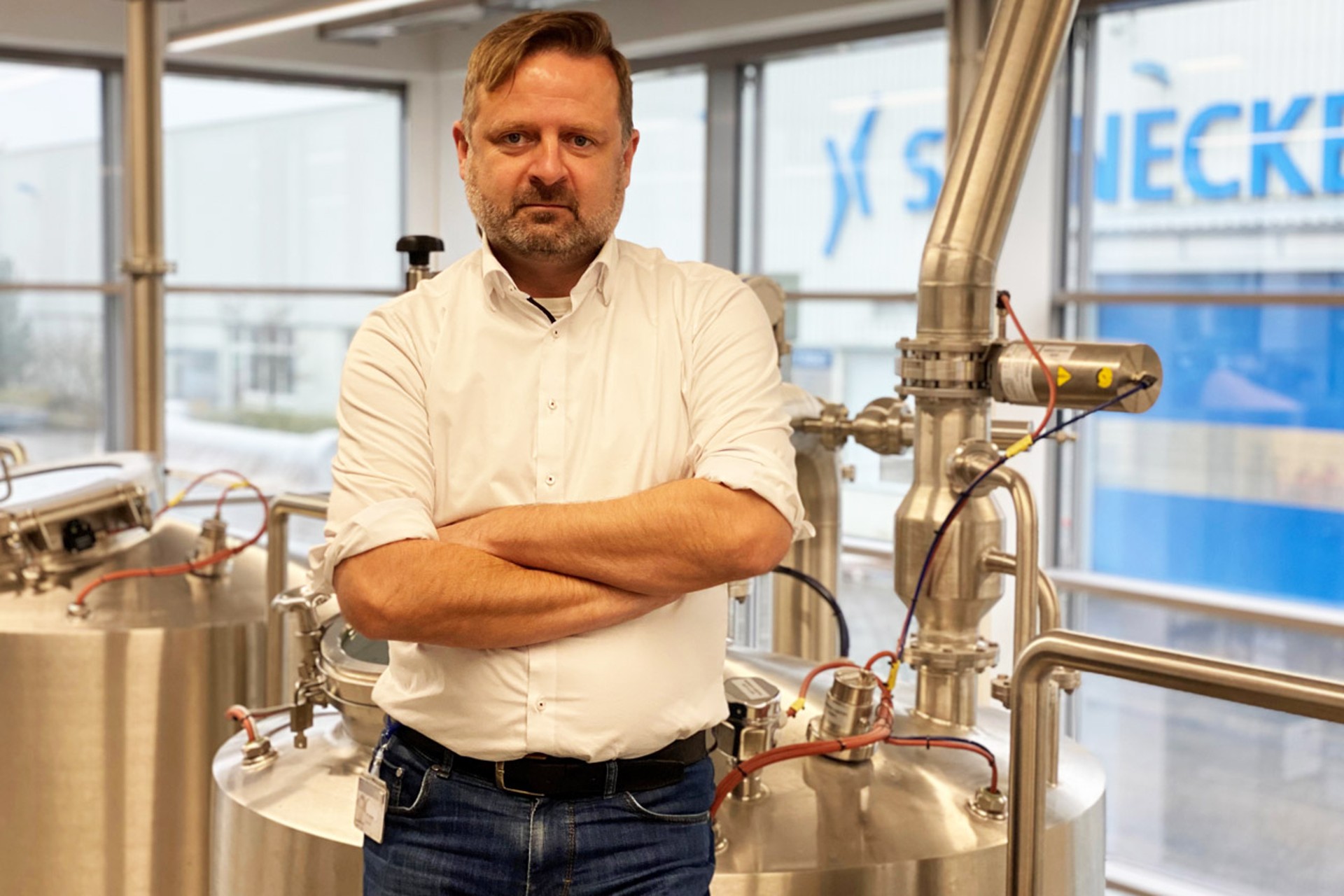
“The energy recovered can supply the entire mashing process and any excess of warm mash liquor be ruled out,” to quote Dr. Ralph Schneid, Head of Product Development at Steinecker. “This yields a significant improvement in the brewery’s energy and water utilisation balance.”
But EquiTherm offers significant advantages for the brewing process and the beer produced not only in regard to energy consumption but also in terms of technology. The beer has superior taste stability, thanks to the reduced thermal load on the mash. “The lower heating medium temperature not only reduces fouling on the heating surfaces, it also protects foam-improving protein fractions and causes less wort coloration,” explains Dr. Ralph Schneid.
Upgrade based on customer feedback
The basic concept behind the EquiTherm(opens external link in a new tab) system has not changed much since it was introduced. But it has been optimised (primarily in regard to controlling energy withdrawal from the storage tank) so as to increase the temperature level and thus the system’s efficiency. Customer feedback revealed not only reduced energy requirements but also significantly lower peak loads in the consumption of thermal and electrical energy. This means that retrofitting the EquiTherm in an existing brewhouse will perceptibly reduce the strain on the boiler and refrigeration systems. These systems can thus be much smaller in new projects.
Who will benefit from EquiTherm?
High CO2 and energy savings
The 50 EquiTherm systems currently in use at breweries all over the world(opens external link in a new tab) produce over 135 million hectolitres of cold wort per year on average. The amount of primary energy required for this was demonstrably reduced by 2.5 to 3.0 kilowatt-hours per hectolitre of cold wort. The result was impressive:
- Around 375 million kilowatt-hours of fossil-fuel-based energy were saved in ten years.
- CO2 emissions were reduced by more than 82,000 tons in the same period. That corresoponds to roughly the amount of CO2 emissions caused by an average passenger car on over 400 million kilometres.
Retrofit option
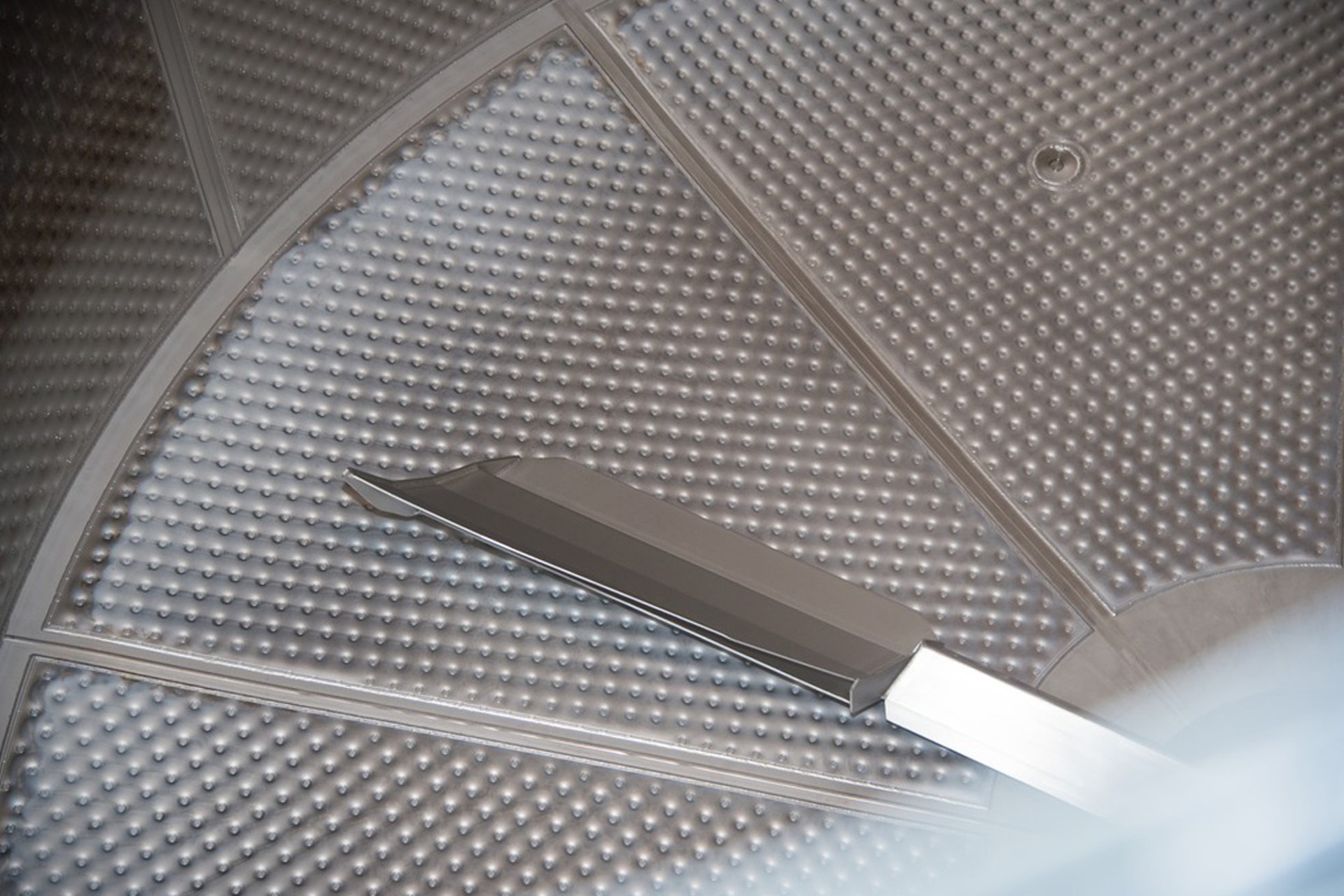
When a new brewery project is planned, EquiTherm(opens external link in a new tab) is dimensioned for the beer types it will help produce to optimum effect. But it can also be retrofitted to existing systems. The work and costs involved will depend primarily on the mash tuns installed, as Dr. Ralph Schneid explains: “EquiTherm needs heating surfaces in the mash tun that permit high heat transfer levels. This is why the heating surfaces ideally have a pillow-plate design, enabling water at 96 degrees Celsius to be used as the heating medium. Therefore, a new heating wall will be installed in most cases when the mash tuns are relatively old.”
But in new projects it is also possible to start off in the conventional way, using steam as the heating medium, and changing over to the EquiTherm system later on. The mash tuns can be designed as “EquiTherm ready”, meaning they are prepared for a subsequent change-over.
Visionary development
With their idea underlying the EquiTherm(opens external link in a new tab) concept, the brewing-technology experts at Steinecker(opens external link in a new tab) were well ahead of their time. Ever since 1998 when they developed the first major innovation in the field of sustainable brewing, the Merlin wort boiling system, resource-economical brewing has been a major factor in Steinecker’s product development work. Although back then the aspect of energy savings was significantly less omnipresent than it is today, the team at Steinecker has always given a lot of thought to how the brewing process could be rendered more energy-efficient – with great success: Today, Steinecker is able to meet the market’s requirements for resource-economical systems with tried-and-tested solutions that have been perfected in practical operation over the past few years. To quote Dr. Ralph Schneid: “The feedback we get from every EquiTherm system we sell benefits us because it helps us improve the system’s efficiency levels.”
Nobody will be able to ignore the issue of sustainability in the near future.

2010 saw the start of development work on the EquiTherm(opens external link in a new tab) energy recovery system, which is now a central part of Brewnomic(opens external link in a new tab) (read more in the info box on Brewnomic at the end of this article). In the meantime, Steinecker has received various energy prizes for its energy recovery system. What is more, many of the over 50 satisfied customers all over the world use “energy-efficient brewing” as a selling point to underline the sustainability principle behind their beer production.
“Nobody will be able to ignore the issue of sustainability in the near future, which is why every brewery should think about how to tackle it. Saving energy provides not only financial or marketing-related advantages but ultimately also benefits our natural environment. And it’s precisely here that we must take action today, so as to safeguard our planet’s future,” is how Dr. Ralph Schneid sums up the situation.
EquiTherm as part of the Brewnomic system
Brewnomic(opens external link in a new tab) is Steinecker’s latest triumph. It is basically the logical progression of the sustainability approach started with EquiTherm. The concept behind Brewnomic aims to ensure energy-self-sufficient, CO2-neutral beer production and comprises many different modules, which also bring about a host of improvements in terms of sustainable brewing when used as a stand-alone solution.