 Julia Leserer
Fill, cap and label on a footprint of just 155 square meters: The Dynafill Bloc FL is setting new standards for space savings, efficiency and energy consumption.
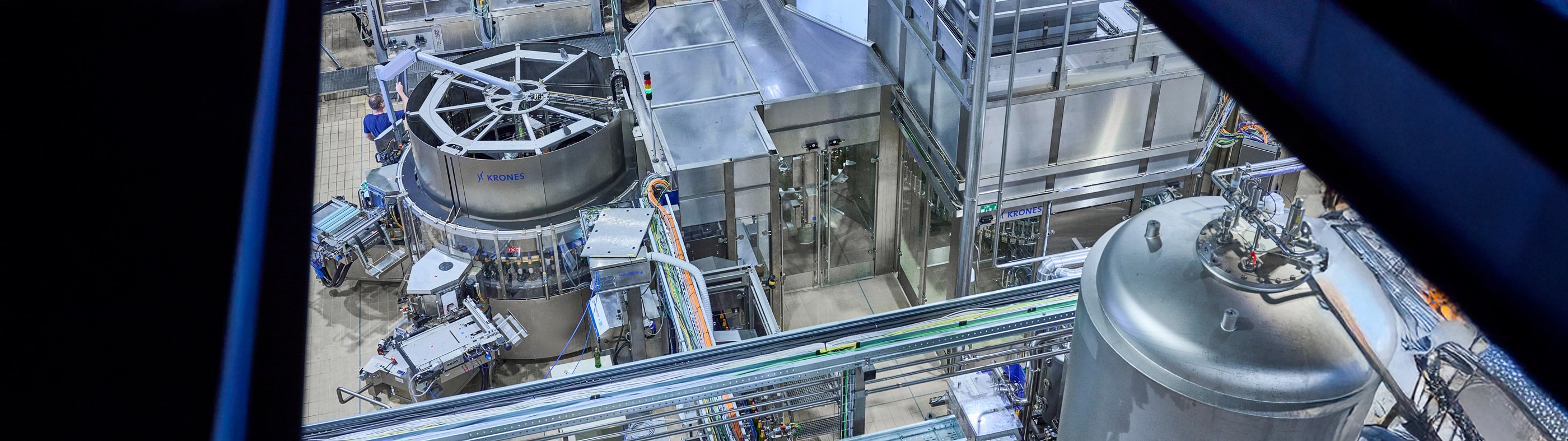
For many bottlers, space in the production hall is a luxury item. Now, Krones has developed a solution for breweries that can reduce the amount of space required for the filler and labeler by more than 60 percent: the Dynafill Bloc FL.
“We need a new line that can fill more bottles per hour – but on the same footprint as the old line. Can you help us with that?” Krones wouldn’t be Krones if we couldn’t come up with a good solution to this problem! We’ve got numerous block concepts – for cans and PET containers as well as for aseptic filling in particular – that allow beverage manufacturers to operate successfully in tight quarters. The latest addition to our block portfolio is designed specifically for breweries that fill their beer into glass bottles. It addresses two of the major concerns in the sector, delivering a solution for brewers who have limited space available and, at the same time, providing filling technology that sets the current industry standard for both engineering and energy efficiency.
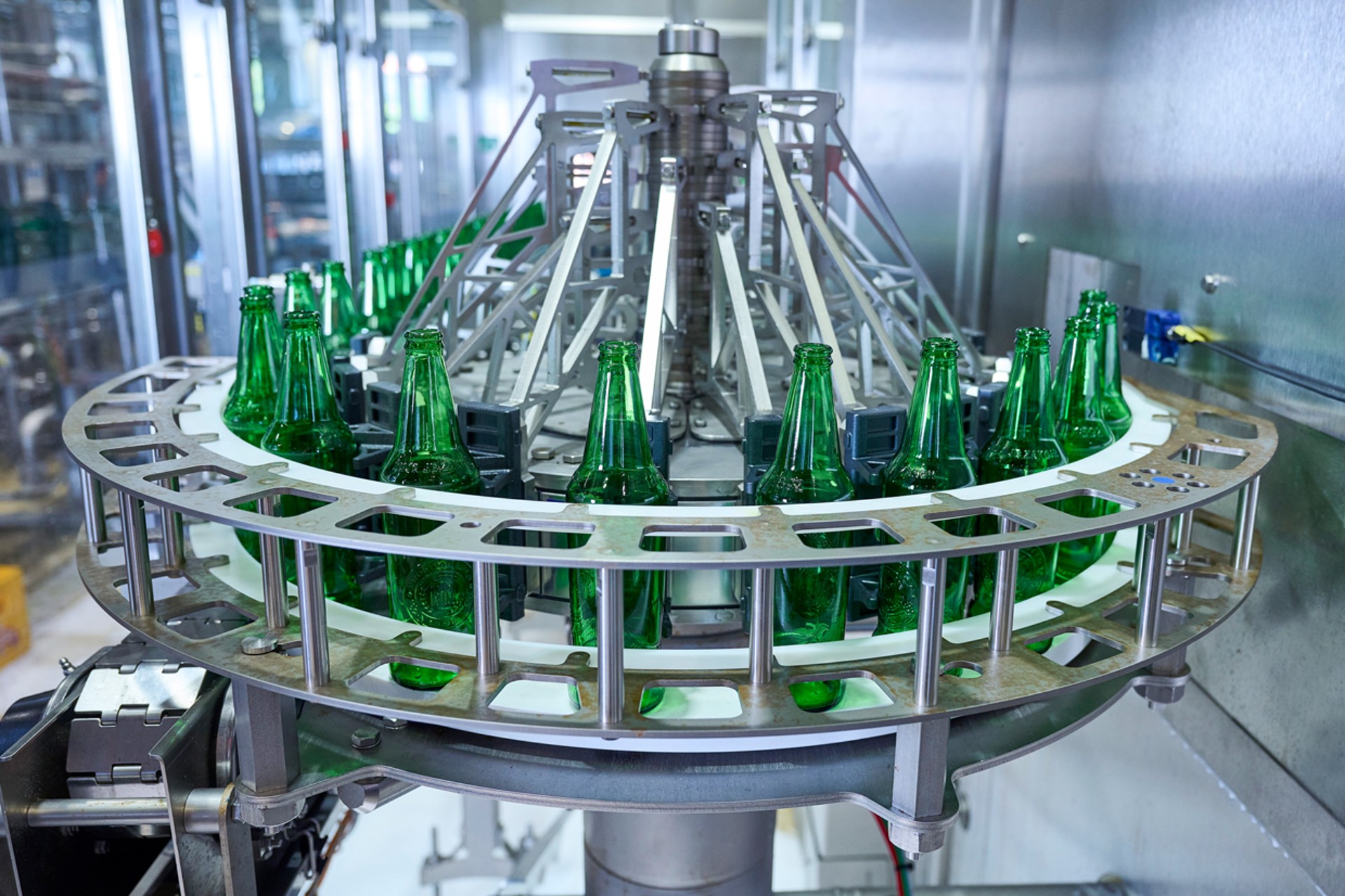
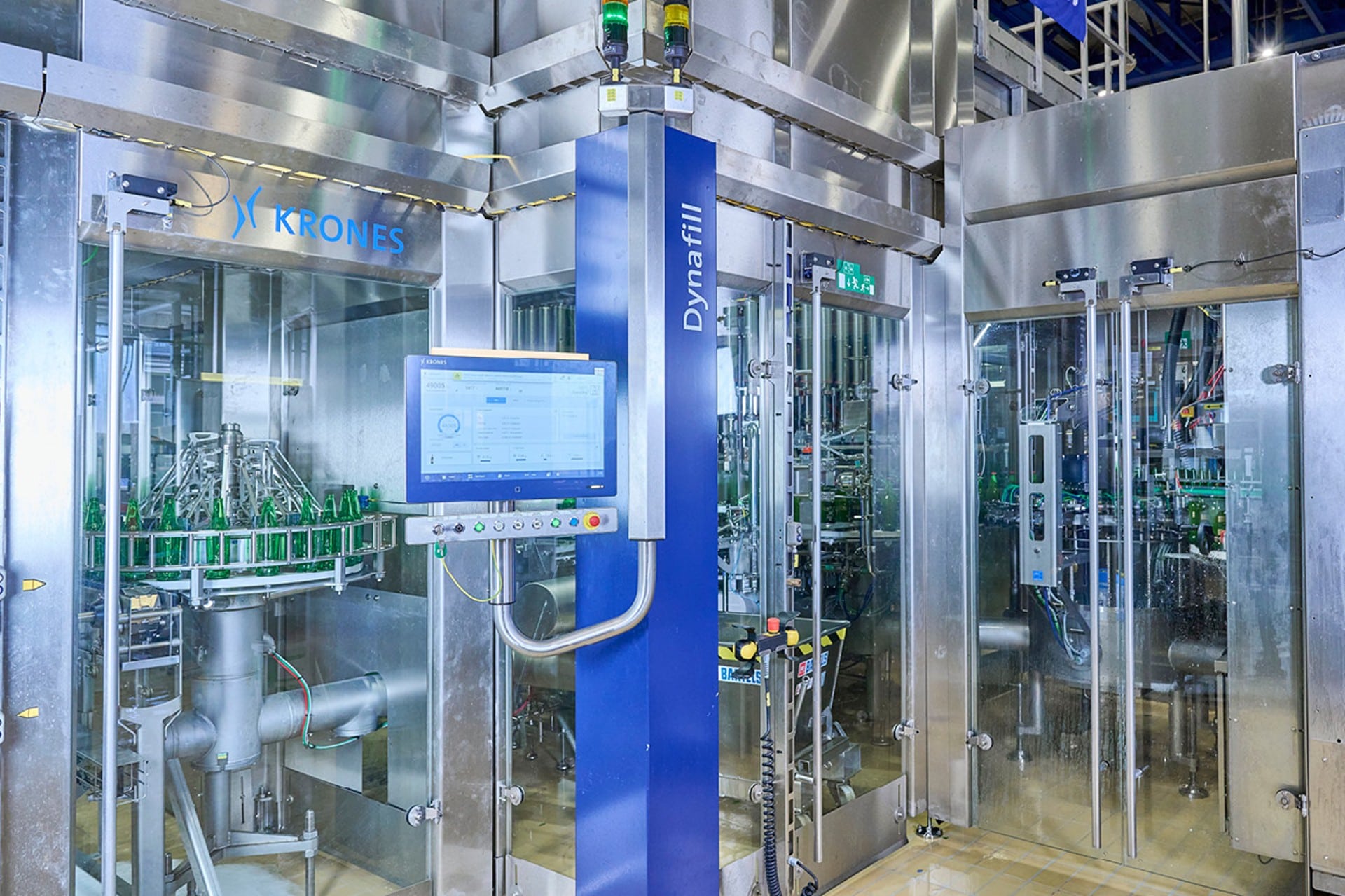
It’s called the Dynafill Bloc FL and comprises a Dynafill filler and a labeler such as an Ergomodul with cold-glue labeling stations. What makes this block ingenious is that the two machines aren’t connected in the usual way, through multiple transfer worms, but instead by a single, pitch-adjusting starwheel(download file). This starwheel can even out different machine pitches (from 87 to as much as 126 millimeters in both directions), allowing the filler and labeler to be set up as a block-synchronized unit.
No accumulation areas or emptying sections needed
The pitch-adjusting starwheel is an important element of the block concept, but it isn’t the only factor in accomplishing the enormous space savings compared with conventional lines. The Dynafill itself also plays a crucial role here.
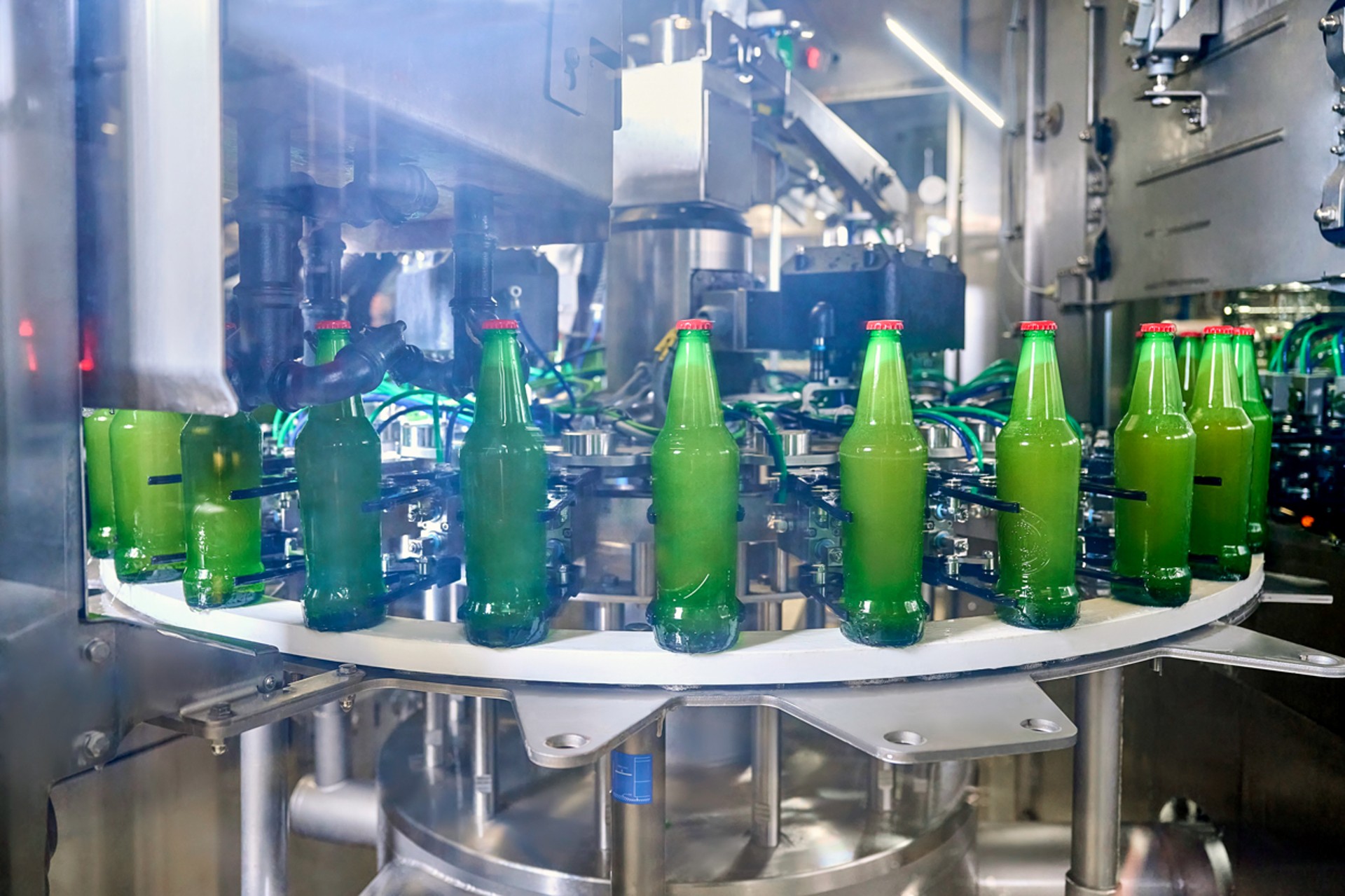
Because it combines the filling and capping process in a single unit, a separate capper is no longer needed – which eliminates an entire machine’s footprint. But that’s not all. Emptying sections also no longer have to be included in the line layout because there are no open bottles circulating that would still need to be closed in the event of a stoppage. Apart from the space savings, that also lends added security for the product itself since the oxygen content can be 100 percent controlled.
From a prototype to an established member of our portfolio
Krones first presented its idea of combining the filler and capper in a single unit at drinktec 2017. And since then, it has evolved from a development project to an established part of the filler portfolio. Whether for specialty breweries, tradition-steeped companies or big multinationals: The Dynafill is a great fit for all bottlers who prioritize maximum product quality and at the same time have the courage to try a completely novel filling principle and machine concept.
Warm filling – on a compact footprint
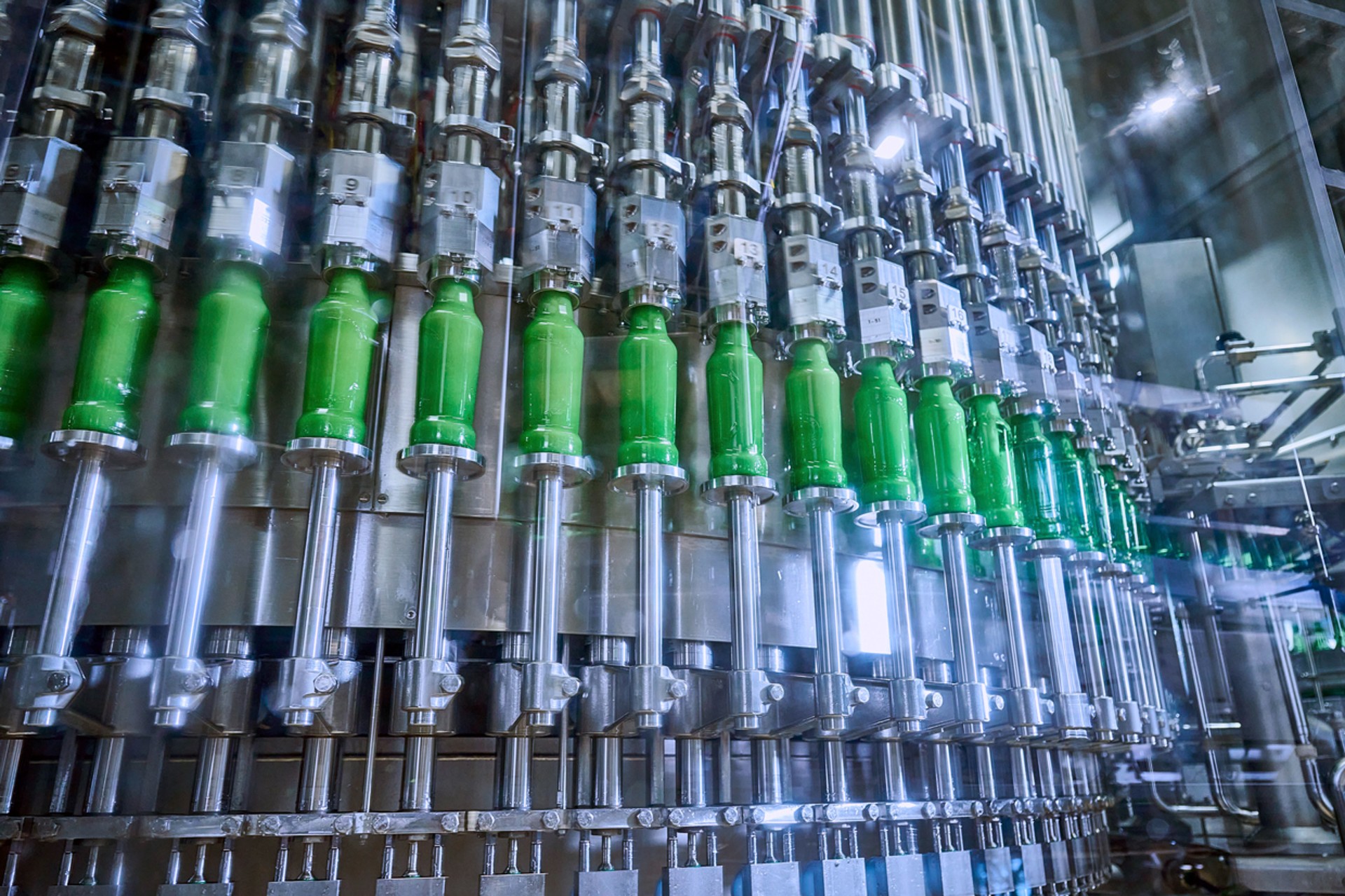
Dynafill has a third major advantage besides space savings and product quality. And this one is a hot topic for many breweries: the ability to achieve sustainable production. That’s because the Dynafill enables warm filling, at up to 30 °C (at a maximum filling pressure of 5 bars) – without compromising on product quality, of course. With the vacuum filling process, the higher temperature has almost no bearing on the size of the filler or the number of valves. With a rated output of, say, 36,000 containers per hour, that means 66 filling valves on the Dynafill versus 120 on a conventional filler.
Looking at the entire line, then, warm filling makes sense not only from an energy-efficiency perspective but also in terms of space requirements. When cold filling in a space with a high ambient temperature, a tunnel heater is needed in order to prevent condensation forming on the filled bottles. By contrast, when warm filling on the Dynafill, bottlers can either dispense with this step entirely or at the very least significantly reduce the amount of energy required for it.
Space savings of more than 60 percent
But let’s return to the Dynafill Bloc FL and take a closer look at its footprint. Where a conventional layout of a filler, capper and labeler would occupy 405 square meters of floor space, this new block concept fits on just 155 square meters. That translates to savings of more than 60 percent – with the same rated speed of 60,000 glass bottles per hour.
That makes the Dynafill Bloc FL the ideal solution for any brewery wanting state-of-the-art technology and sustainable production – in a line that can easily be accommodated in a hall with limited space.
In field testing: Long-stator linear motor for even greater space savings
It’s possible to save even more space by integrating an infeed starwheel with long-stator linear motor technology(download file). In the future, this new, highly flexible concept will replace the customary worm-based infeed and the associated accumulation area. That is because the long-stator linear motor modules make it possible to regulate the flow of containers on the conveyors and in the machine’s infeed synchronously. Besides eliminating even more conveyors, using this concept also means far less shocks to the bottles in the area susceptible to backup pressure, which in turn results in less damage to the bottle surface and considerably lower noise levels in the production hall.