
 Pia Brunsch
More than 200 product variants, eight formats, and flexible change-overs between returnable and non-returnable containers. At Rauch, all of that works fine on a single line.
In the middle of Austria’s picturesque Vorarlberg region, the juice specialist Rauch made a wish come true, installing a modern, ultra-flexible glass line in Rankweil, the place where the company was founded. There were two challenges to overcome: a long list of requirements posed for the glass line combining returnables and non-returnables processing and the fact that space was extremely limited. So clearly nothing that can’t be solved in a close partnership based on mutual trust.
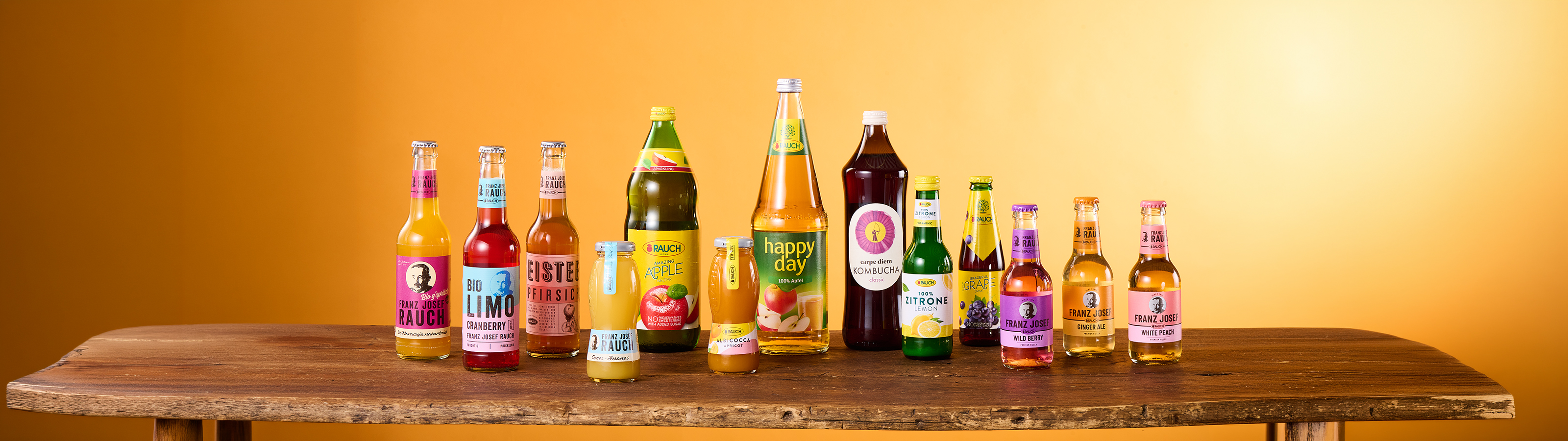
“Fruit, family and nature. Since 1919.” That is the tagline the family-managed RAUCH company uses for marketing its diverse range of beverages in what are meanwhile more than 100 countries all around the world. Rauch has 16 production facilities and eight branch offices in Europe and the USA and fills its drinks into glass bottles, cans, PET bottles and beverage cartons. What’s special is that all drinks in glass bottles come from company headquarters in Rankweil, Austria.
Since the existing glass line that had been up and running there for 30 years already was no longer able to keep up with the growing levels of production and international expansion, the time had come to increase and update its capacities. The company opted for a new Krones turnkey line rated at 45,000 bottles per hour while also taking the strategic decision to keep Rankweil as its glass bottling centre, not only to reaffirm their local roots but also because the town right in the centre of Europe has favourable logistical connections.
As to flexibility: “nothing left to be desired”
When the brownfield project in Rankweil was green-lighted in 2024, one thing was clear: It wasn’t going to be easy. Rauch wanted to complement the existing glass processing equipment with an additional line that, like the first one, could fill the company’s entire product portfolio into glass bottles: a huge number of juices, iced teas, mixer drinks like ginger ale and tonic water, lemonades and other carbonated soft drinks. The formats used range from the traditional 0.2-litre juice bottle and long-neck bottles holding 0.2 and 0.33 litres right through to a 1.0-litre bottle, with closures including crowns, twist-off caps and aluminium roll-on caps.
To top it all, Rauch wanted to produce both returnable and non-returnable goods on the new line: single-use cartons largely intended for worldwide export and returnable crates primarily for customers in the markets of Austria, Germany, Switzerland and parts of Italy and France. And all of these requirements were to be met in a brownfield project for which only limited space was available.
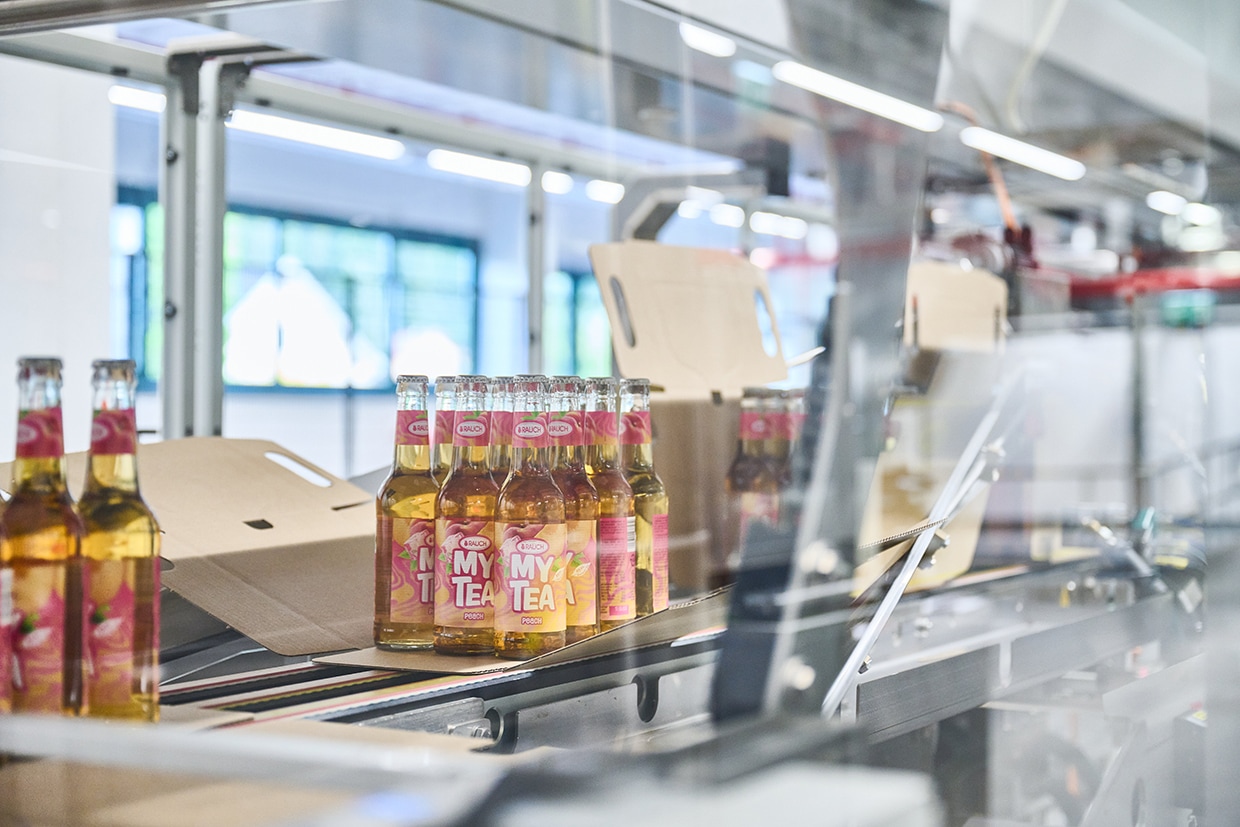
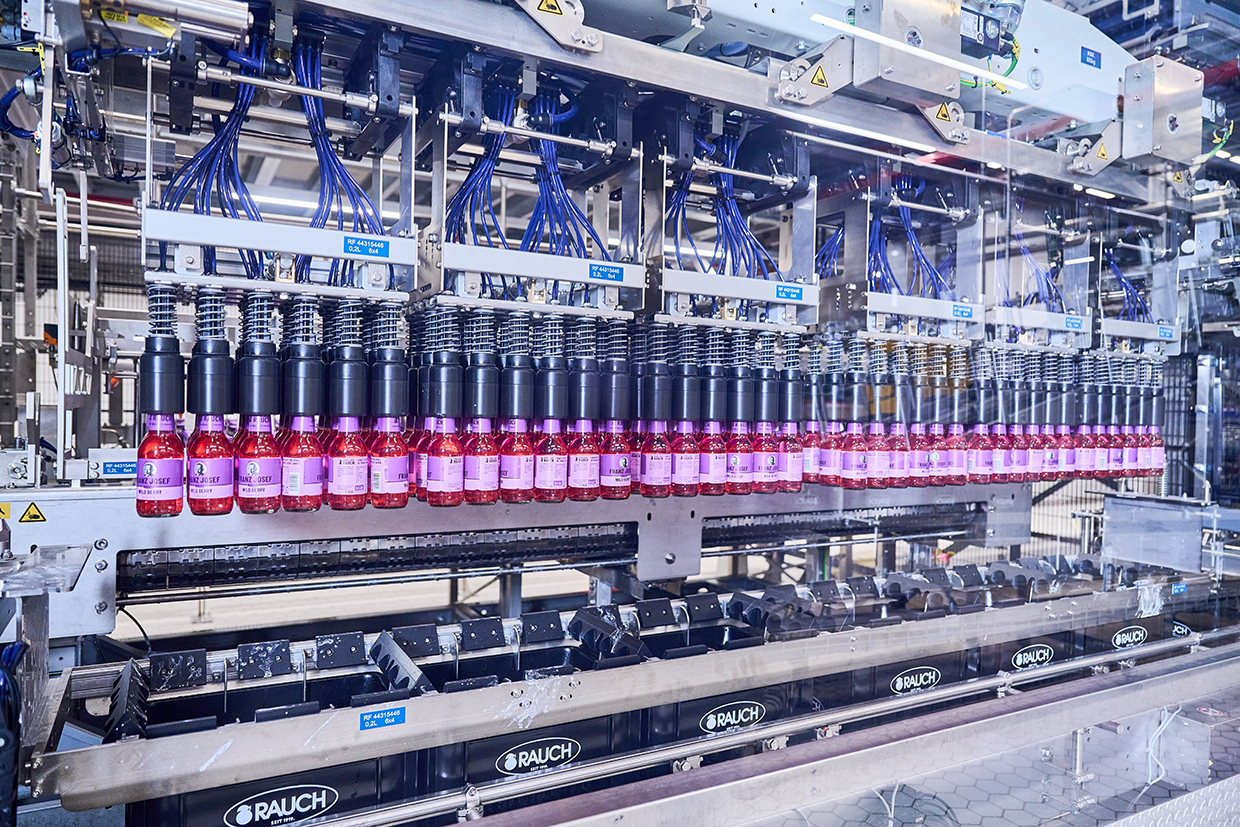
Adding to the complexity were the sometimes very small batch sizes of only about 1,500 wholesale units: “Many producers feed their crates into the system at the beginning of the week, fill their bottles with product, and run the line empty at the end of the week. We have to change over our lines several times throughout the day, especially with juices where many different types are filled on the same day. What’s more, we alternate between returnables and non-returnables at regular intervals,” explains Sandro Vonbank, the project manager at Rauch.
“Rauch is innovation and tradition united under one roof. That’s our recipe for success: While relying on our field-proven quality products, we also try new things – firstly to keep up with market trends, and secondly because we want to help shape them as an industry leader. Flexibility is vital in this context – and Krones has really made every one of our wishes come true. The kit has been meticulously customised and tailored to the way we’re working here,” is how Adrian Dauti, Department Head Bottling at Rauch, describes the requirements posed for the line. The result is an integrated system to the latest state of the art that is both ultra-flexible and compact. It is installed on two levels and perfectly equipped to cope with frequent change-overs to a different product type, format and/or package.
Planning work was heavy going
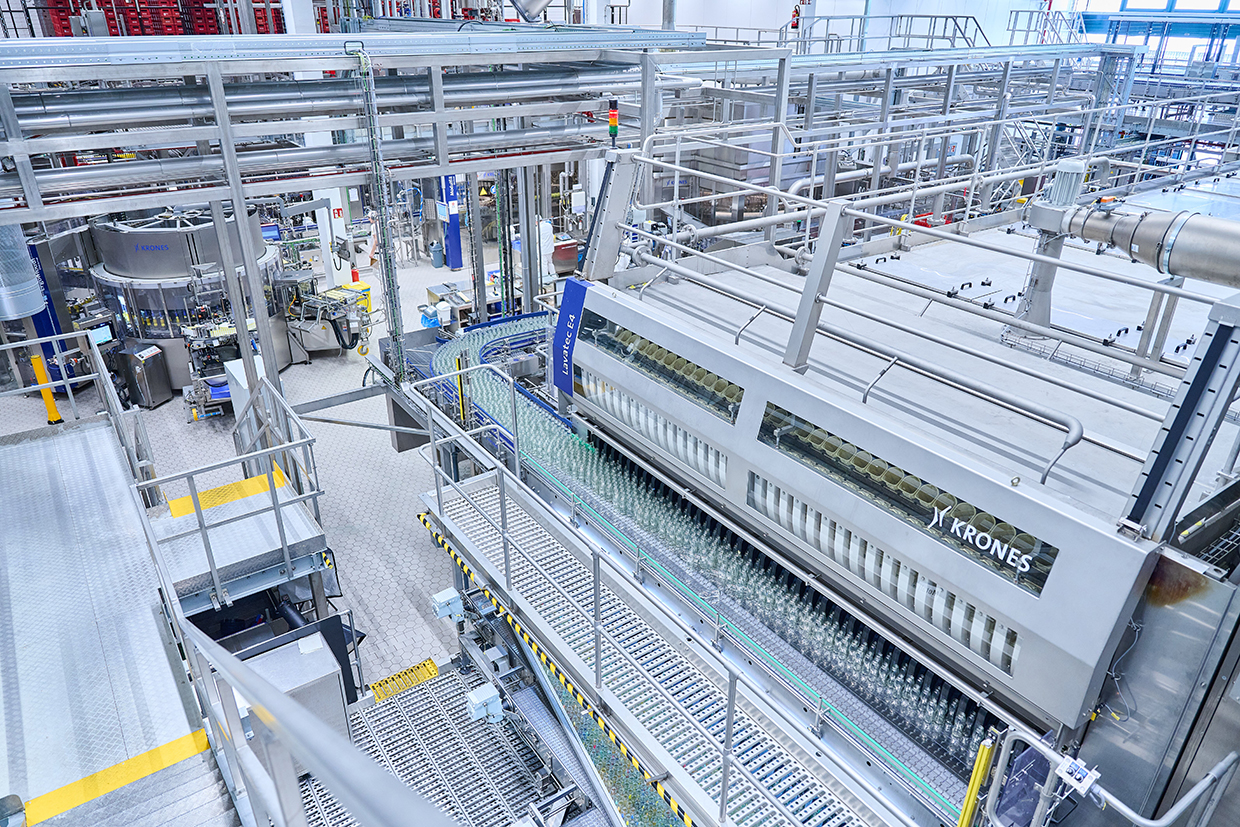
What used to be a warehouse hall was the starting point for planning. Like a jigsaw puzzle where you start by putting together the frame and then fill in the pieces in the middle, the line was designed piece by piece to fit into the hall in accordance with the requirements posed by Rauch. Conditions inside and outside the hall had to be factored in because the company’s main plant is located right in the centre of Rankweil. So, for example, the adjacent rapid-transit route had to be temporarily shut down when the equipment was brought into the hall.
“We put a lot of work into layout planning,” confirms Sandro Vonbank. “The trickiest challenge in this project was to create a layout providing not only enough room for everything but also good accessibility for the operators. And as I see it, together with Krones we’ve done really well here.” As an example, he outlines how the line’s “dirty” part has been separated from its “clean” section: “The line has been neatly arranged. The area where the returnables are fed in has been expertly separated from the finished-goods zone – even though the two areas are directly next to each other. Even the wastewater plan is based on a well-thought-out concept that, despite the close proximity between the two parts, prevents water splashing over into the clean section when the dirty zone is being cleaned.”
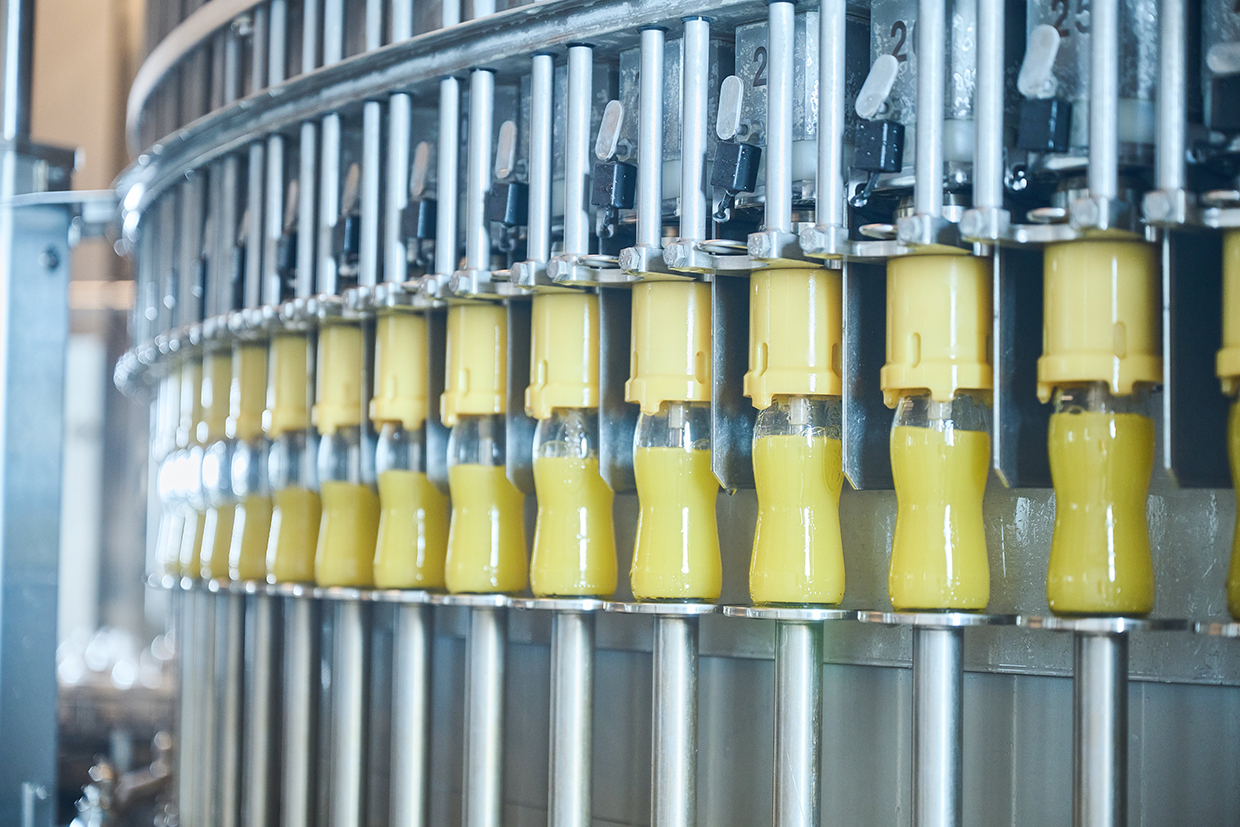
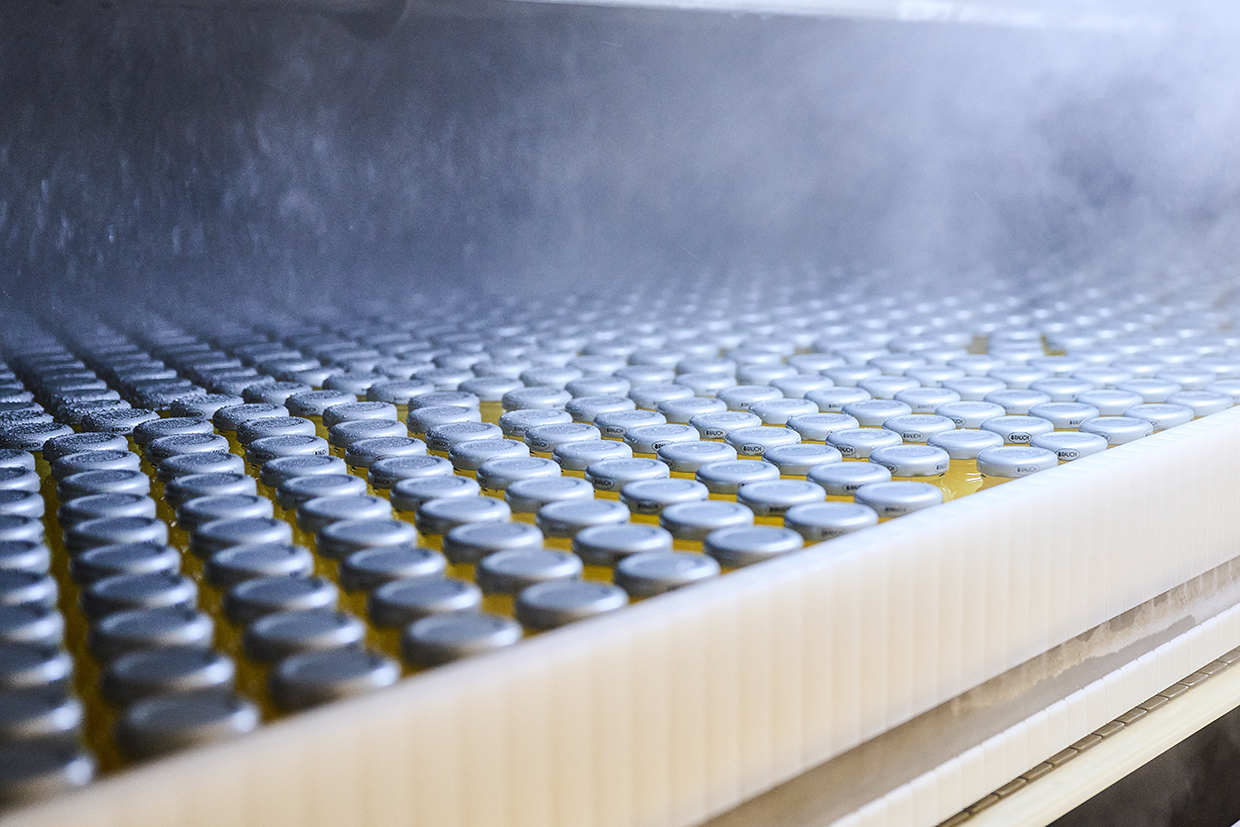
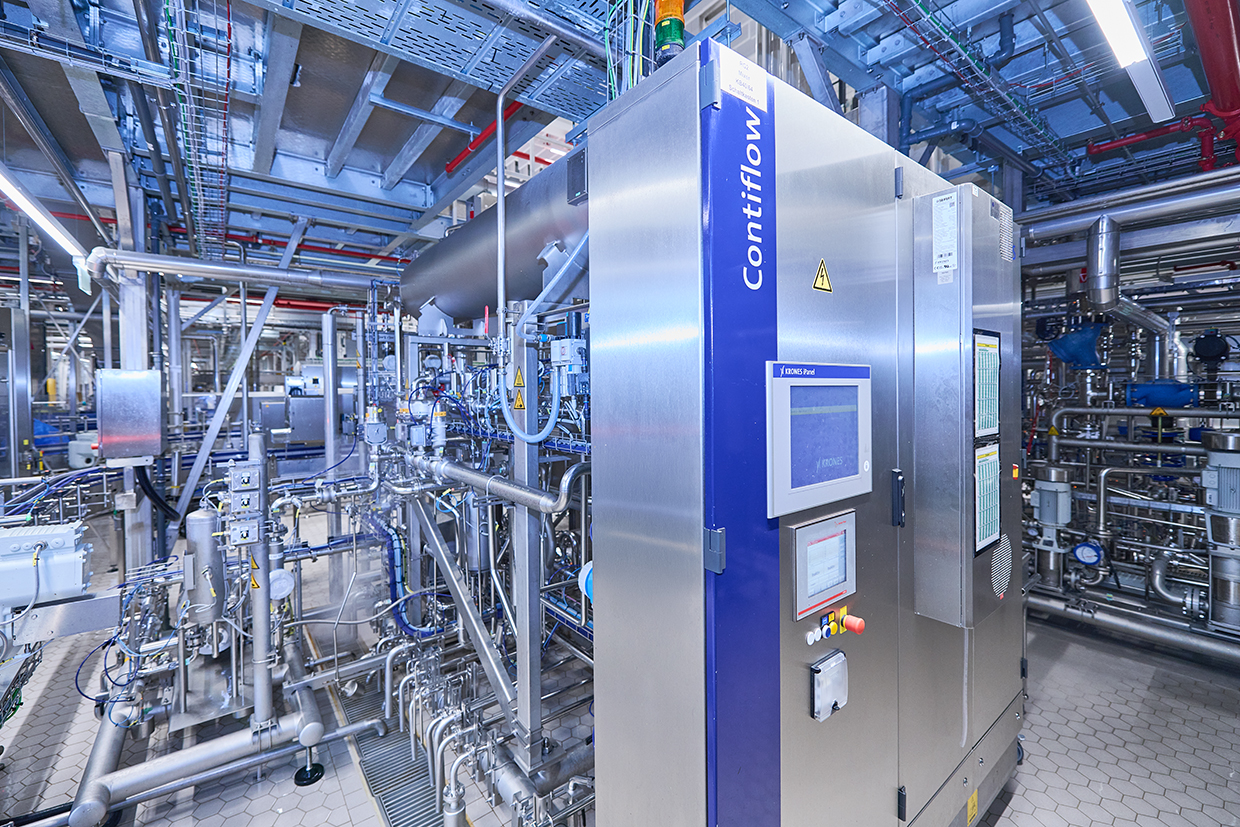
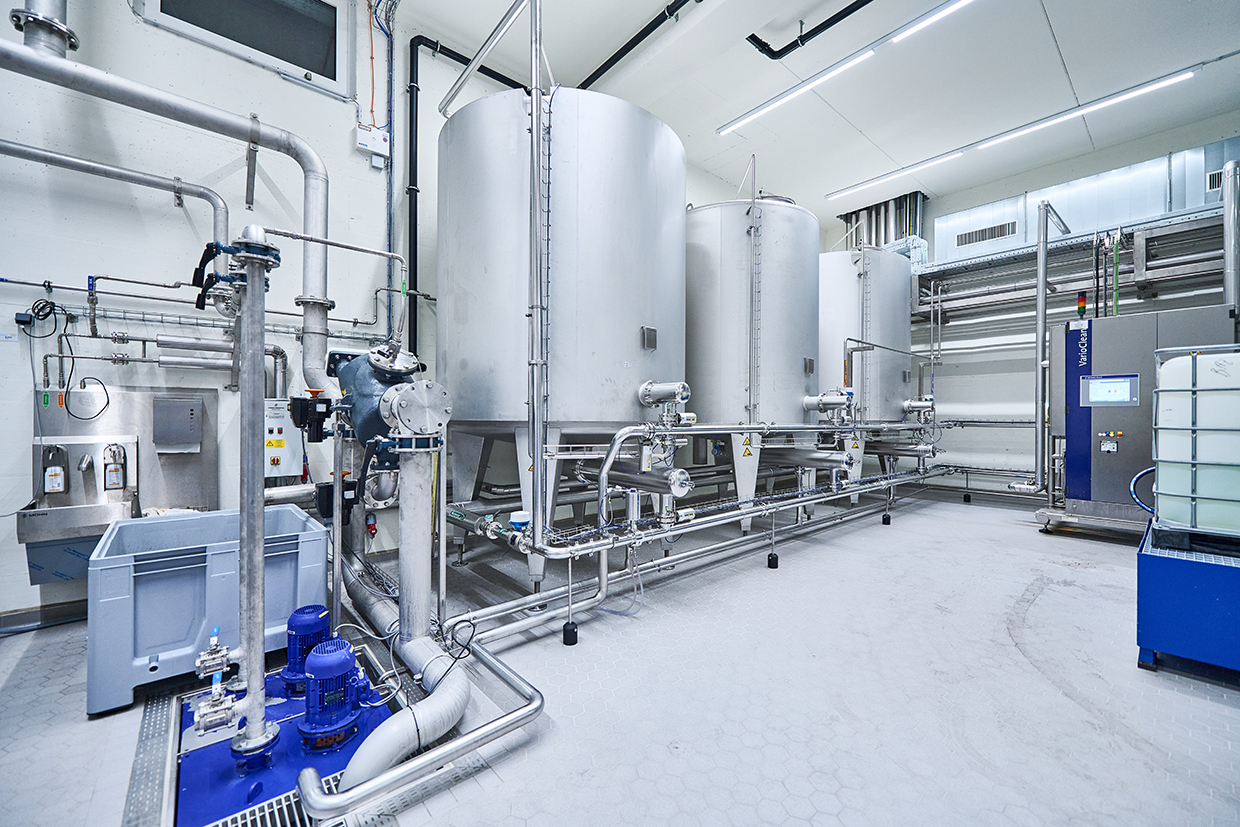
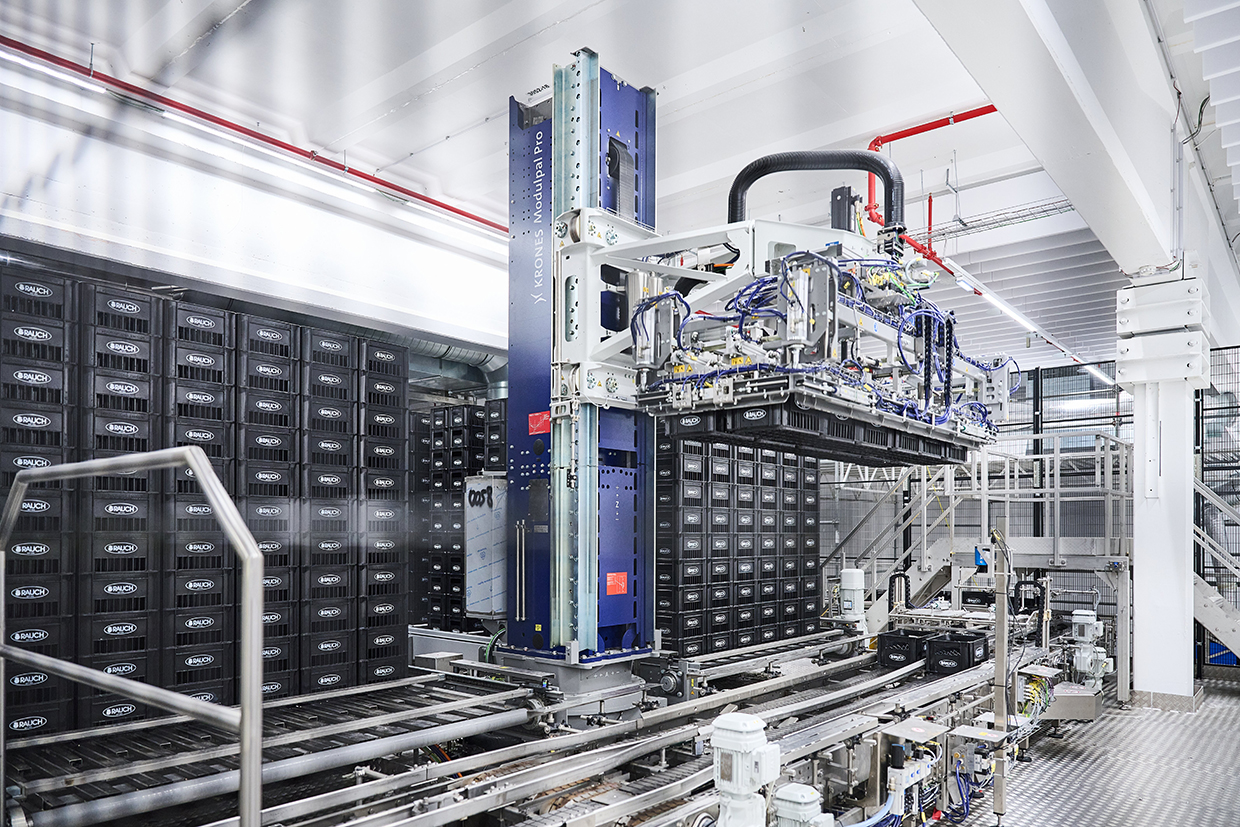
The integrated crate store is yet another example of the teams’ excellent planning. The fact that in its production Rauch alternates between returnables and non-returnables processing at regular intervals gave rise to a somewhat unusual wish: to incorporate a large crate store right in the middle of the line, which is fed by two Modulpal Pro palletiser robots and offers space for up to 5,000 crates. “We were fully aware that this request is rather exotic these days, also and especially in view of the limited space available. But we’re really glad that we opted for it and that the Krones design engineers were actually able to make our wish come true.” Thanks to the integrated store, the crates can remain in the line and are always available for short-notice change-overs.
The requirements for tomorrow’s flexibility have already been factored in, too, not least in the design of the Variopac Pro non-returnables packer handling wrap-around cartons and trays: The handling parts needed for the many different bottle formats are likewise stored in the line directly next to the machine, so they are ready at hand for format change-overs. And it’s precisely here that the innovation-embracing team from Rankweiler included additional storage space for future products right from the start. In the end, all the time and effort that the teams of both companies devoted to planning the new line paid off: When the line was commissioned in 2025, everything went like clockwork.
Quality in and around the bottles
Producing delicious drinks calls for top-quality ingredients. In order to give its traditional juices their rich, mellow taste, Rauch processes only sun-ripened fruit, which is made into semi-finished products like frozen fruit puree or concentrate in its country of origin and then delivered to the plant in Rankweil. Not only is this option more sustainable because it’s just the fruit’s usable parts that are shipped. It also means the fruit is not harvested until it is fully ripe, which allows its taste to unfold to perfection. For iced teas, on the other hand, exclusively freshly brewed tea from rose hips, green or black tea leaves is used. No chance of finding any instant powder here.
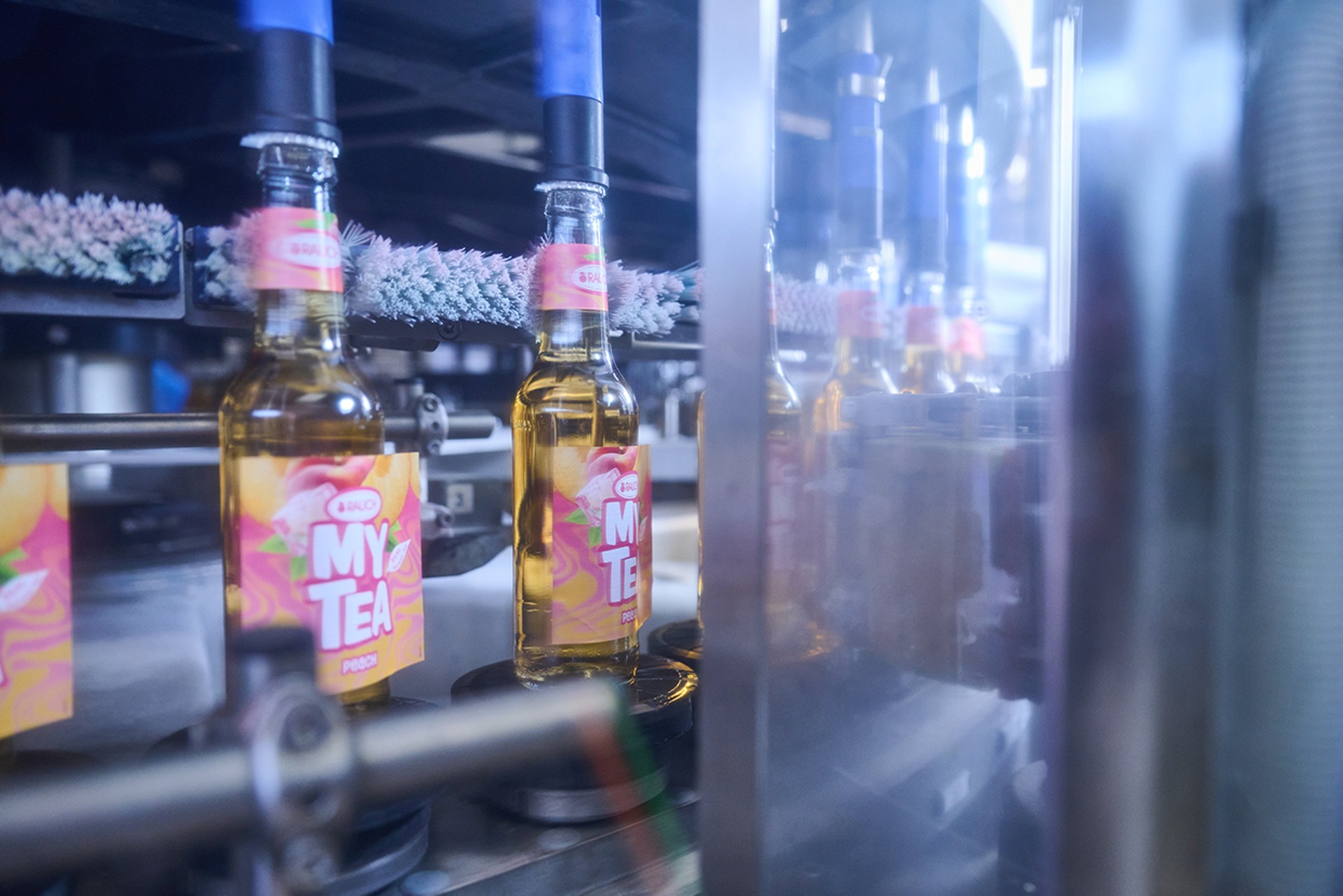
In order to make sure this top quality actually reaches the consumers, Rauch has opted for inspection technology from Krones to the latest state of the art: The Linatronic AI empty-bottle inspector scores highly with its precise AI functionality while the Linatronic 774-X full-bottle inspector uses X-rays. “It really detects each and every thing. We’ve meanwhile tested this machine with a huge number of specially prepared bottles, and nothing has so far escaped its eagle eye,” says Adrian Dauti.
The team in Rankweil apply the same exacting quality standards set for their products to their packaging as well. “It’s true, we at Rauch are sometimes perhaps a bit detail-obsessed. And that is quite obvious even on our labels,” admits Adrian Dauti with a wry grin, inviting us to look at the new “Franz Josef Rauch” premium series.
But that is no problem for the Ergomodul labeller installed, as Dauti points out: “We have very many different types of labels for dressing a huge number of different formats and had a clear vision of what our finished products should look like. And honestly, we were truly thrilled when we saw how the Krones machine invariably applies each of those labels to the disparate bottle formats with utmost precision – even at top speed. That Ergomodul is the highlight of the line for me.”
Reaching our goals together
Right from the start, Rauch knew one thing for sure: For such an extensive project, it was imperative to place the order for the line with a general contractor who can draw upon a rich fund of expertise in returnables processing – and that was precisely where Krones scored. Sandro Vonbank explains: “In view of the line’s overall complexity, we wanted to minimise the number of suppliers. And as far as Krones was concerned, we knew that the company not only covers a wide spectrum but also possesses the know-how we were looking for, not least in the field of returnables. We couldn’t help but notice that each and every one in their team is a true professional, starting with the project managers and sales people and going right through to the planning and technology experts. We were always able to discuss everything with Krones and therefore managed to make sure all the tiny details intermesh like gearwheels, even though this brownfield project was quite a challenge due to the limited space available.”
Experience, however, is only one side of the coin – good teamwork is yet another key factor, as Adrian Dauti recalls: “Throughout the entire project, we felt we were in very good hands. If there was a challenge, we addressed it and joined forces to focus on finding a solution to the problem. Our teams always liaised closely and in the end met every single deadline. I can honestly say: It’s been great working with Krones!”