
 Manfred Kaiser
The Belgian specialty brewery De Halve Maan has more than doubled its filling capacity with a new returnable-glass line from Krones.
With double-digit annual sales growth – from zero to 65,000 hectoliters in 15 years – and growing international demand, it was only a matter of time before the Belgian specialty brewery De Halve Maan would need a new filling line with higher speeds and more packaging flexibility. And now, that time has come: The company, whose name translates as “Half Moon” in English, has installed a new line from Krones.
Officially speaking, Xavier Vanneste is the sixth-generation head of De Halve Maan brewery in Bruges, Belgium. But that line has been broken a time or two. In fact, things have, on more than one occasion, looked rather bleak for the family-owned business. Xavier Vanneste’s grandfather sold the brewery’s most successful brand, Straffe Hendrik, to another brewery back in 1988. (Incidentally, the name means “Strong Hendrik” in English and was a tribute to all the strong Hendriks and Henris in the family). And then Xavier Vanneste’s mom shut down the brewery operation altogether in 2002. But Xavier Vanneste wanted to brew beer again, as five generations before him had done since 1856. The historic building and the old equipment were still there. “At first, my family was not at all enthusiastic about my plans to revive the brewery, because they knew how tough the business is,” he confides. “But it wasn’t all bad to have critical voices like that, to guide me as I developed my business plan. Of course, my family also knew the industry, and that is always good.”
Brewery revived in 2005
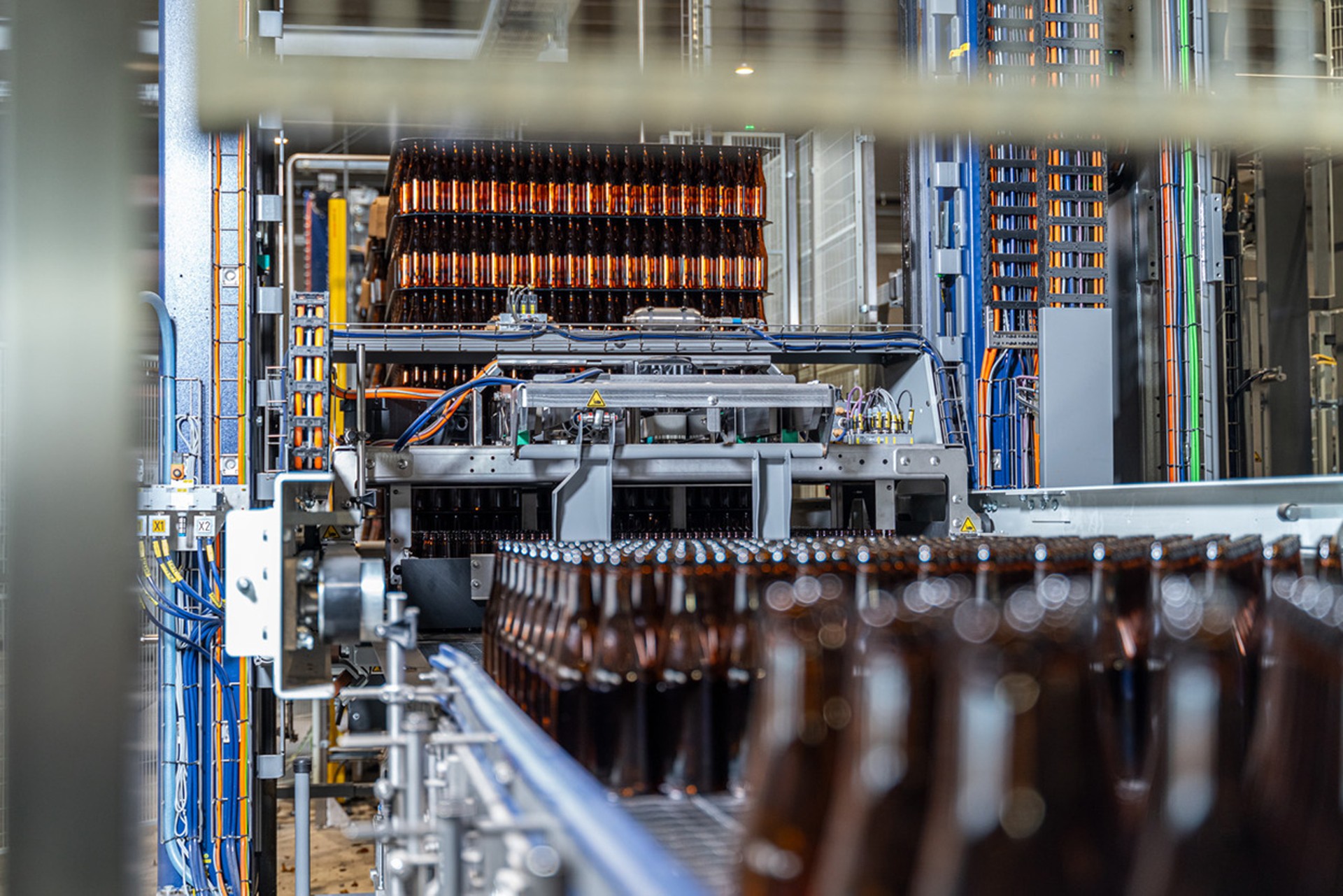
For the brewery’s relaunch, Xavier Vanneste developed the Brugse Zot (“The fool of Bruges”) in 2005, which was an immediate success. Today, it is the most recognized beer from De Halve Maan and is available in four varieties, including a non-alcoholic version. Around 70 percent of the brewery’s output falls under this brand.
In the meantime, the brewery that had acquired the Straffe Hendrik brand back in 1988 had gone bankrupt, and Xavier Vanneste was able to buy back the rights to the name in 2008. De Halve Maan now produces a variety of high-strength beers with as much as 8.5 to 11 percent alcohol by volume under the Straffe Hendrik moniker. In addition, the brewery acquired Bruges’ traditional wheat beer brand, Blanche de Bruges, in 2019.
In all, De Halve Maan now produces around ten different top-fermented beers, which are then bottle-conditioned – in typical Belgian style. For this latter process, a small amount of sugar is added during the filtration stage, after which the beer is flash pasteurized and dosed with yeast inline. The filled bottles are stored for two weeks in a warming chamber, during which time the beer undergoes a secondary fermentation. After that, the beer is ready to make its way to market.
CombiCube brewhouse in the historic brewery
By 2010, the brewery had increased its output substantially, to around 15,000 hectoliters, and outgrown the space in the old city center of Bruges. So, the decision was made to move filling operations and the storage cellar to a new building on the outskirts of the city. De Halve Maan also installed a kegging line and a second-hand Krones glass filling line there, rounding out the latter with various Kosme(opens external link in a new tab) machines. Tank trucks shuttled the green beer from the brewery site, where the brewhouse and fermentation tanks stood, through the entire city to the storage and filling plant. That all changed in 2016, when the brewery, whose annual output had by then climbed to around 50,000 hectoliters, made the spectacular move of having an underground pipeline laid between the brewery and the bottling plant, with a length of more than three kilometers.
The pipeline consists of four pipes, which carry all of the beers to the filling plant. The brewing water travels to the brewery through the same pipeline. Back in 2014, De Halve Maan had already brought online a new brewhouse, a Steinecker CombiCube(opens external link in a new tab) with a capacity of 200,000 hectoliters per year so that the company would be equipped to handle higher capacity needs in the future.
“Long and interesting conversations with many people”
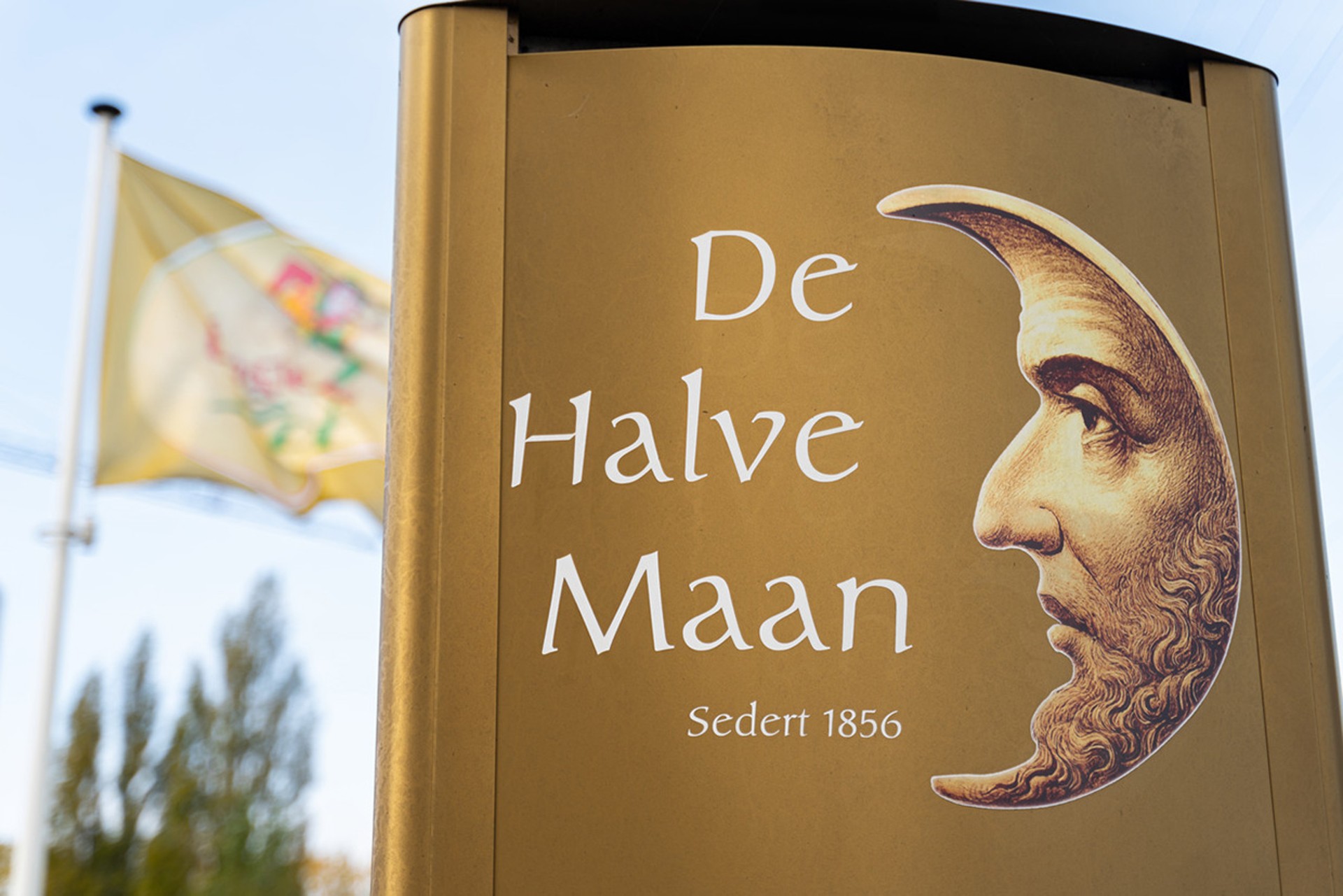
Rising demand for the specialty beers soon pushed the 8,000-bottle-per-hour filling line to its limits. “It was already running 24/7, with three shifts a day. And so began a series of visits to other breweries and long, interesting musings and conversations with many people, about what to do next, which technologies were the right ones, and which partners we should choose,” recalls Xavier Vanneste. “That was over a period of four to five years, because we also still had to buy the land adjacent to the existing filling plant.” In the end, the family-owned brewery decided to invest in new equipment, for which it also built a second filling hall. The new hall has room for the kegging line as well as a new bottling line rated at 24,000 0.33-liter containers per hour. With its commissioning in May 2021, this line replaced the existing one and significantly increased capacity at the same time. Once again, the contract went to Krones.
Rinser-filler block with minimal oxygen uptake
The new line’s wet end includes:
- Sekamat container sorter
- Lavatec E3 single-end bottle washer
- Linatronic empty-bottle inspector
- Rinser-filler block with Moduljet and Modulfill HES
- Ergomodul modular labeler
The rinser-filler block is enclosed in a housing and employs a foam cleaning routine. After filling, a few drops of hot water are injected into the bottle. The temperature difference causes the beer to fob. The rising foam displaces the air present in the bottle’s headspace, and the bottle is capped immediately. Thus, the beer’s own tendency toward fobbing is used to minimize oxygen pick-up. In addition to the crowner, the line also has a stand-alone champagne corker for natural cork, with wire cage applicator, for 0.75-liter bottles. The Ergomodul modular labeler can handle both cold-glue and pressure-sensitive labels.
Versatile Varioline
At work at the start of the dry end are a Modulpal Pro 2A depalletizer with high-level discharge, a Pressant Universal 1N sweep-off depalletizer, and a Smartpac unpacker.
For packing the filled bottles, the kit includes a Varioline 3M packaging system with a Variocol carton sealer. A Modulpal Pro 3AR places the finished packs on pallets.
The three modules of the Varioline accommodate a wide variety of packaging options, including:
- Packing loose 0.33 and 0.25-liter glass bottles into crates or cartons
- Packing 0.75-liter bottles into crates or cartons that are then sealed by the Variocol
- Adding Sunshields to crates
- Applying neck clips
- Producing clusters of 4 or 6 “over-the-top-closed” packs and packing them into cartons or crates
“This Varioline provides exceptional flexibility. It allows us to produce a wide range of packs,” says Bernard Degroote, who is responsible for production planning. “It’s a beautiful sight to see the Varioline in action. Of course, it requires a certain level of knowledge on the part of the operator. That’s why it’s important to me that our staff has the training they need – and we get that from Krones Belgium.”
In all, the brewery plans to produce more than 50 SKUs (Stock Keeping Units). The Varioline is also essential because around 40 percent of De Halve Maan beer is now sold internationally, primarily in Western Europe but also across the globe in Mexico, Brazil, and China. “That means we need a highly versatile system that can handle the widest imaginable range of packaging options. Belgian beer is known the world over. That’s our advantage when it comes to exports,” says Xavier Vanneste.
This Varioline provides exceptional flexibility. It allows us to produce a wide range of packs.

“In the end, it was easy to choose Krones”
Thanks to the increased capacity, the company is able to stick to a single production shift on the line. The brewery fills around 65,000 hectoliters a year, about one-third of which goes into bottles. Because De Halve Maan is able to run relatively large batches, changeovers are necessary only three to five times a week.
“Installation of the entire line went very smoothly to my mind,” says Bernard Degroote. “Krones sent a large team that really did their best all along to integrate our operators and teach them about how the line works.” As the person responsible for production planning for filling, Degroote was also involved in awarding the contract. “We looked at several reference lines from various manufacturers. Since we had already had a positive experience with the first glass line from Krones and the brewhouse, and because it seemed that Krones had installed the majority of lines of this magnitude in Belgium, the decision was easy in the end,” he explains. Brewmaster Frederik Verstringe gets more specific: “As we see it, Krones offered the best cost-benefit ratio and strong service in Belgium since there are already so many Krones lines running here.” De Halve Maan also signed a seven-year service agreement with Krones to ensure that maintenance needs are covered.
As we see it, Krones offered the best cost-benefit ratio.

“It was a nice team”
Xavier Vanneste has good things to say about the collaboration: “Krones is very professional. They’re the experts when it comes to turnkey lines. They know what they’re doing.” He adds, “It was a nice team. The human factor invariably plays an important role. Of course there were challenges – that’s sort of inevitable with big projects like this – but there were also always solutions.” And now, it’s up to them to keep the ball rolling, as the brewery owner knows: “We’re confident that our employees will become more deeply familiar with the new line as we move through intensive training from Krones and learn to really take advantage of the new options it opens up. Running a successful production operation is increasingly a matter of knowledge, having the right people, and good teamwork.”
While some of his family members were skeptical when Xavier Vanneste first decided to restart the brewery, he’s since proved them wrong: “We’re probably the fastest-growing brewery in Belgium right now,” he believes. These days, everyone is very proud of Xavier Vanneste and his decision to get back into the beer business.
Krones – they’re the experts when it comes to turnkey lines. They know what they’re doing.

One of Belgium’s most-visited breweries
The old De Halve Maan brewery in the center of historic Bruges, a tourist magnet in its own right, now houses a museum and a restaurant that serves their beers as well as a menu to complement them. Before the coronavirus pandemic started, the brewery welcomed more than 100,000 visitors each year and was among the most-visited breweries in all of Belgium. But like so many others, the brewery was hit hard by the country’s seven-month lockdown, since on-site consumption had accounted for a large share of revenue. And so, sales had to shift to retailers. Business is now recovering, but “2020 and 2021 were two lost years,” says Xavier Vanneste, adding wryly, “It was the ‘perfect’ time to start up a new filling line.” But every cloud has a silver lining – and De Halve Maan is now optimally equipped to really ramp up production.
We value your opinion!
Feel free to join in our discussion on LinkedIn
Do you have any questions? Or would you like to share your thoughts on this subject with us? We welcome you to post your comments and remarks!
Hier geht's zum LinkedIn-Post(opens external link in a new tab)