Close
Search
Searching...
No results
    Innovation

    Benefits twice over: Improving both energy efficiency and shrink-wrap quality

    You need to accept cookies to use this functionality.
    The new shrink tunnel for the Variopac Pro packer reduces energy consumption while also substantially enhancing shrink-wrap quality.
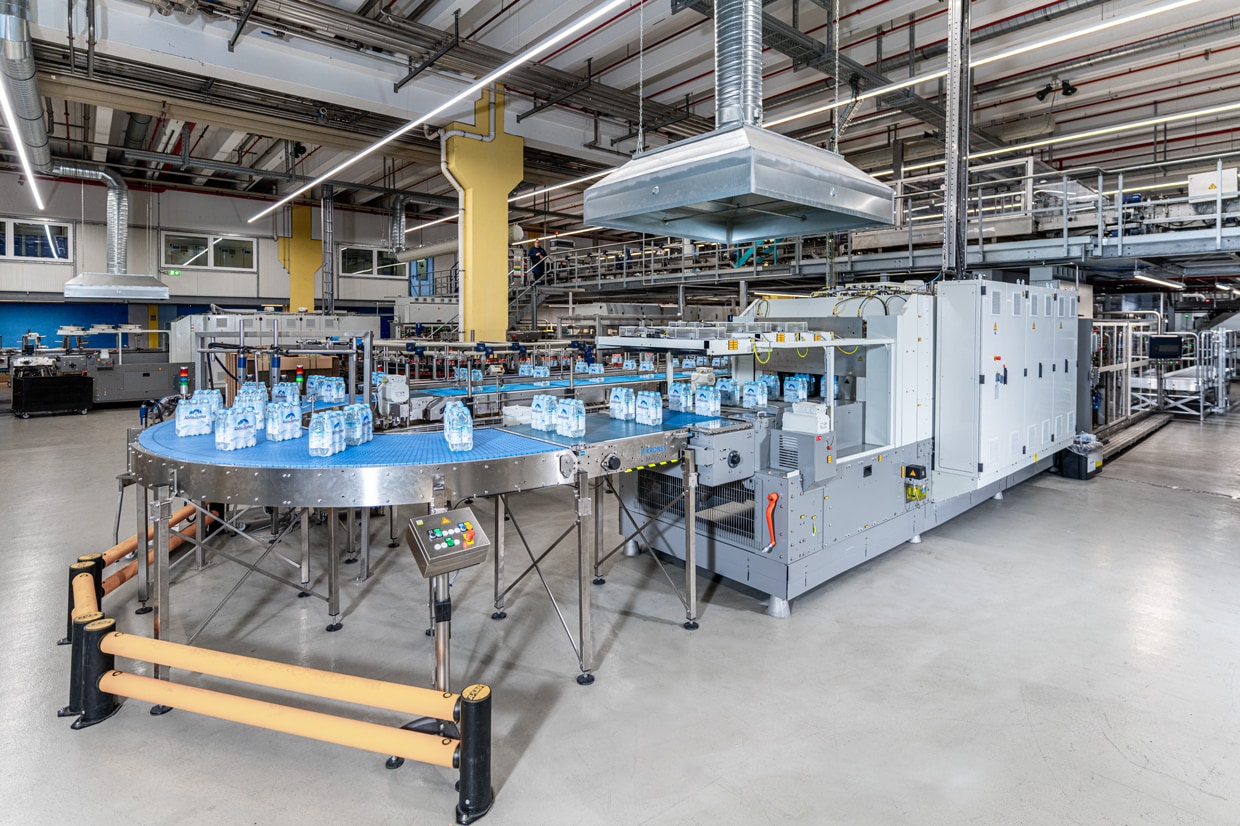
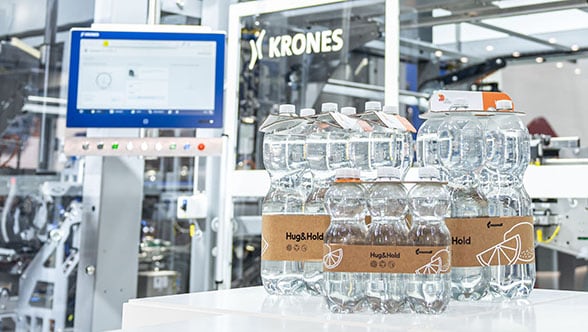
    • The first shrink tunnel of its kind has been up and running in the Variopac Pro packer installed in a new line at Adelholzener Alpenquellen for about one year now.

    The shrink tunnel is one of the most energy-hungry elements in a filling and packaging line. So the crucial question is: How can the heat it needs be fed in as efficiently as possible under controlled conditions? Krones has taken an in-depth look at precisely that issue and fundamentally revamped the shrink tunnel for the Variopac Pro. The idea behind this improvement came from people with hands-on industry experience. 


    When PET bottles are shrink-wrapped in film, mere seconds are crucial in determining a whole lot more than you might think at first glance. What we’re talking about here is not just pack stability and quality of packaging but above all energy consumption because here the film is heated, shrunk onto the containers and then cooled down. This process requires meticulous temperature control coupled with maximised precision, which is precisely the technical challenge involved. If the film is unintentionally subjected to excessively turbulent air during heat-up, the process can no longer be reliably controlled, resulting in unsteady film travel. The film may adhere to cold bottles or be unevenly formed. “That’s why we’ve aimed to achieve a properly directed, steady flow of air that gets the energy precisely to the place where it’s needed – to the pack and not to its surroundings,” explains Marcus Kreis, Head of Process Engineering, Packaging Technology at Krones. That may sound easy at first, but it is highly demanding in actual practice. To achieve it, Krones has upgraded and fine-tuned the shrink tunnel’s design.  


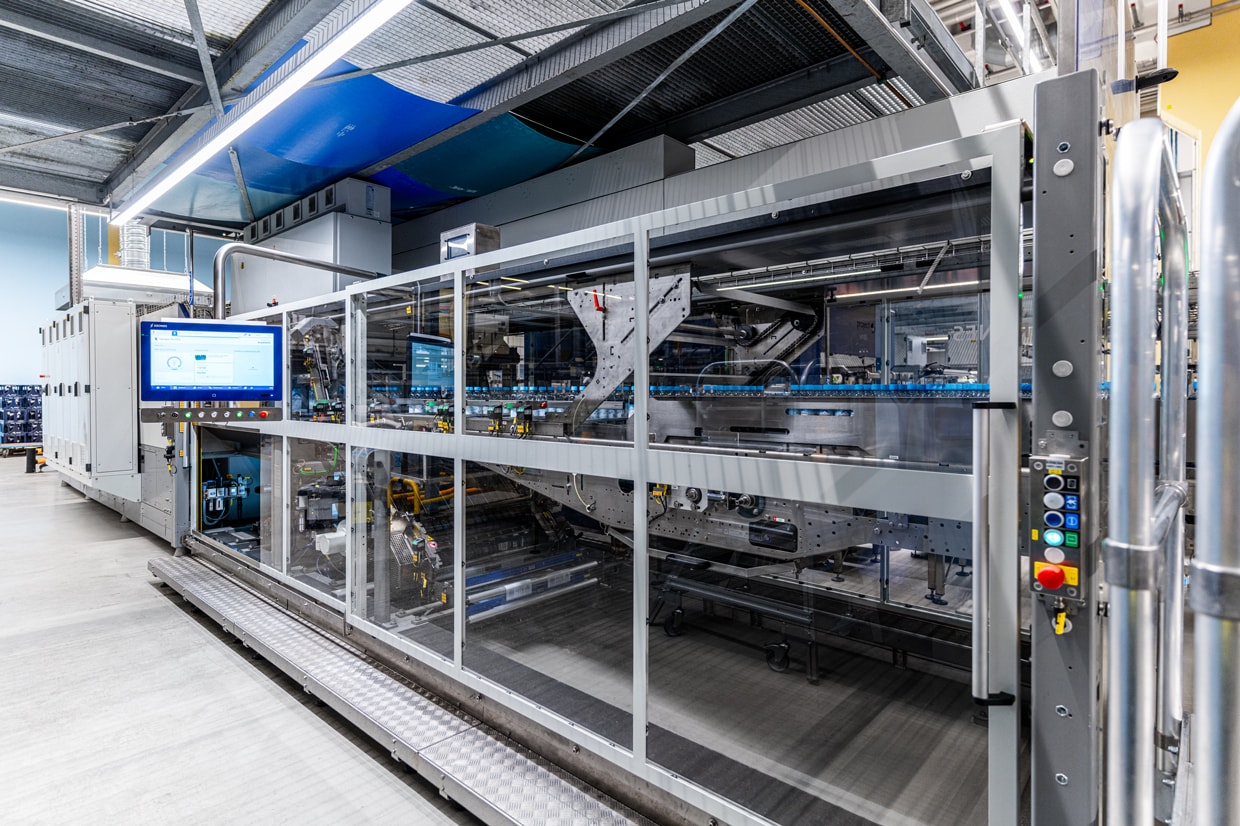
    The design enhancement was prompted by Krones’ close cooperation with Adelholzener Alpenquellen GmbH, a Bavarian beverage producer known for its top product quality and responsible use of natural resources. The shrink tunnel installed in one of their existing non-returnable-PET lines revealed some optimisation potential for energy consumption and shrink-wrap quality. That was where Krones’ Packaging Technology team came in: They systematically modified the parameter settings involved, thus achieving some initial improvement. It also became clear that design-related measures would further boost efficiency. 

    But that was not all. While the optimisations certainly benefited Adelholzener Alpenquellen, the insights gained were also put to good use in the team’s work on design-enhancing the energy-efficient shrink tunnel in general. The first such shrink tunnel has been up and running in the Variopac Pro packer installed in a new line at Adelholzener Alpenquellen for about one year now. Herbert Schrobenhauser from Automation Technology and Energy Management at Adelholzener reports: “The consumption data have been continuously recorded and documented from Day One of commissioning. We were gratified to find that, even with a higher line output, overall power consumption of the new shrink tunnel could be reduced yet again as compared to the existing one that had already been optimised.” 

    Shrink tunnel upgrade

    From their project jointly run with Adelholzener, the Krones team distilled three key starting points for their development work, which resulted in additional options for saving energy in the shrink tunnel. 

    Targeted energy input: adjustable-width bottom chamber 

    The first starting point for upgrading efficiency levels was the shrink tunnel’s bottom chamber. In conventional designs, hot air is blown into the tunnel from below over its entire width – irrespective of whether all of that width is in fact used. Particularly with single-lane production or when handling slender packs, that means energy is needlessly fed into areas without product. 

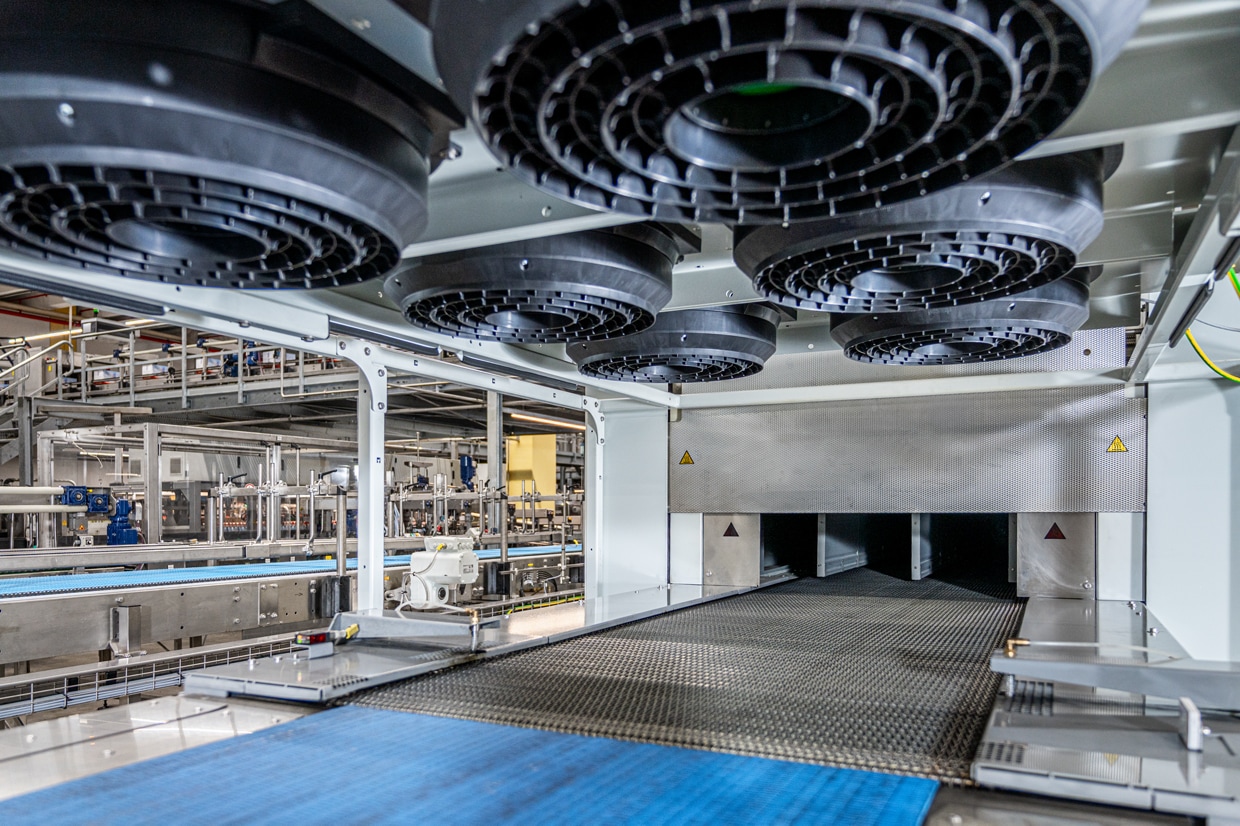
    In Krones’ design-enhanced tunnel, integrated shield plates now make it possible to precisely match the width of the bottom chamber to the format handled in each case. Hot air is only activated in those places that actually hold a pack. That makes for a noticeable reduction in both air volume flow and heating output. “Until now, we’ve heated up the tunnel’s entire base,” says Marcus Kreis. “In the energy-efficient shrink tunnel, we now channel energy only into the width actually used.” The beneficial effect of this modification is particularly striking in lines handling disparate pack formats.

    Image 54110
    In Krones’ design-enhanced tunnel, integrated shield plates now make it possible to precisely match the width of the bottom chamber to the format handled in each case.

    Until now, we’ve heated up the tunnel’s entire base. In the energy-efficient shrink tunnel, we now channel energy only into the width actually used. Erwin HächlMarcus KreisHead of Process Engineering, Packaging Technology at Krones

    Homogeneous temperature distribution: heat integrated from above 

    The second step in the design upgrade tackles heat distribution in the tunnel’s interior. Up to now, energy has primarily been fed in from the sides and from below. So a correspondingly high air volume flow was needed to get enough heat into the middle of the pack. 

    In order to conclude the shrink-wrap process under controlled conditions, newly integrated heating elements now systematically feed in additional heat from above at the rear of the tunnel shortly before the pack leaves it. “When I can bring in the heat needed from above, I don’t have to blow it in from the sides,” explains Marcus Kreis. “That renders the process a whole lot smoother and more stable.” It thus ensures more uniform heating of the pack and a more homogeneous shrink-wrap result while simultaneously reducing air consumption. Not only does this improve the energy footprint but the shrink-wrap quality as well because the film at the top is more evenly formed. 

    Flow-based efficiency: new shaft-wall geometry  

    The biggest efficiency gain comes from a newly developed shaft-wall geometry. Here’s how it works: The pack travels through the tunnel on a wire mesh belt made of steel. When a lot of hot air is blown in from below, this belt is substantially heated up and has to be cooled down again before it loops back to the tunnel entry point. It’s a never-ending cycle of heating up and cooling down that significantly increases energy consumption.

    The lateral air distributor plates have now been redesigned for improved flow dynamics and generate defined air jets going slightly upwards. That produces a properly targeted air draft at the bottom so that the lateral flow can be used more heavily for running the shrink-wrap process. As a result, significantly less hot air needs be blown in from below. 

    Not only does that reduce energy consumption, the properly targeted air flow also stabilises the pack while it is being shrink-wrapped and improves film formation. “This air flow supports neat formation of the lateral film eyes and stabilises the film without requiring major amounts of energy to be fed in from below,” explains Marcus Kreis. Since less hot air passes through the conveyor belt, it is not heated up so much. That reduces the cooling required in the return track and thus the shrink tunnel’s overall energy consumption. This is the most important means for saving energy because it is instrumental in reducing conveyor belt heat-up.

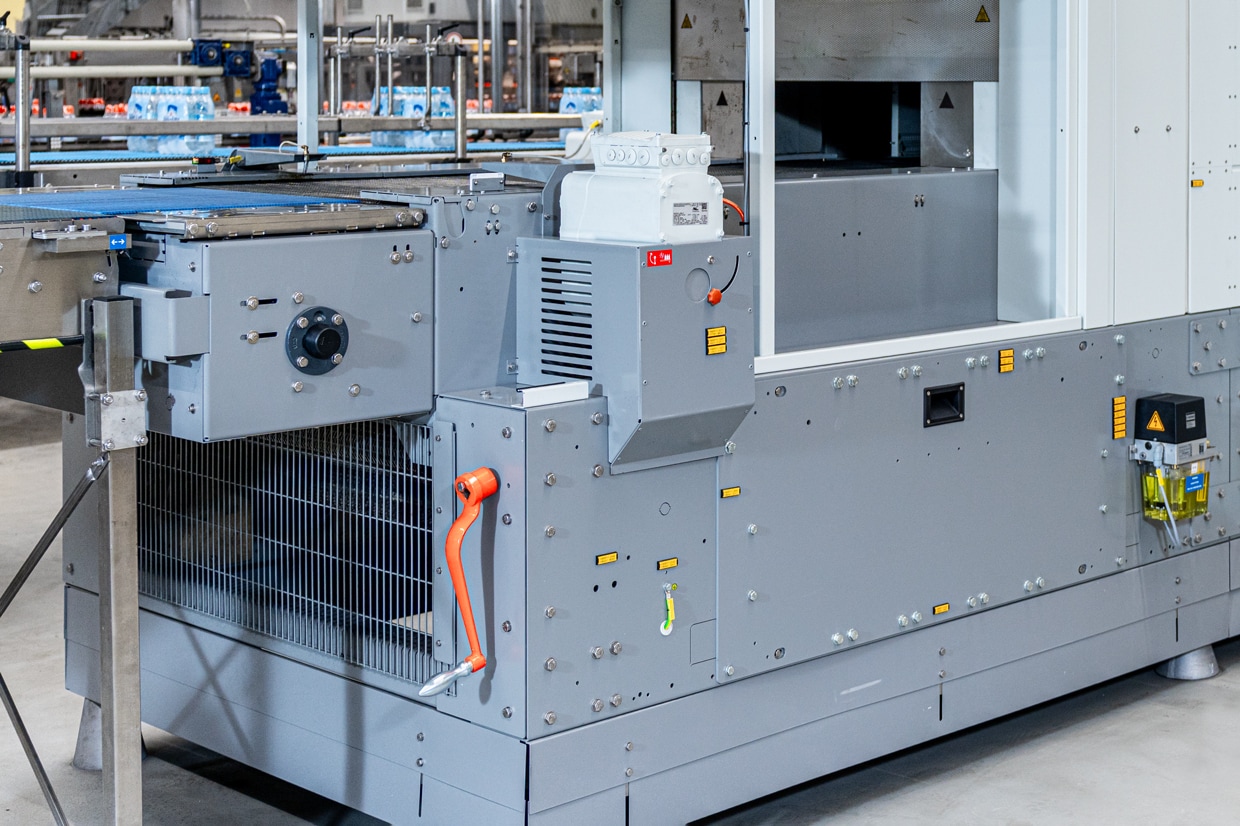
    The new shaft-wall geometry can also be retrofitted to shrink tunnels already in operation. So efficiency levels can be meaningfully upgraded not only in new systems but in existing ones as well.

    Image 54113
    The new shaft-wall geometry can also be retrofitted to shrink tunnels already in operation. So efficiency levels can be meaningfully upgraded not only in new systems but in existing ones as well.

    Not only does that reduce energy consumption, the properly targeted air flow also stabilises the pack while it is being shrink-wrapped and improves film formation. “This air flow supports neat formation of the lateral film eyes and stabilises the film without requiring major amounts of energy to be fed in from below,” explains Marcus Kreis. Since less hot air passes through the conveyor belt, it is not heated up so much. That reduces the cooling required in the return track and thus the shrink tunnel’s overall energy consumption. This is the most important means for saving energy because it is instrumental in reducing conveyor belt heat-up. 

    The new shaft-wall geometry can also be retrofitted to shrink tunnels already in operation. So efficiency levels can be meaningfully upgraded not only in new systems but in existing ones as well. 

    This air flow supports neat formation of the lateral film eyes and stabilises the film without requiring major amounts of energy to be fed in from below. Erwin HächlMarcus KreisHead of Process Engineering, Packaging Technology at Krones

    Three measures, one goal: maximum energy efficiency

    These three approaches pursue one common goal: directing the energy required for the shrink-wrap process more precisely to those places where it is actually needed.

    The figures achieved at Adelholzener vividly demonstrate the huge savings potential offered by this package: The consumption forecast for the previous tunnel for 0.5-litre bottles was 97.2 kilowatts and for 1.0-litre bottles 99.7 kilowatts. By contrast, the consumption figures measured for the new shrink tunnel (including all the energy-saving functions mentioned) came to a mere 57 kilowatts and 64 kilowatts respectively. That is a reduction of roughly 40 per cent. And although the new shaft-wall geometry makes the biggest contribution here, the savings achieved are the result of a holistically optimised energy concept, in which all three measures are neatly dovetailed to optimum effect. “We can promise customers energy savings of at least 20 per cent,” says Marcus Kreis. Depending on the application concerned, it is possible to save significantly more than that, as Adelholzener Alpenquellen have gone to show. Erwin Hächl, the head of Central Project Management, is delighted: “We’re really thrilled to see that those purposeful optimisation and upgrade measures have substantially cut energy consumption in the new Variopac Pro packer.” 

    Thanks to the revamp we’ve given our shrink tunnel, we can promise energy savings of at least 20 per cent. Erwin HächlMarcus KreisHead of Process Engineering, Packaging Technology at Krones

    The shrink tunnel upgrade is one example, which demonstrates how Krones translates its sustainability strategy into technological reality. The aim is to reduce the use of both energy and resources throughout a line’s entire lifetime without compromising on performance and quality. Especially in the shrink-wrap process, which is notable for its high energy requirement, the potential offered by detailed design enhancements is particularly evident. Reduced energy consumption means lower operating costs and an improved carbon footprint, which equally benefits line owners and our natural environment. Energy efficiency and top shrink-wrap quality are by no means mutually exclusive. On the contrary, both are the result of precisely routed air flows. 

    Image 54114
    We can promise customers energy savings of at least 20 per cent,” says Marcus Kreis.

    Want to read more Krones stories?

    You can easily send a request for a non-binding quotation in our Krones.shop. 

    Request new machine
    kronesEN
    kronesEN
    0
    10
    1