Close
Search
Searching...
No results
    Reference

    Heineken shaking up the premium beer market in Brazil

    You need to accept cookies to use this functionality.
    For its first greenfield brewery in Brazil, Heineken has opted for filling technology made by Krones and ordered four lines for filling cans plus returnable and non-returnable bottles.
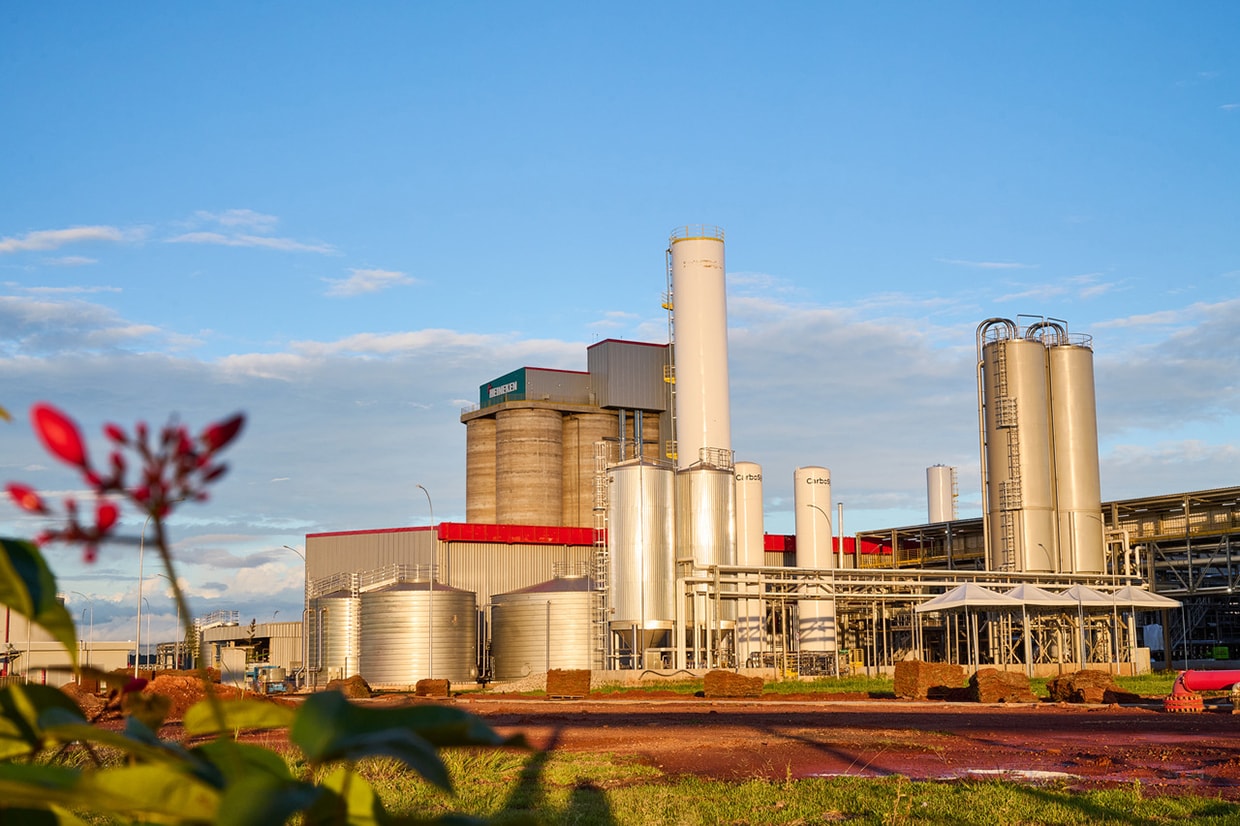
    • Two years ago, there was nothing here but grass, and now this site at Passos in the Brazilian state of Minas Gerais boasts a brand-new Heineken brewery.

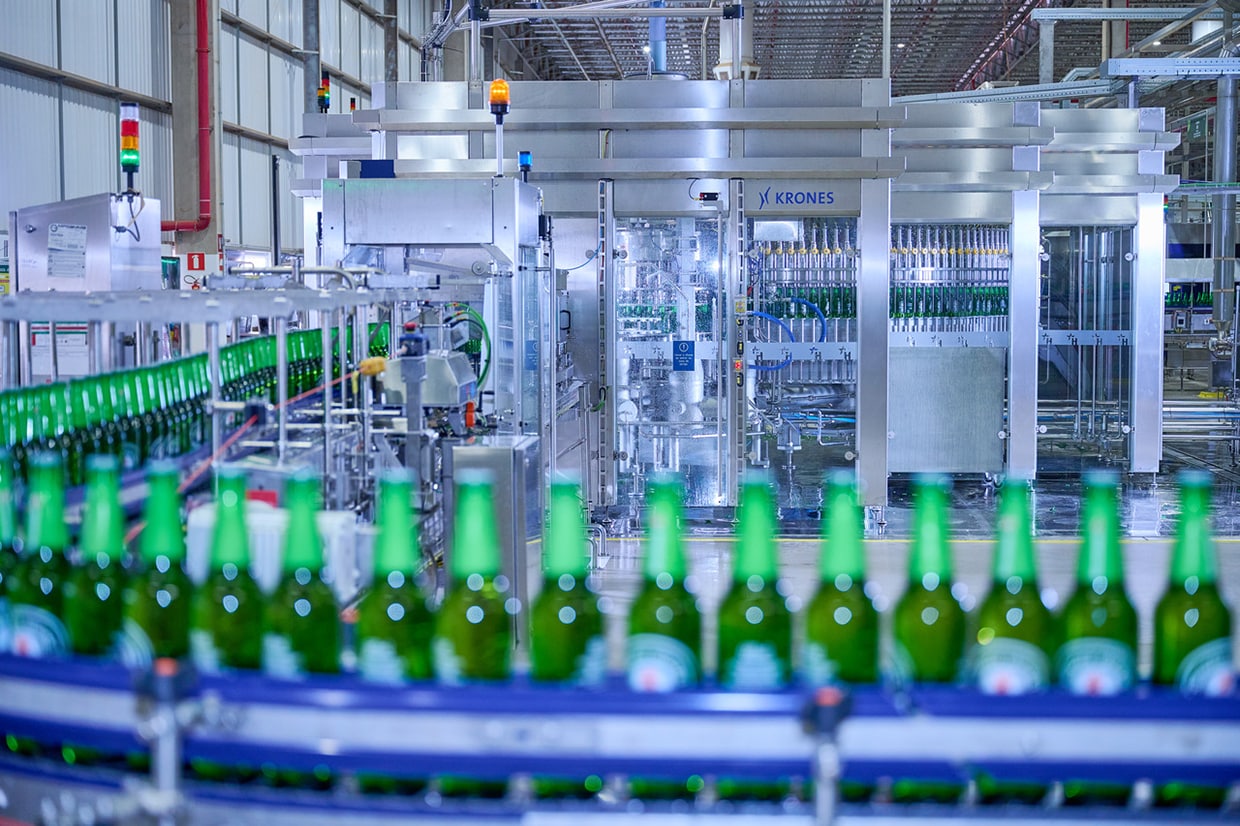
    In its new brewery in Brazil, Heineken produces up to five million hectolitres of beer per year. Here, the company brews top-quality pure-malt beers and uses four Krones lines to fill them into cans and glass bottles, both returnable and non-returnable. This new facility marks an important milestone for Heineken’s presence in Brazil and is a beacon of sustainability.

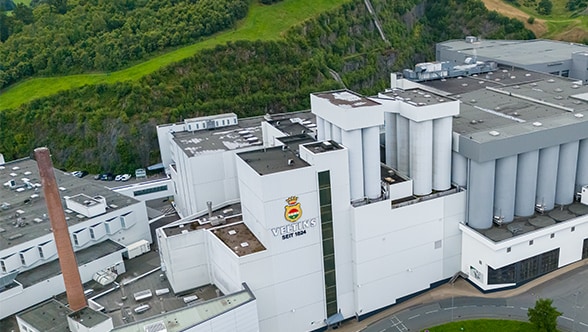
    Passos has a population of just over 110,000, but quite a lot has been happening here since Heineken started building its new brewery. The city is located in the state of Minas Gerais in the south-east of Brazil, a region with abundant water resources. The Rio Grande is not far away. It is the company’s first greenfield brewery in Brazil. According to Heineken, the project represents one of the largest investments in this region, totalling more than 400 million euros. The facility was ceremonially inaugurated in early November 2025. “Two years ago, there was nothing here but grass and a few trees. And today we’re looking at this brand-new brewery, that’s just amazing,” says a gratified Reinaldo Franco, the brewery’s director. 

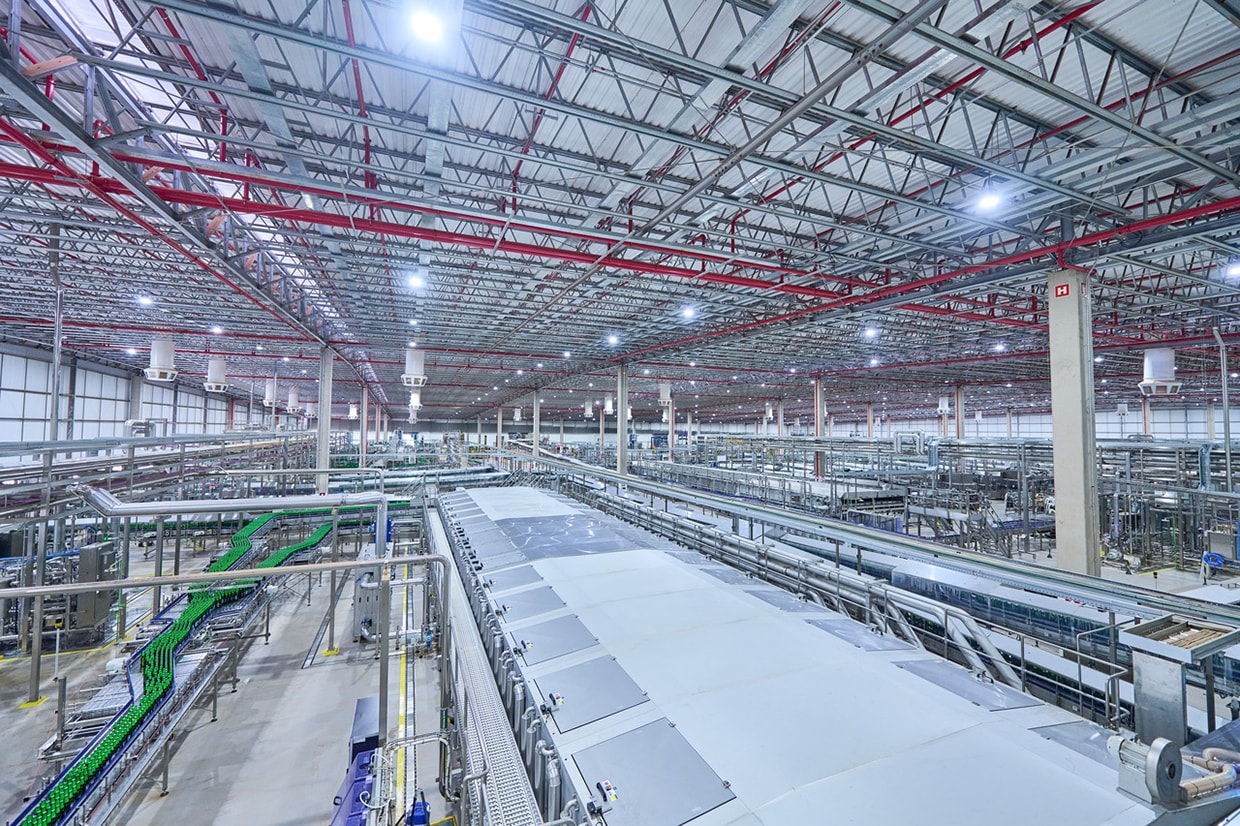
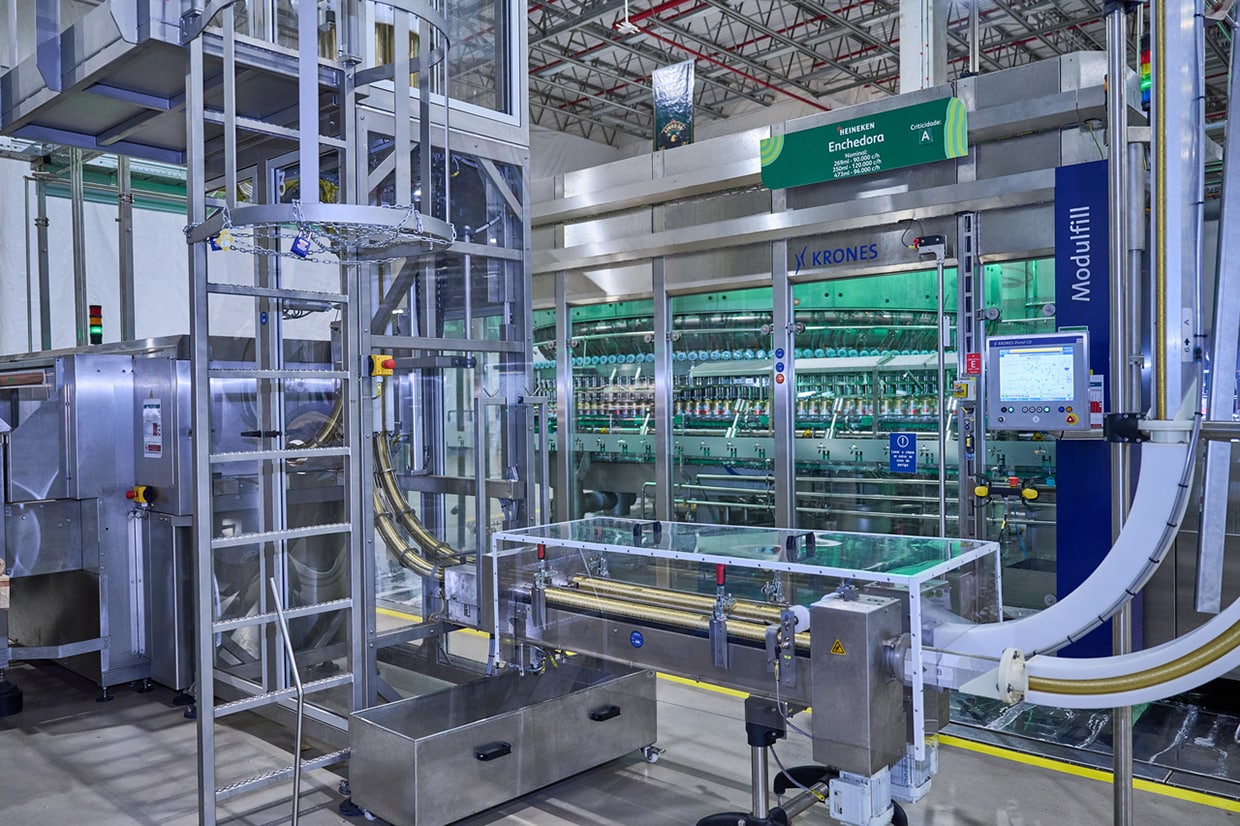
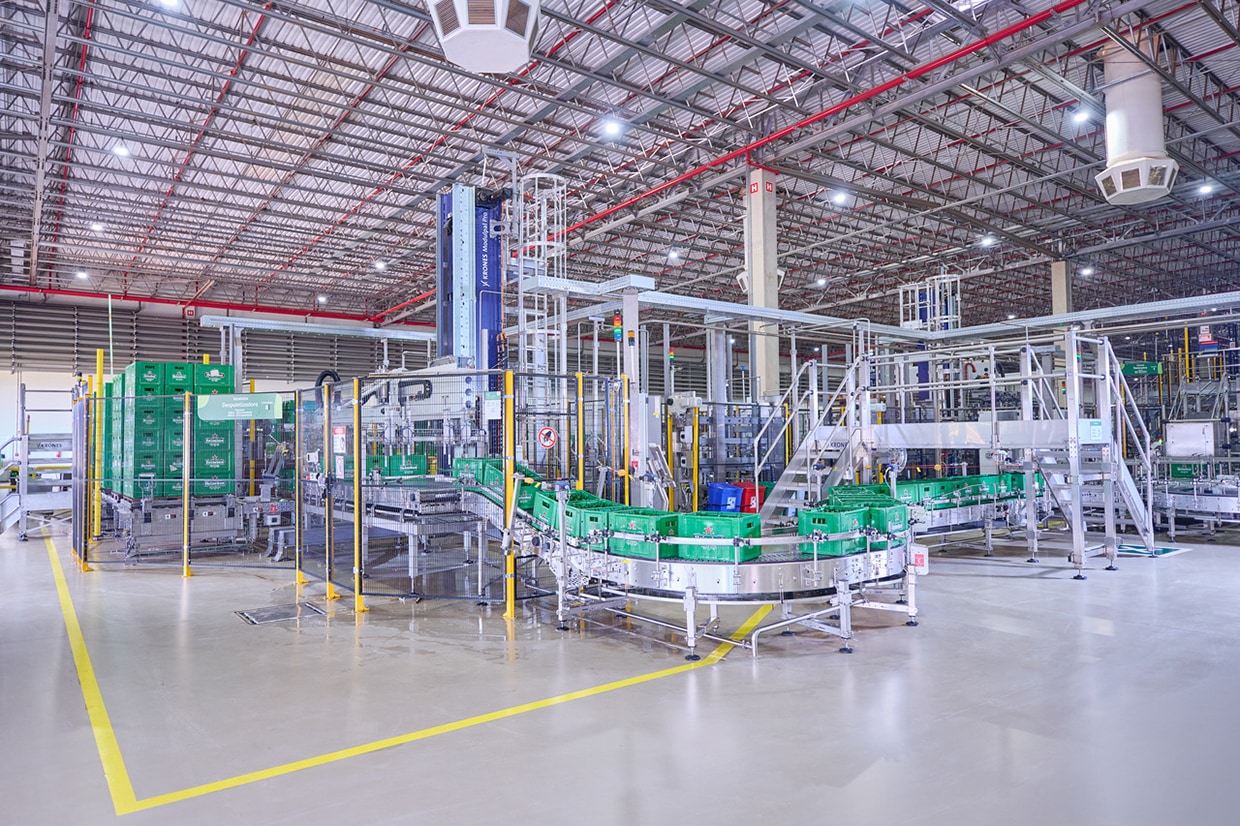
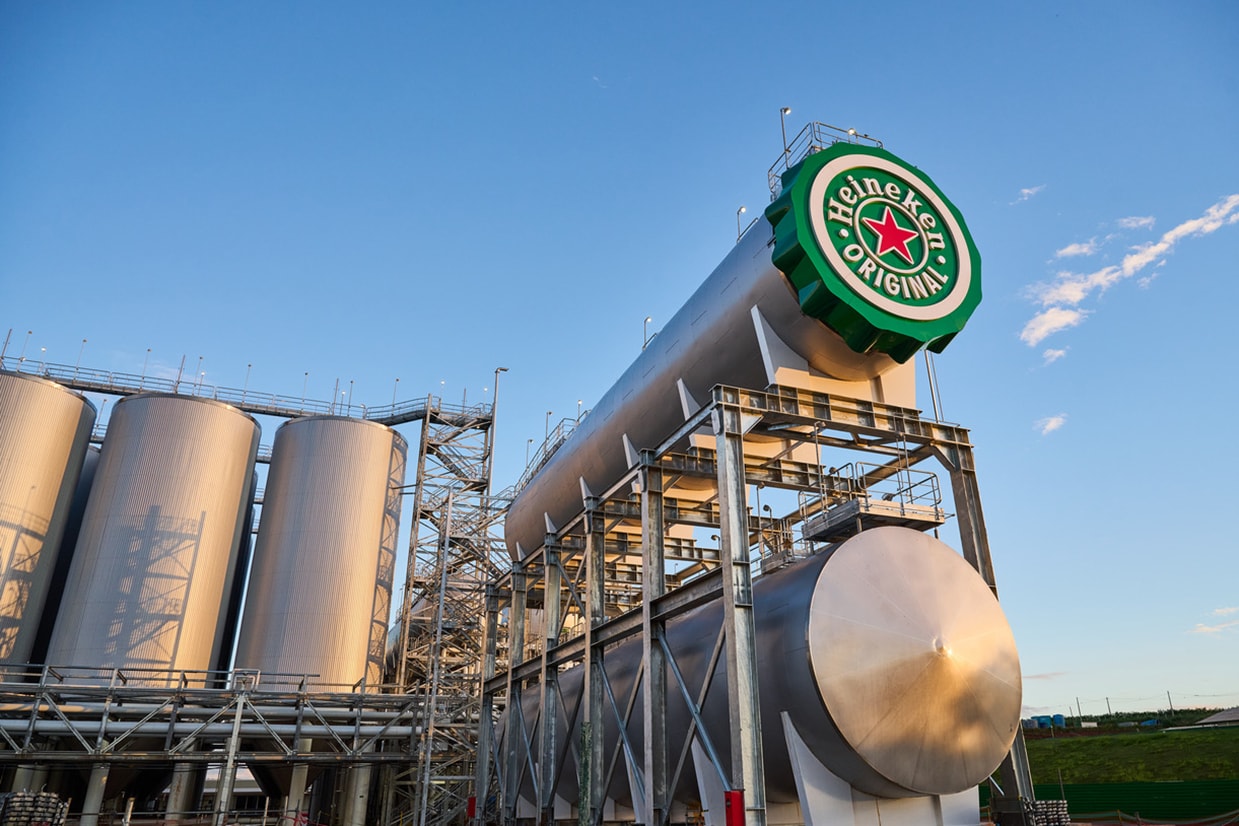
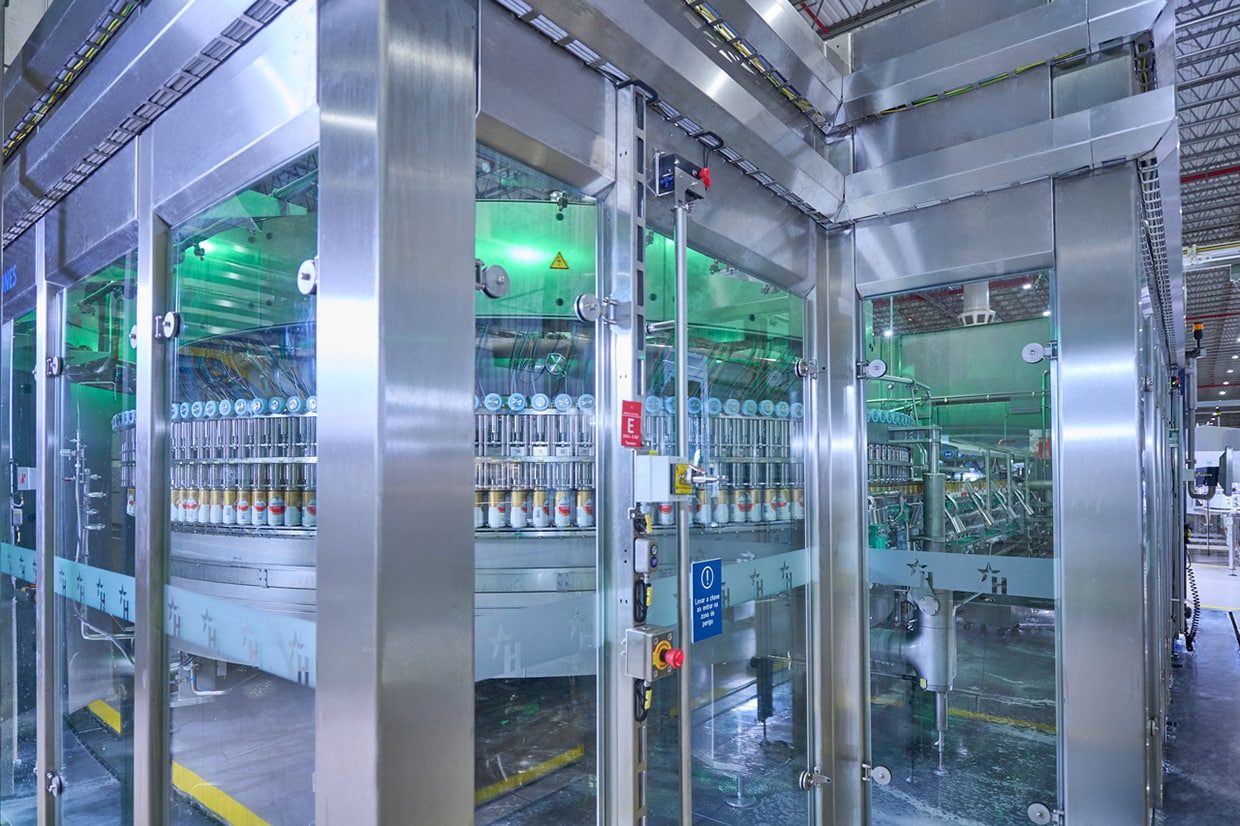
    Spanning an area equivalent to about 140 football pitches, the plot of land still bears the marks of a major construction site – even now in early 2026. The red earth typical of this region is clearly visible in the unpaved areas and when vehicles raise the red dust that settles everywhere. The first things visitors notice when they approach the brewery are Heineken’s characteristic horizontal fermentation tanks and a giant illuminated crown cap greeting them from the top of the first tank. Striking corporate design elements such as the Heineken green and the red Heineken star recur throughout the facility, including the bottling hall where one filler is entirely bathed in green light. The hall itself is a hive of activity, with all four new Krones lines already up and running.
    A premium location for a premium beer 

    The choice of Passos as the location for the new brewery was the result of a meticulous selection process, as Reinaldo Franco explains: “We had three decisive factors: good access to road and rail routes, the availability of top-quality water, and a well-trained workforce. We found all of these in Passos, plus good relations with the local authorities. So far everything has worked perfectly, the new brewery is a genuine win-win arrangement.” 

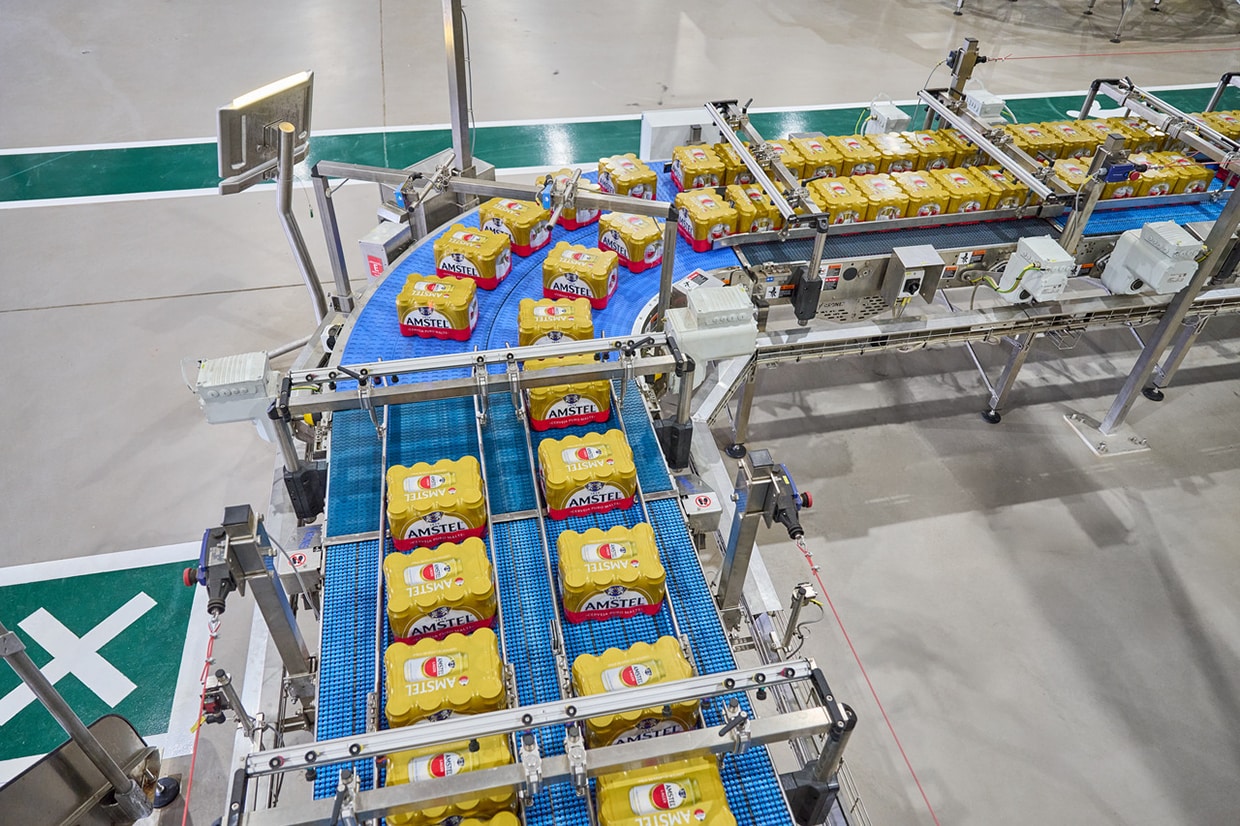
    The production site in Passos supplies the Brazilian beer market’s premium segment with Heineken and Amstel beers, both pure-malt brands brewed in line with the company’s own purity law. Only malt, water, hops and yeast may be used for making them, nothing else. In its current stage of completion, the facility boasts an annual production output of five million hectolitres of beer, with ample space for expansion.

    The new facility is also a beacon of sustainability. Throughout the sector, Heineken is well-known for its ambitious goals in this regard, and its plant in Passos is once more setting high standards for efficiency and environmental stewardship. The brewery operates entirely on renewable energy: Hydro-electric power and photo-voltaic systems are used to generate electricity, and biomass boilers produce the thermal energy needed. Water consumption was once again substantially reduced to an amount even lower than in the already stringent Heineken standards. Part of the beer output is filled into returnable glass bottles. Heineken’s sustainability strategy also includes social and environmental projects in the region, plus of course jobs. The brewery has created around 350 new jobs, with 60 per cent of these given to local residents.

    Sustainability is a top priority

    Throughout the sector, Heineken is well-known for its ambitious sustainability goals. For example, the group intends to achieve net-zero emissions along the entire value chain by 2040, and for Scope 1 and 2 emissions by as early as 2030. Minimised water consumption, the preservation or restoration of local water catchment areas and the maximum use of material cycles are further pillars of Heineken’s sustainability strategy. The group’s goal is to ensure that by 2030, 43 per cent of the products sold worldwide are packed into re-usable containers and only bottles and cans with a minimum recycled content of 50 per cent are used.

    Filling technology made by Krones

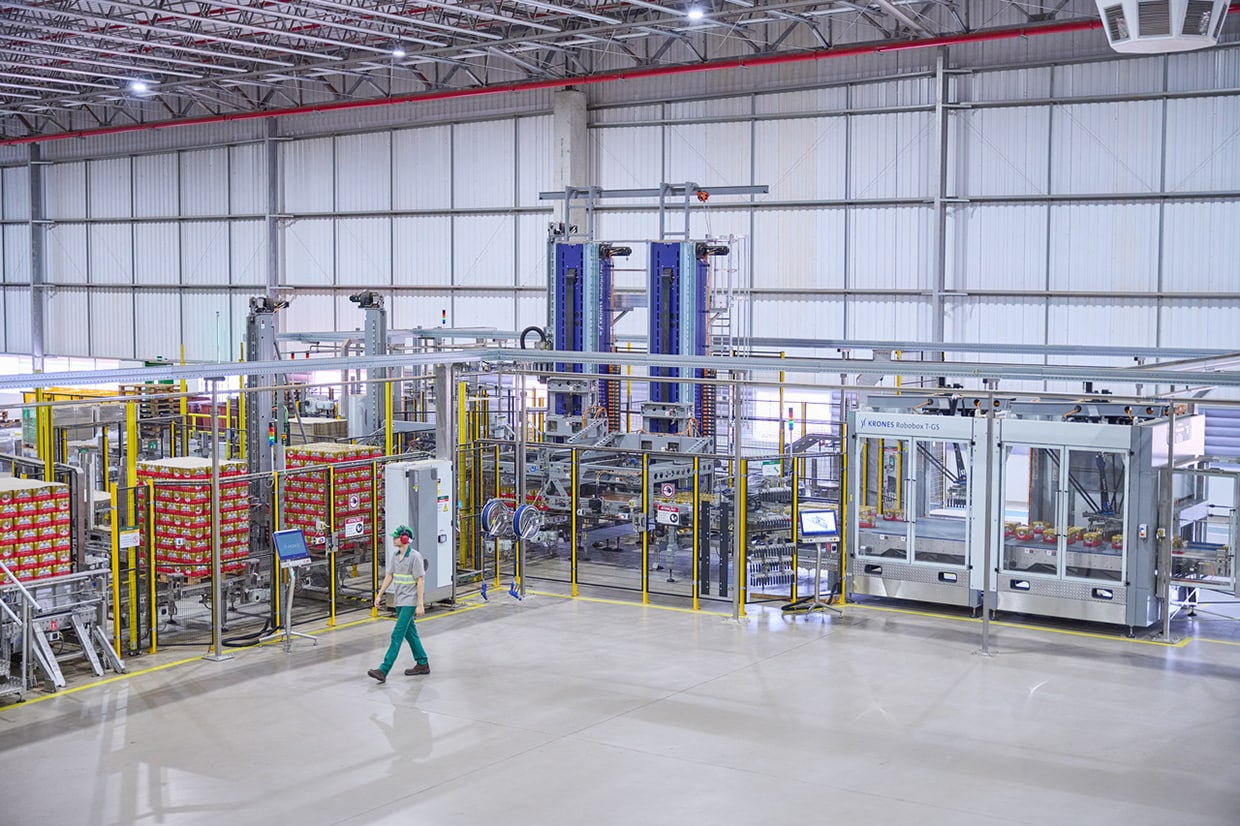
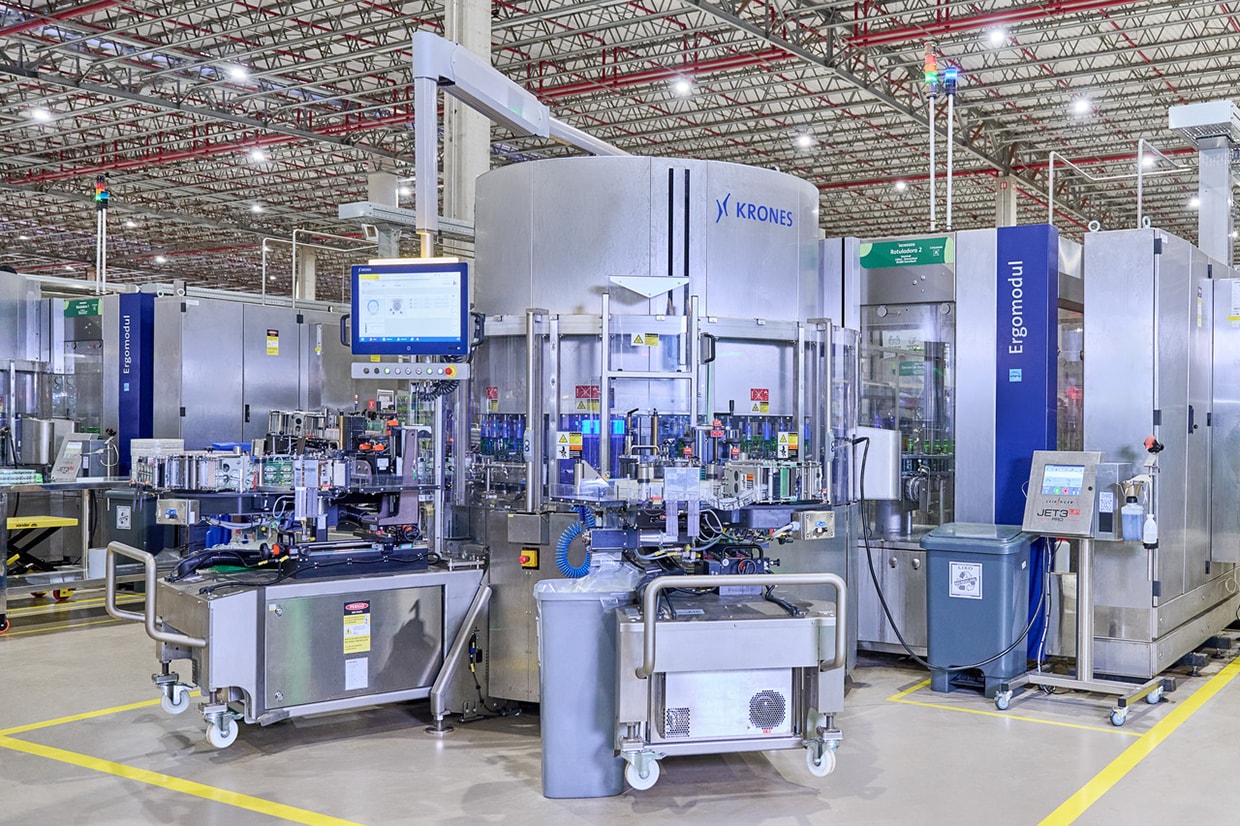
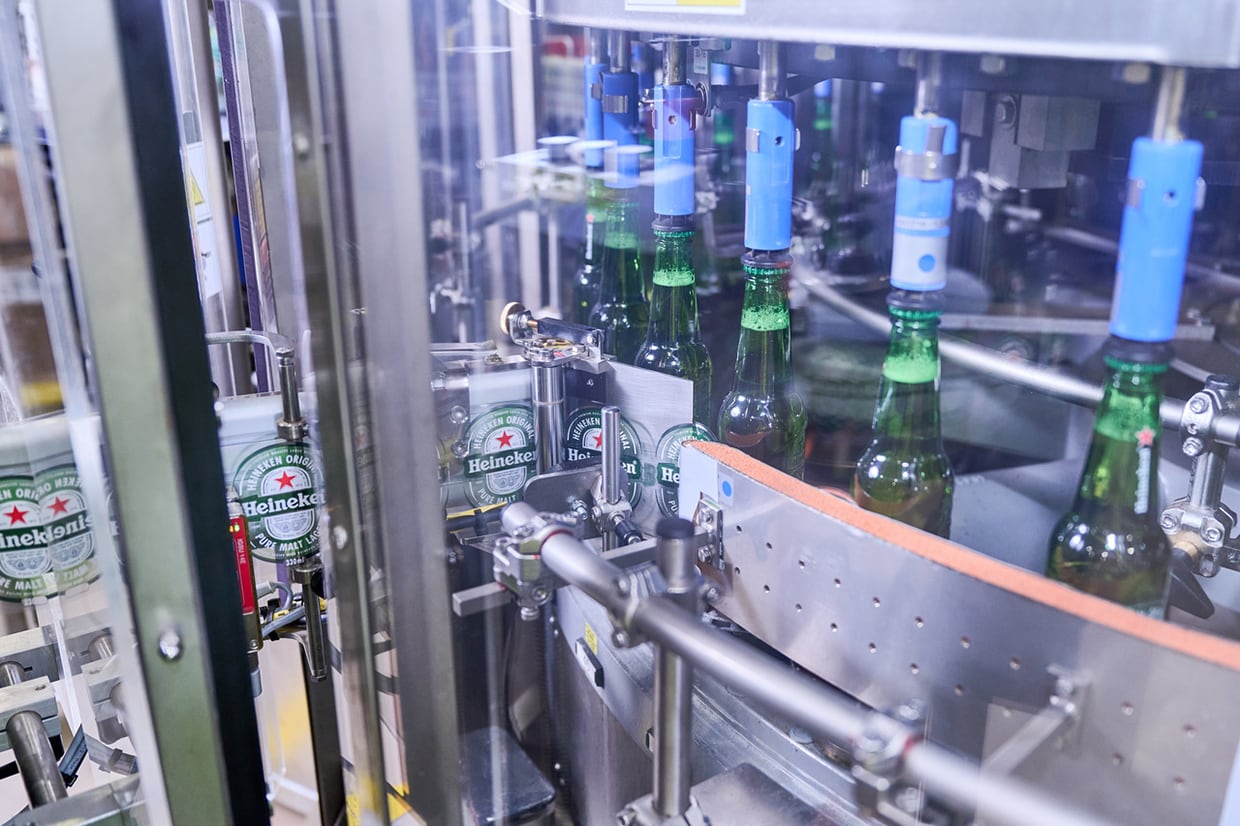
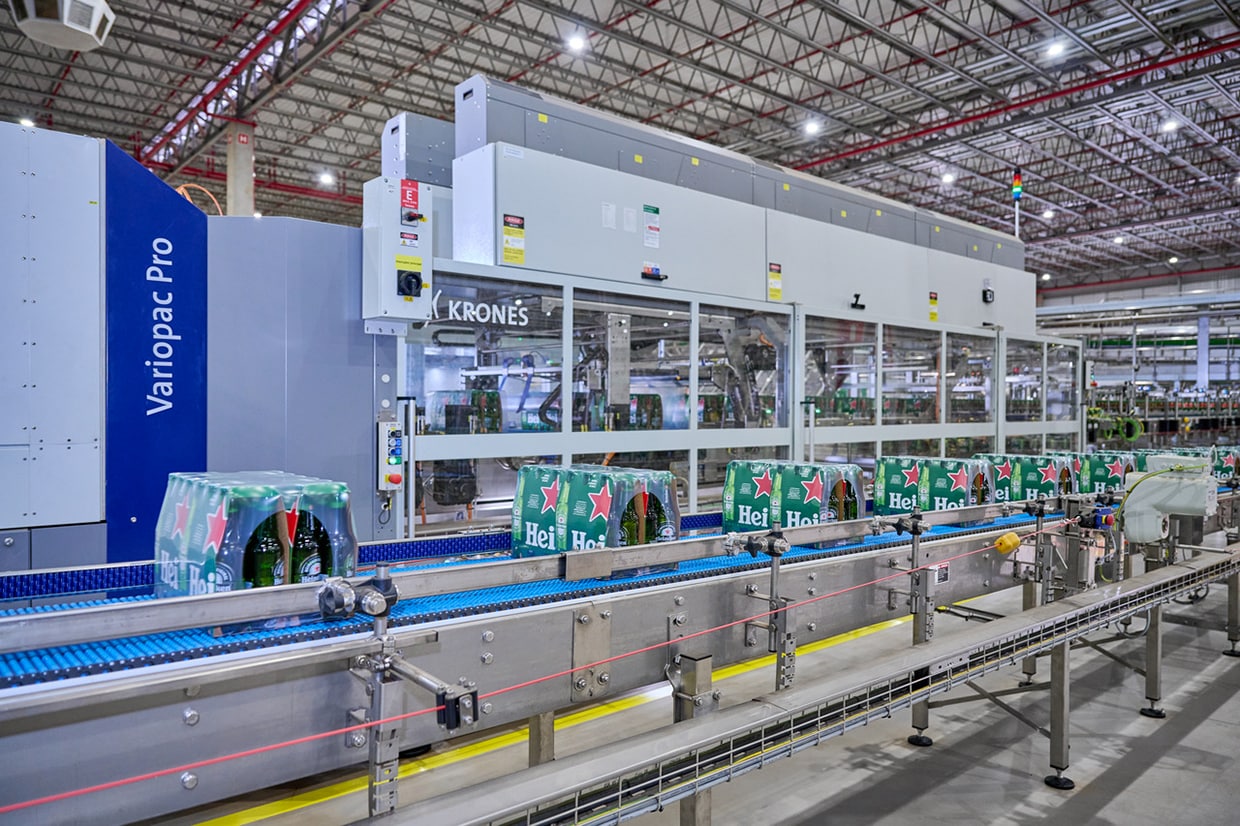
    Krones supplied all the filling equipment for the new facility, four lines in all: one for cans, two for 0.33-liter non-returnable longneck glass bottles and one for 0.66-liter returnable glass bottles. More than 400 containers were needed to ship the machines to Brazil and then onward to Passos by truck. “You can’t imagine the commotion when the four lines arrived here in an endless series of trucks and containers. You see, Passos isn’t really that big, so people were very curious,” recalls the brewery’s director Reinaldo Franco.

    Image 54388
    All four filling lines for Heineken’s first greenfield brewery in Brazil have been supplied by Krones.

    Why was Krones awarded the contract? Reinaldo Franco gives three reasons: cost advantage, technology and a mutually supportive relationship. “Krones and Heineken in Brazil can look back on many years of fruitful cooperation. We knew that we’d always be able to rely on Krones and in a big project like this you definitely need a strong partnership. Krones met all our requirements for the technical equipment and their price was spot-on as well.” A high level of flexibility in the canning line was crucially important for Heineken, as Senior Packing Manager Luis Felipe Zuin Mandra points out: “We produce all the formats commonly used in the Brazilian market. That’s why a smart, flexible canning line with short make-ready times at can change-overs was imperative for us.” Intuitive, user-friendly operator interfaces and visualisations are also essential for the operating staff, he emphasises and adds: “We need lines equipped with effective digital technology for efficient control, for recording data and for data-based analysis of the line’s performance. Those were our requirements, and they were fully met.”

    We produce all the formats commonly used in the Brazilian market. That’s why a smart, flexible canning line with short make-ready times at can change-overs was imperative for us. Luis Felipe Zuin MandraSenior Packing Manager, Heineken Brazil

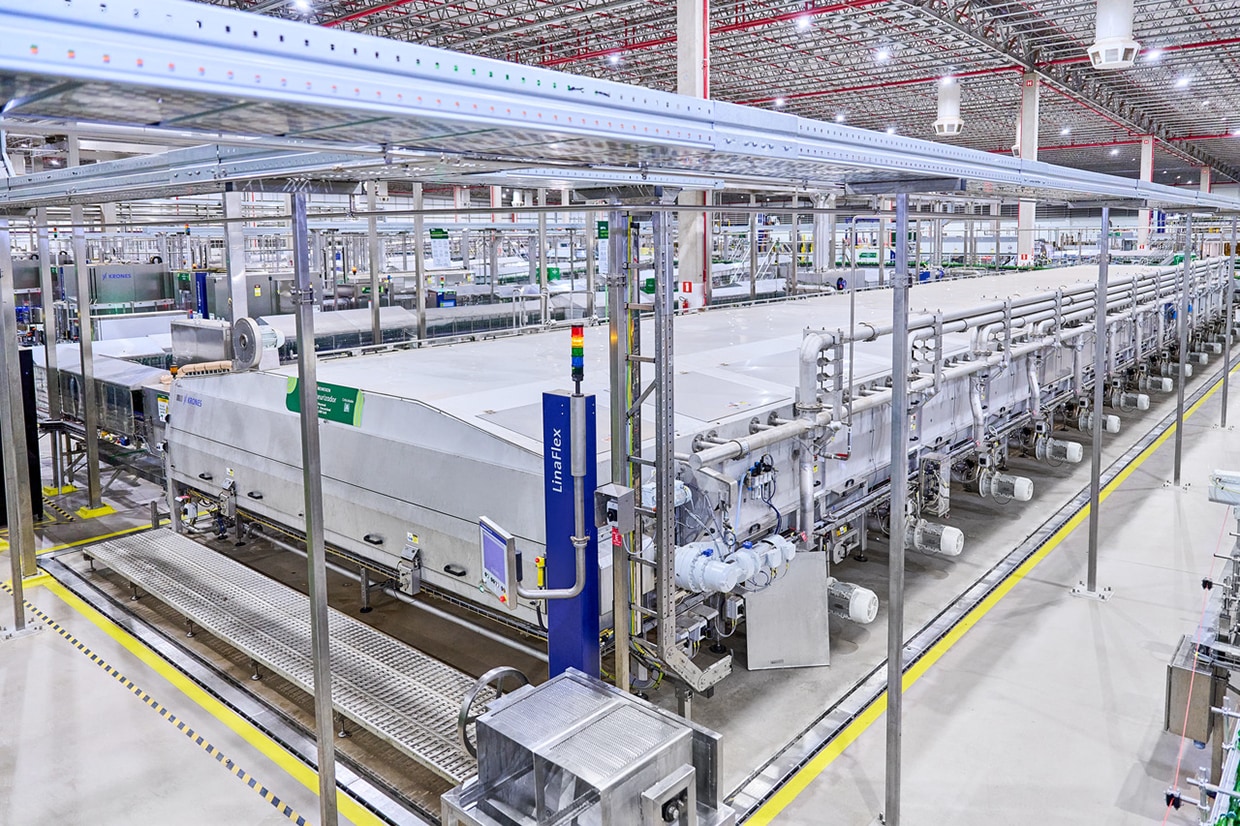
    Energy and water consumption were further important criteria, resulting from the group’s high sustainability standards. Reinaldo Franco also highlights the benefits of running the pasteuriser and bottle washer with hot water instead of steam: “It increases workplace safety because there’s less pressure in the pipes.” Krones prefers water for all its machines, not least because water permits better temperature control, which in turn raises energy efficiency.

    Zero accidents, everything completed on schedule

    The first beer was brewed and filled into the tanks in July 2025. The canning line was then started up in August, followed by acceptance-testing for the various can formats. The returnable glass line was next in October, with the first line for longneck glass bottles starting up in November. All four lines have been up and running since February 2026. Reinaldo Franco is pleased that the project’s time schedule was kept: “The lines are producing, we’re dispatching a lot of beer.”

    In our conversation with Heineken, the team’s joy about having completed the project without any serious accidents and right on schedule is unmistakable. “I’ve worked in breweries for 30 years now and can say without hesitation that this project went very well,” says Reinaldo Franco. “Of course, there are always some misunderstandings and points which need to be discussed, but all in all it was an excellent partnership, good teamwork between the Krones crew and our operators and engineers.” Luis Felipe Zuin Mandra also looks back with satisfaction: “That was a big site indeed, full of people speaking many different languages, but everything went smoothly. Erecting four lines in such a short time, always fully aware that the beer in those tanks was waiting to be bottled or canned, that was definitely an enormous challenge. But each erection phase was carefully planned, the people set to work calmly, and everyone felt it was a safe environment to work in. The atmosphere on site was good, boosted no doubt by all of us celebrating each time we completed a small milestone.”

    I’ve worked in breweries for 30 years now and can say without hesitation that this project went very well. Erwin HächlReinaldo FrancoDirector of the brewery in Passos, Heineken Brazil

    The project constituted a major job for Krones as well: After all, the shipping of 400 containers is not an everyday occurrence. “Not a single container was lost,” emphasises Ralf Ebenthal, one of the project managers at Krones. The tropical weather presented the project crew with quite a few challenges, as he recalls: “Torrential rain poured down on us about once a week. The gravel roads had to be reinforced constantly.” Ralf Ebenthal, too, is pleased that the project proceeded according to plan: “We managed to get the production lines up and running extremely fast, allowing the factory to reach full production capacity very quickly. It was a huge success that the filling goals for 2025 could be fulfilled.”

    A partnership with a promising future

    Reinaldo Franco highlights the excellent technical skills of the Krones crew on site: “We couldn’t help notice that Krones had really put together an exceptional team for this project, comprising skilled and experienced technicians (partly from Germany) right from the start. We knew some of the crew from previous projects, mainly people from Krones Brazil. We knew we could trust them, that matters a lot.” For him, further key impressions of working with Krones in this project, besides the team’s expertise, were the solid planning and the mutually supportive relationship: “A site with so many different people invariably constitutes a major challenge, which demands a lot of goodwill from everyone involved. The Krones crew had exactly that positive mindset, they knew how to integrate each and every one of our people – experienced staff and newcomers alike – and how to respond to all their needs.” 

    “There’s still lots to do here in Passos, that’s true. But the successful start has put fresh wind in the team’s sails,” says a satisfied Reinaldo Franco and adds: “We feel we’re well prepared for any jobs which may arise going forward. We have to maintain our strong partnership with Krones because we’ll need their help and support on further technical questions in the future.” 

    Brazil: a beer powerhouse

    With an annual output of roughly 150 million hectolitres, Brazil is the world’s third-largest beer producer, behind China and the USA. Heineken began establishing a strong presence in this country in 2011. The company currently has 13,000 employees on its payroll, and 15 breweries up and running. 

    Beer is a really popular drink in Brazil. People like to savour it ice-cold, often at temperatures near freezing point. At home, they drink it straight from the bottle or can. Freshly tapped beer is a rare occurrence. Instead, restaurants and bars serve big bottles, plus enough glasses for everyone around the table, and the beer is then shared. The Krones team laugh as they recall the surprise of their German colleagues who assumed that everybody would get their own beer bottle.

    Want to read more Krones stories?

    You can easily send a request for a non-binding quotation in our Krones.shop. 

    Request new machine
    kronesEN
    kronesEN
    0
    10
    1