Close
Search
Searching...
No results
    Trend

    The detective work behind wrinkle-free shrink packs

    You need to accept cookies to use this functionality.

    Which film provides the finest possible shrink-wrap result? Will the new print image lay nicely around the pack without any wrinkles? How can we change over to sustainable films? A film analysis will help answer all these questions.

    Why do unattractive wrinkles suddenly appear on our shrink packs? That question prompted a beverage producer to investigate, because nothing had actually been changed: The company was using the same film as before, from the same supplier, with the same process in the shrink tunnel. Their search for answers led them to Krones – and shrink tests in Krones’ own film laboratory uncovered what was behind the wrinkles: Clearly, a different stretch process had been used for manufacturing this latest film batch, which – as further inquiries revealed – had come from a different factory. The lab’s analysis also showed what kind of changes in the production process would remedy the problem. These insights enabled the beverage company to contact the film supplier and work on a satisfactory solution. 

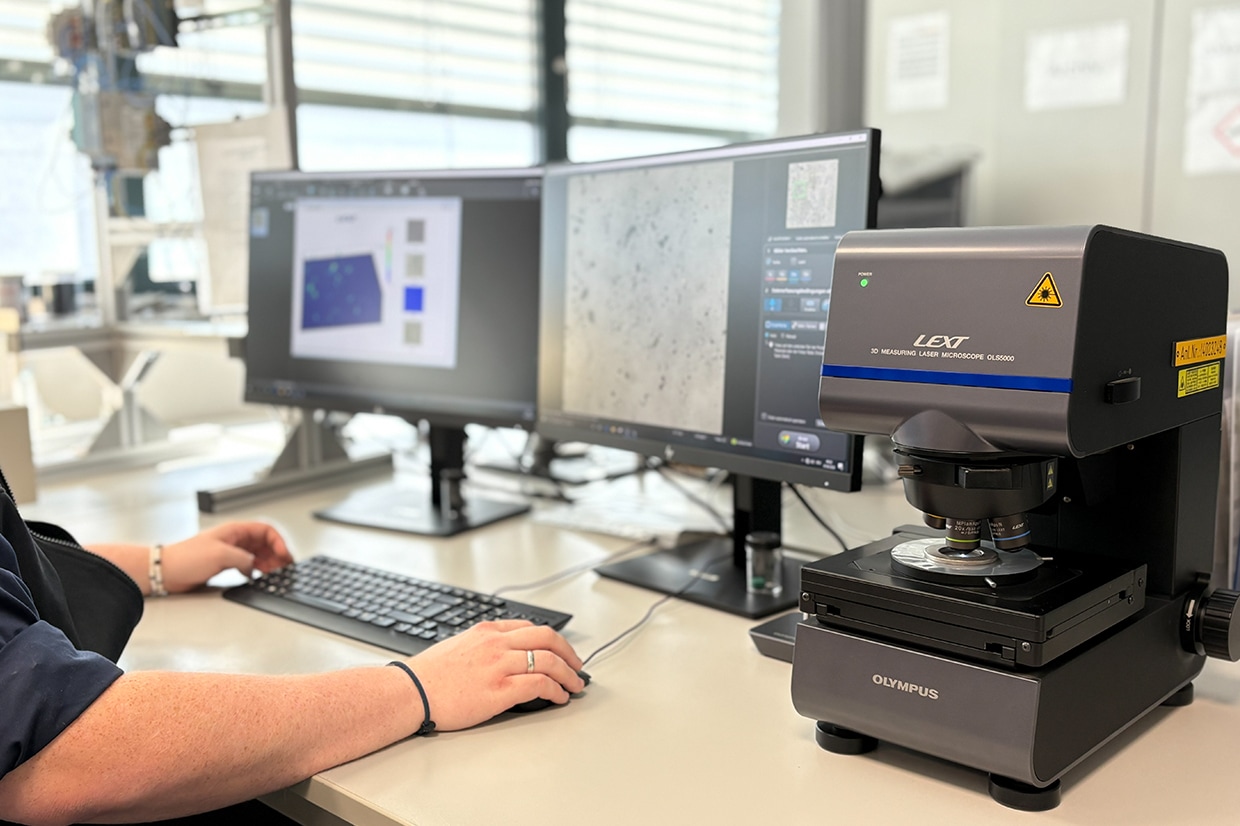
    The shrink tests performed in the lab were key to solving the problem described here. For over ten years now, the Krones film and packaging laboratory has examined the influence of a film’s various properties on shrink-wrap quality. The more than 1,200 films analysed so far provide an impressive fund of expert knowledge the lab team can tap into, thus enabling them to help many beverage producers solve shrink-wrap quality issues. Film analysis is now offered as one of the products in Krones’ Lifecycle Service (LCS) portfolio. Rupert Marinus Wörndl, who is responsible for packaging within Lifecycle Engineering, explains what motivated the team to take this step: “A film analysis reveals the level of shrink-wrap quality that can be reached with each of the films tested. If a customer is planning to make changes to the film they’ve been using, such an advance appraisal is of enormous help. And that’s exactly what makes this service a really interesting option for our customers.”
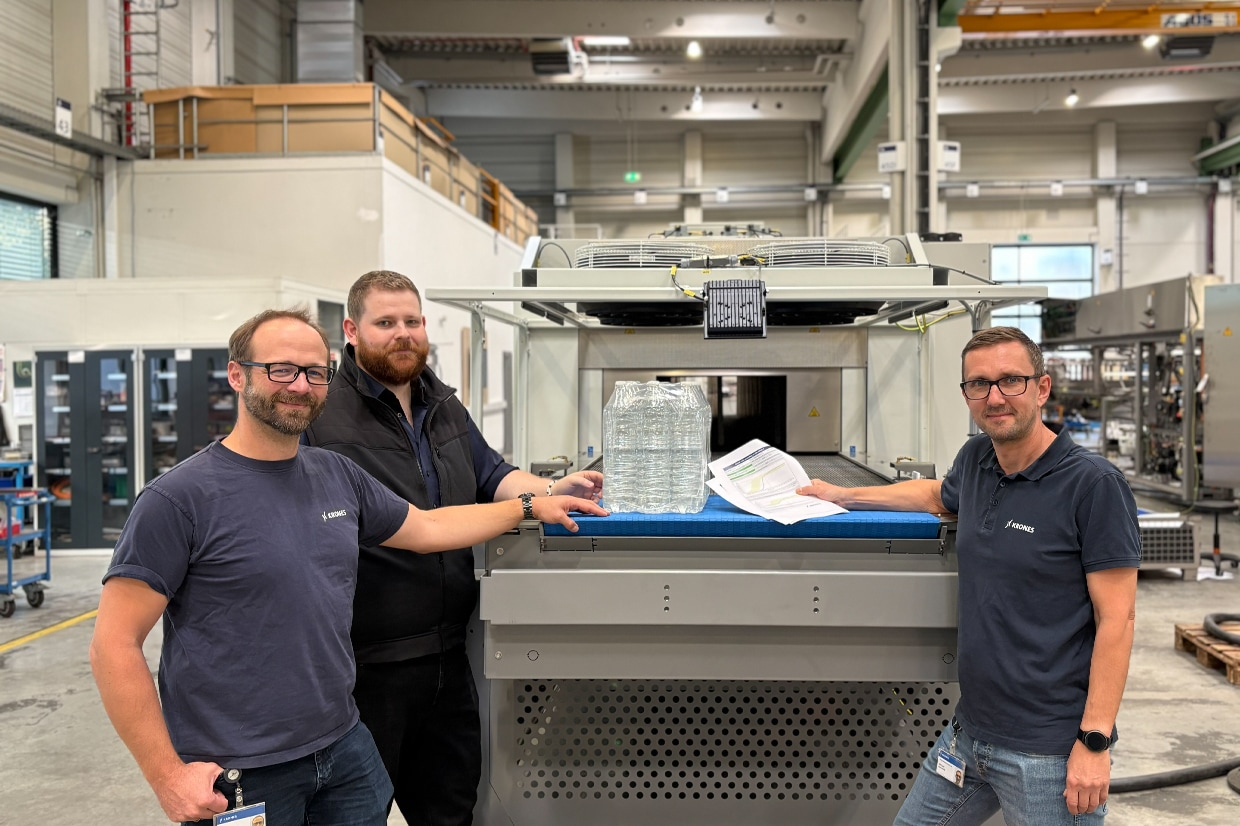
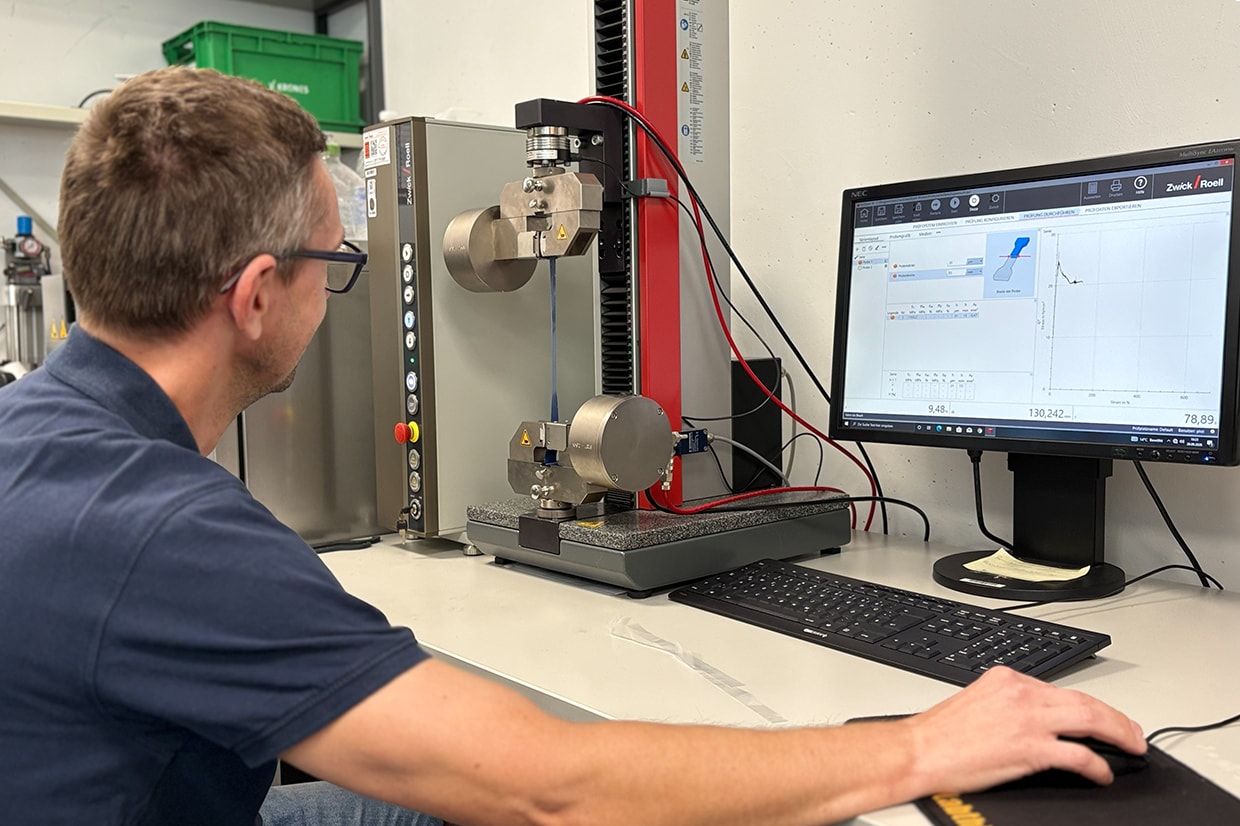
    Image 61253
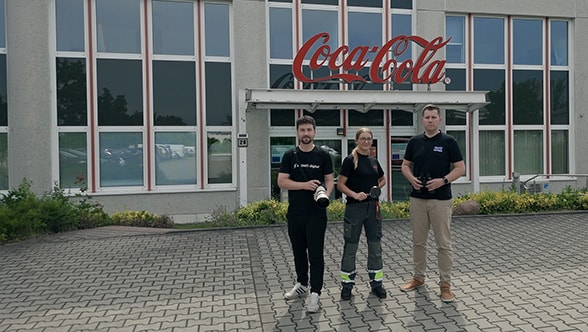
    From the left: Rupert Marinus Wörndl, Dominique Gerlach and Michael Eisenkolb support customers in analysing films.

    Production method makes all the difference 

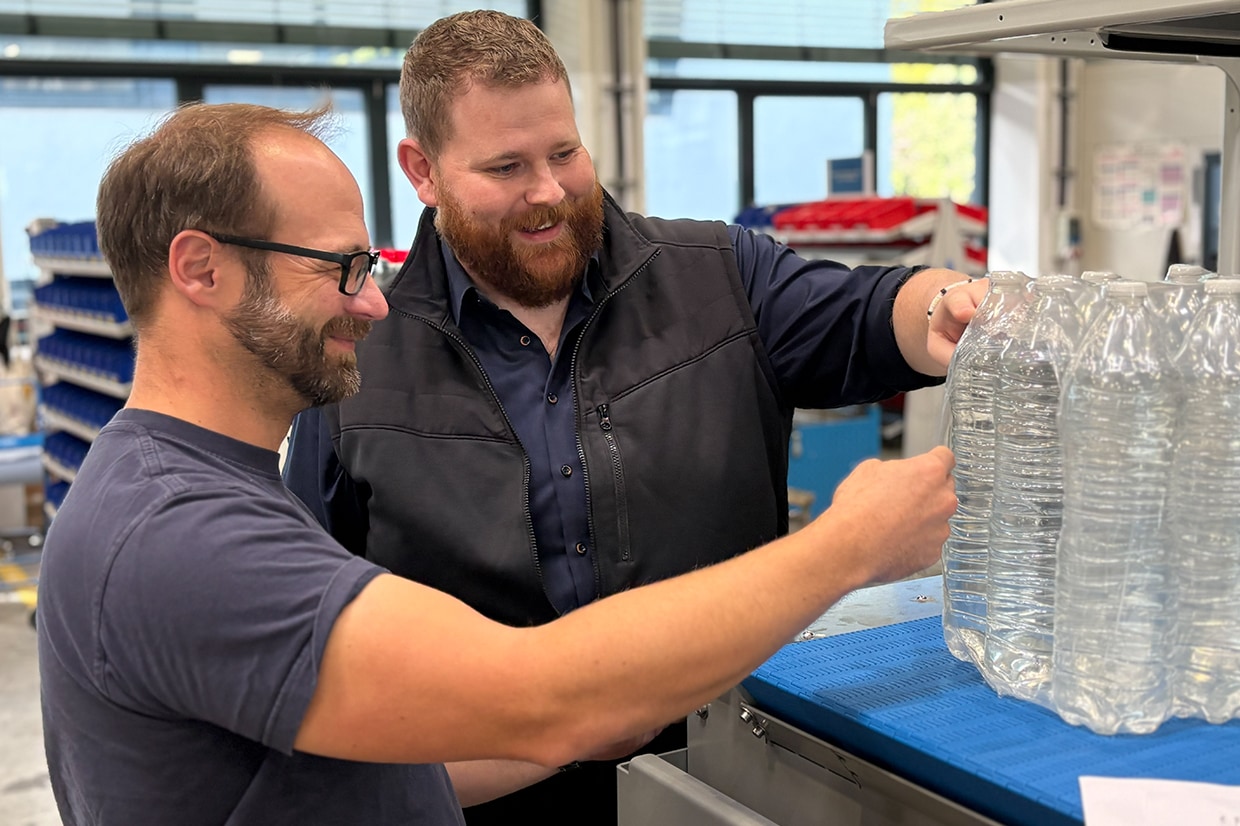
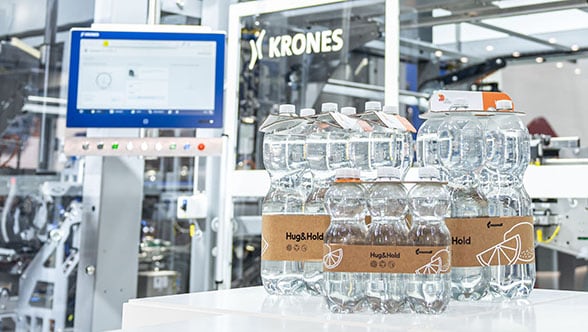
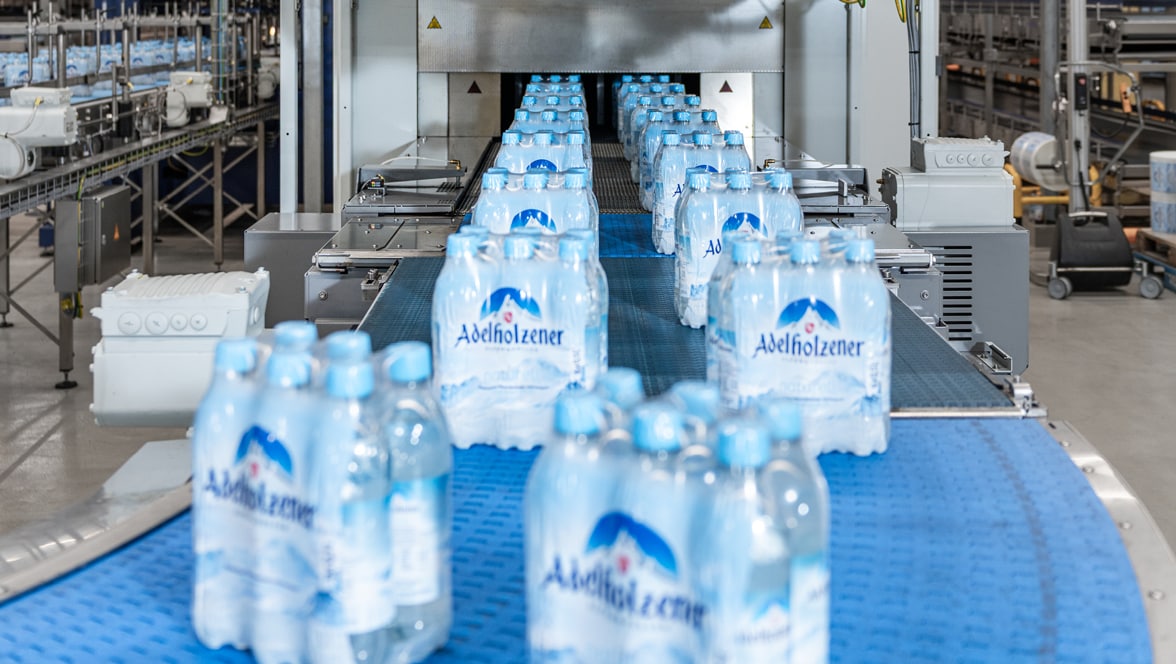
    High shrink-wrap quality means two things: a tightly shrunk-on film that lends the pack the requisite stability and neat, wrinkle-free formation of the lateral film eyes. It depends on a number of highly disparate factors, such as the process parameters in the shrink tunnel and the film’s specific properties.


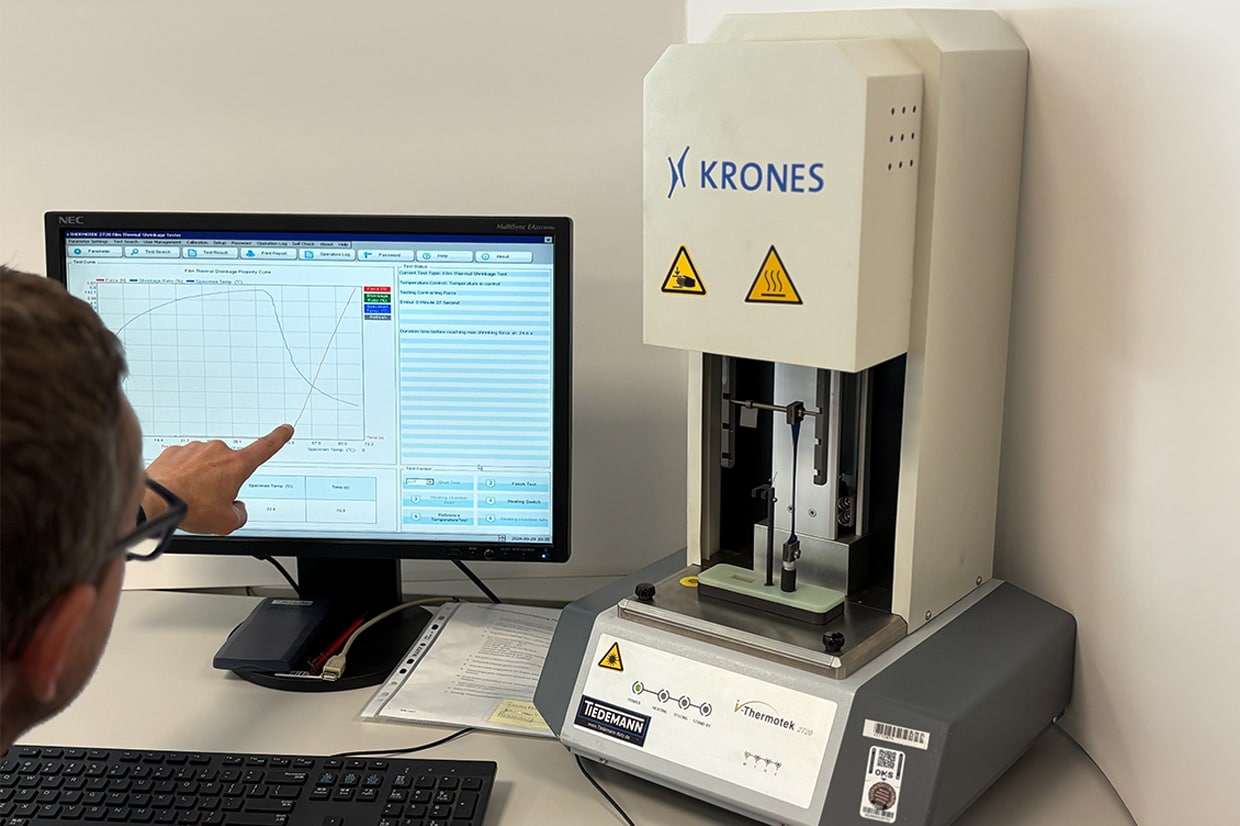
    Based on the application concerned, Krones specifies the material and chemical composition for the film(s) to be used in its shrink tunnels. Above and beyond that, however, a film’s mechanical properties, determined as they are by the way it is made, are also of major importance. To ensure that a shrink-film actually shrinks the way it should when exposed to heat, it must first be stretched accordingly during production. Basically, all the shrink tunnel does is reverse precisely this stretching, nothing more. “The shrink tunnel cannot get anything more out of the film than what was put into it during its production,” is how Wörndl succinctly puts it. What’s more, films don’t shrink the same way in every direction. If a film is stretched very fast in the direction of film feed and very slowly at right angles to it when it is made, it will in the shrink tunnel contract equally fast in the direction of film feed and rather slowly at right angles to it – with concomitant effects on the pack being shrink-wrapped. 

    The film analysis examines precisely that: the various ways film shrinks. Its result shows what a particular film can maximally achieve and enables conclusions to be drawn about its production process. “This knowledge provides our customers with the details they need in their conversations with film suppliers, whether it’s about quality issues or selecting a new type of film,” explains Wörndl. 

    When does it make sense to conduct a film analysis? 

    “In most cases, inadequate shrink-wrap quality is what prompts customers to have their film analysed,” says Dominique Gerlach from the film and packaging laboratory, adding: “Only a very small percentage of the more than 1,200 analyses we have conducted so far were tasked with checking the film’s effects on pack stability.” Basically, the higher a product’s premium aspirations, the more meaningful a film analysis will be.


    The inquiries received in the lab also reflect the ongoing trend towards upgrading sustainability in the production process: Many beverage producers change over to recyclable variants or to thinner films in order to save material and want to make sure their packs’ visual appearance is not negatively affected. A film analysis provides them with valuable details that enable them to make an informed purchase decision while also reducing the number of test runs, as Gerlach explains: “When there are various types of film to choose from, our analyses will show which of these are in fact suitable at all. A film that yields poor results in our lab will certainly not work on the shopfloor.” So only the films with the most promising analytical results will then be tested in the machine. However, a film analysis cannot replace a test run. 


    The print image, too, has a major influence on shrinkage. Dominique Gerlach gives us an example: “Depending on the season of the year, a customer wanted to print Father Christmas or the Easter Bunny on the packs. While it was possible to process the Easter Bunny film without any problems, the Father Christmas film required far more complex machine settings.” Film reel replacement where the end of the current reel and the beginning of the new one are spliced together automatically constitutes yet another critical point, as Dominique Gerlach explains: “The key here is the quality of the splicing seam. The new reel is accelerated fast, and that’s something both the film and the seam have to withstand. We know which parameters are crucial here and check them in the film analysis.” 

    The red-amber-green dial visualises what’s actually possible 

    What the lab team need for their analysis is film samples with and without print image as well as some basic information on film thickness, overlap and lateral overhang on the pack, and on container size and pack format. The results are summarised in a ten-page report, which lists all parameters analysed and shows the film’s capabilities and limits for each. A red-amber-green (RAG) dial enables the viewer to see at a glance what degree of stability and visual appearance can be achieved for the pack with the film analysed. This enables beverage producers to confidently take the next steps: carry out test runs, talk to film vendors, make purchase decisions and finally be rewarded by a top-quality pack.

    Want to read more Krones stories?

    You can easily send a request for a non-binding quotation in our Krones.shop. 

    Request new machine
    kronesEN
    kronesEN
    0
    10
    1