Close
Search
Searching...
No results
    Reference

    Coca-Cola Halle and Krones hot on the trail of as yet untapped potential

    You need to accept cookies to use this functionality.
    At the facility of Coca-Cola Europacific Partners Deutschland (CCEP DE) in Halle, Germany, jointly developed use cases help staff avoid unscheduled downtimes, plan maintenance jobs more selectively and continually fine-tune the production operation.
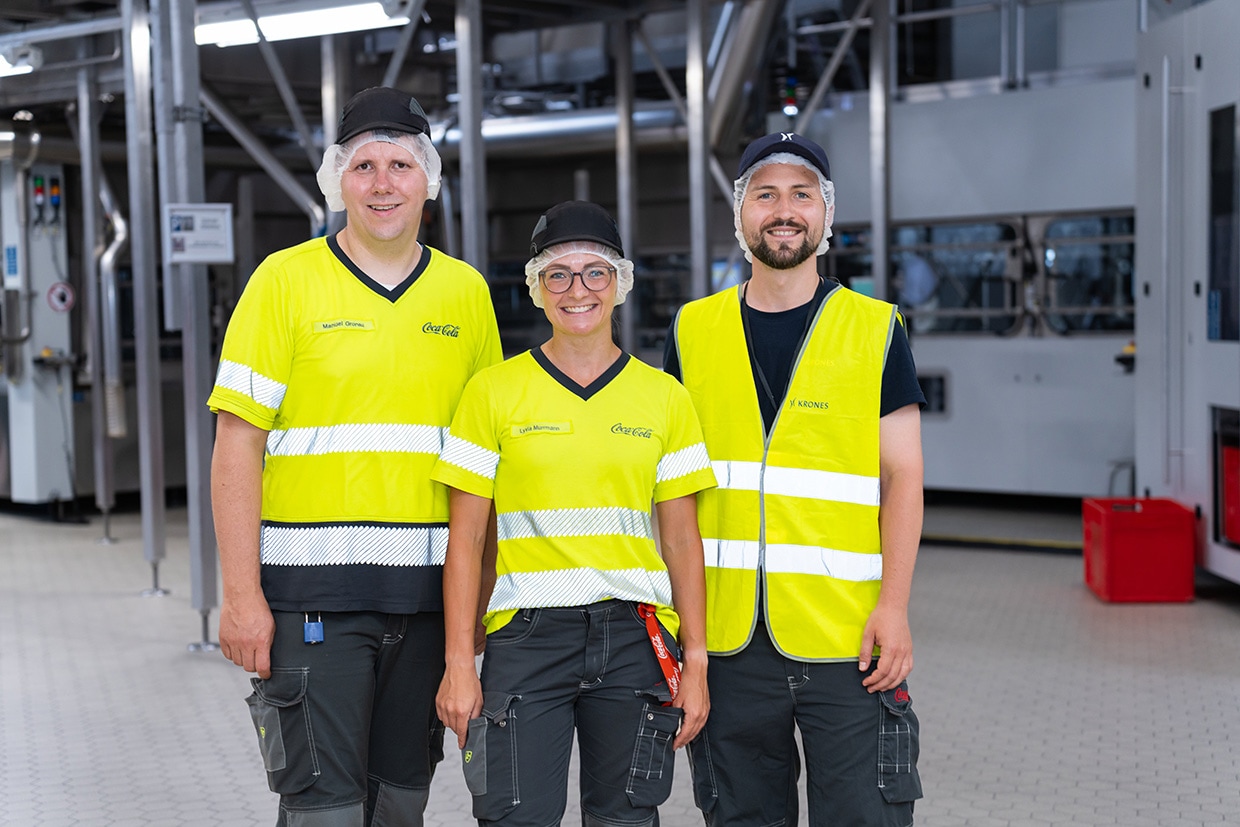
    • (from the left) Manuel Gronau and Lyvia Murrmann from CCEP DE’s facility in Halle and Christoph Bogner from Krones
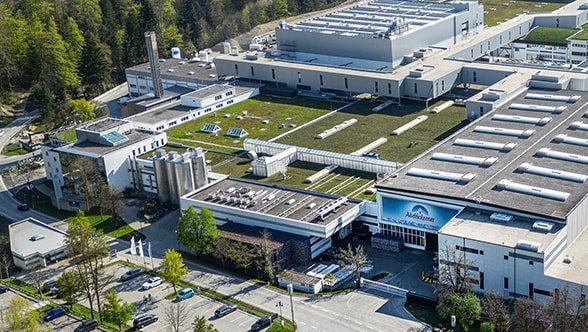
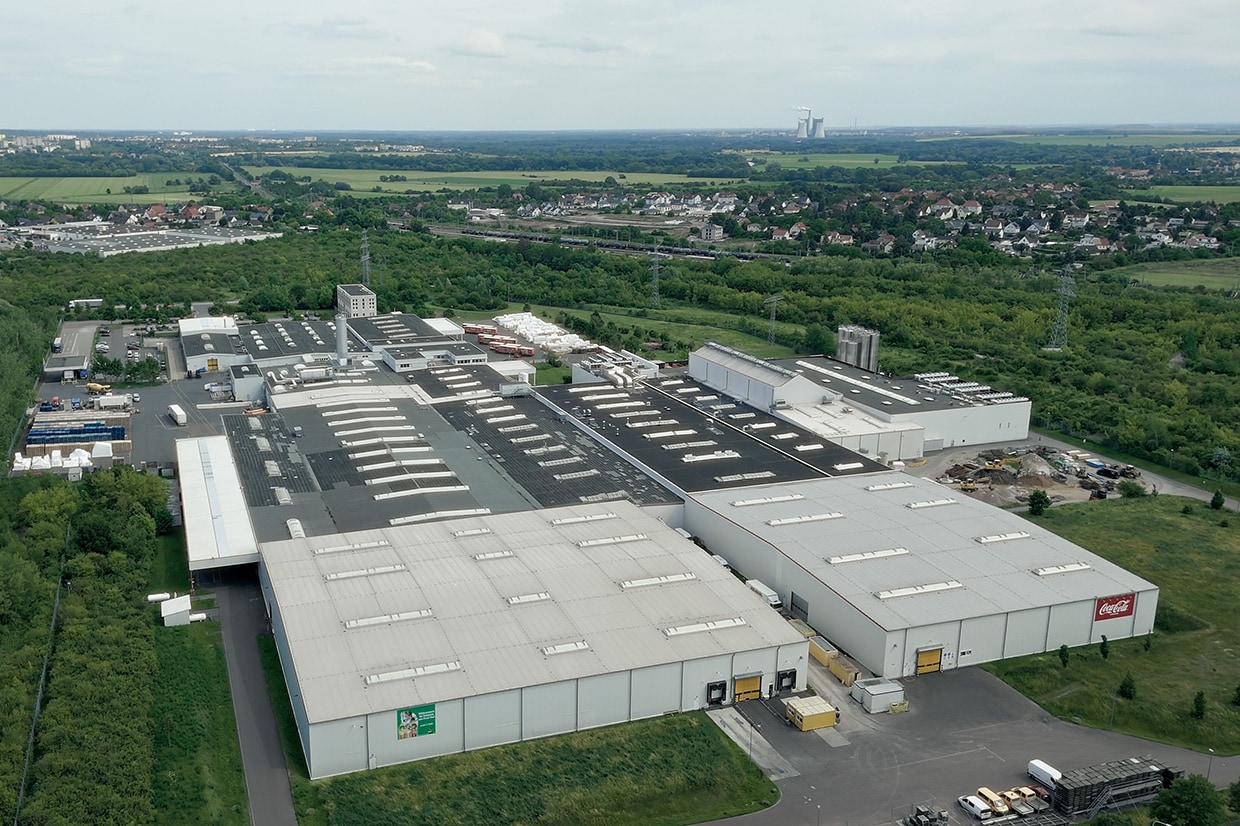
    • Coca-Cola’s plant in Halle is one of the company’s 13 production facilities in Germany. Together with Krones, its team went in search of as yet untapped potential in their production operation.

    How can unscheduled downtimes be avoided and production processes be purposefully optimised? In their search for answers to these questions, the teams from Coca-Cola’s plant in Halle and Krones joined forces – and found what they were looking for in the production data.

    Anyone looking for optimisation scope in an existing production line will in most cases need a keen eye for detail because the vital clues will hardly ever be plain to see. They are hidden in process data, machine status information or recurrent patterns, all of which are easily overlooked in the hustle and bustle of day-to-day production. 

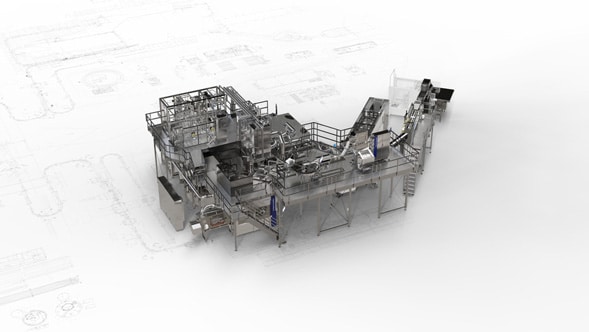
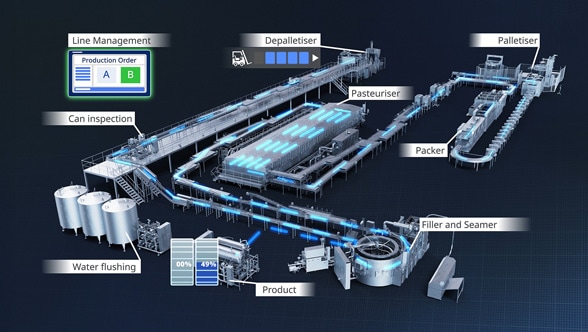
    Coca-Cola Europacific Partners Deutschland (CCEP DE) and Krones set themselves the goal of revealing precisely such untapped potential at the plant in Halle. Their plan was to take a closer look at an existing aseptic production line and find out where digital solutions can be used to achieve meaningful improvements. 

    Their focus was not on theoretical scenarios. Instead, the teams from CCEP in Halle and Krones directed their joint efforts at specific challenges that production and maintenance staff are faced with day in, day out. Together, they identified the most important fields of action. Based on this, they then developed use cases that create quantifiable added value in ongoing operation and for the maintenance jobs planned.
    In search of vital clues

    To this end, the teams joined forces to look for cues. What are the biggest challenges, and where along the line do they appear? What are the causes for repeatedly encountered malfunctions? And what can existing machine data reveal about the scope for possible optimisation? 

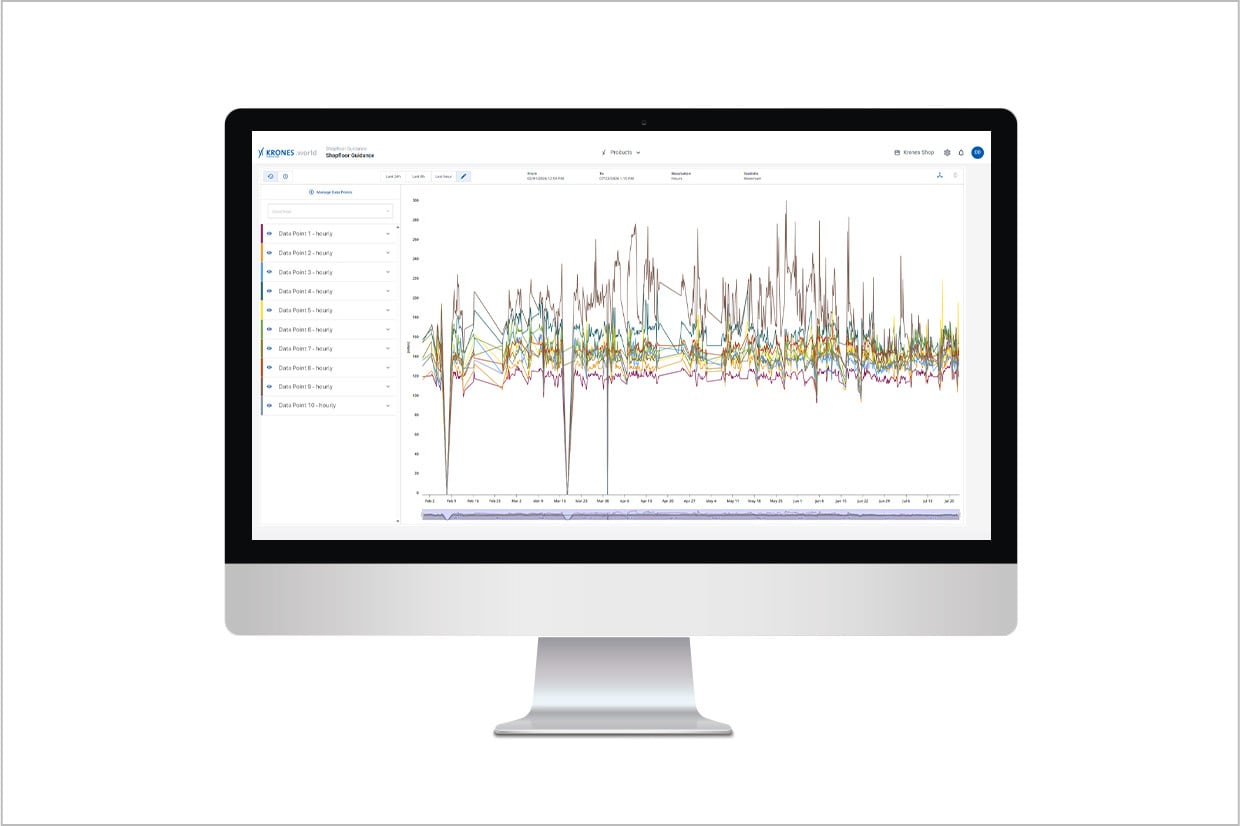
    Based on this analysis, several specific use cases were created and implemented in Krones’ Shopfloor Guidance solution. One major factor that was crucial in driving this project’s success was close cooperation between Krones and the professionals working at CCEP DE, whose specialist knowledge obtained in their production and maintenance jobs was combined with data-based analyses. The overriding goal was to derive hands-on improvements from their findings.


    Three use cases, three tangible improvements

    Use Case 1: Analysing the H₂O₂ evaporator

    The hydrogen peroxide (H₂O₂) evaporator represented an especially critical area. In the past, the evaporation process had been blocked time and again, and frequently the operators hadn’t noticed until the situation had become urgent. 

    Together, the project teams identified the relevant parameters needing to be measured and established appropriate limit values that are now monitored continuously, thus detecting any irregularities at an early stage and automatically reporting them.

    Use Case 2: Information available exactly where it’s needed

    Sometimes the scope for optimisation does not lie with the machine itself but with the speed at which the relevant information reaches the right persons. 

    That is why a new approach was also chosen for how employees are alerted. The Shopfloor Guidance app notifies the operators concerned by sending malfunction messages, plus relevant instructions on how to solve the problem, directly to their smartphones, thus enabling them to respond faster, no matter where in the line they actually are.


    Use Case 3: Condition monitoring instead of maintenance by calendar

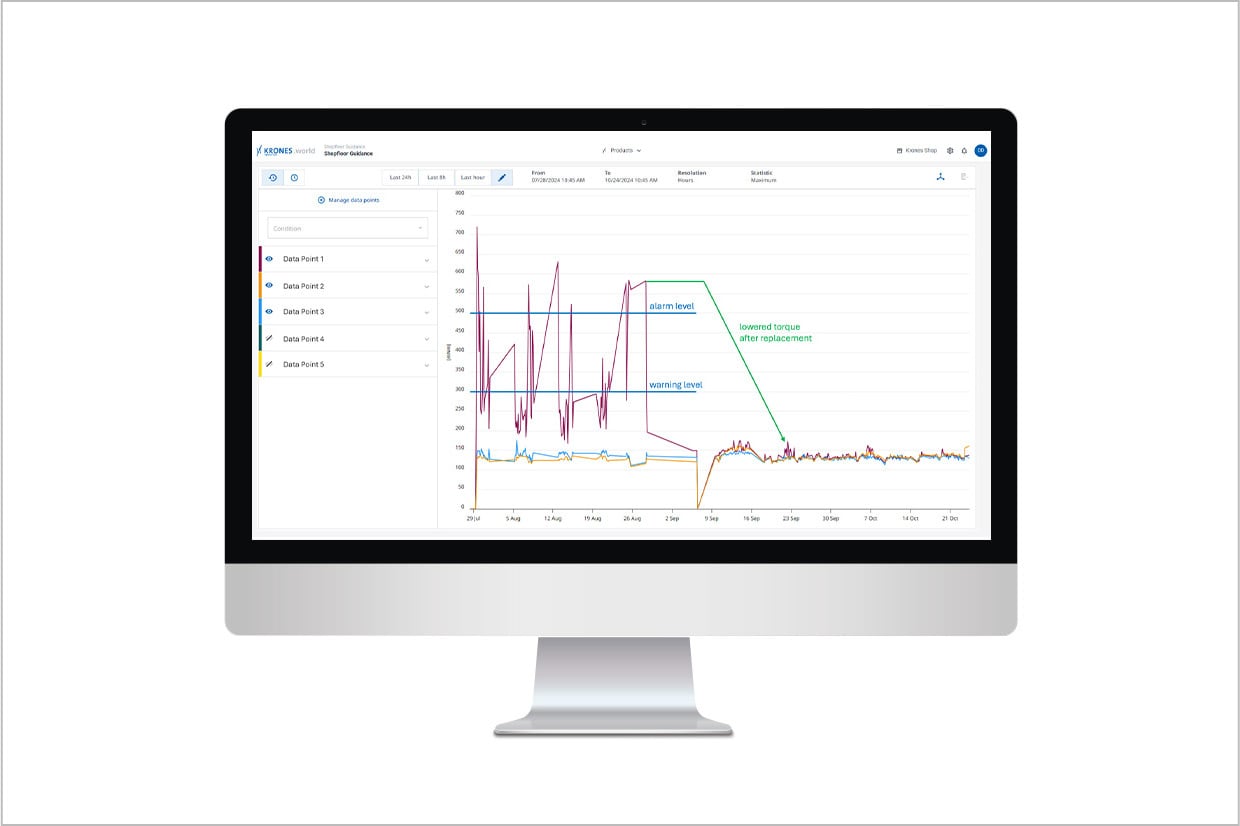
    The teams’ efforts also focussed on the capper. Previously, the expensive capping heads were overhauled at regular intervals – irrespective of whether they actually exhibited signs of wear or not. 

    Today, the relevant values are continually monitored. These data can then be used to determine which components must in fact be seen to, thus enabling maintenance jobs to be more selectively planned. 

    That provides the following benefits: fewer unnecessary interventions, lower costs and higher line uptimes. And therein lies the value of shifting from interval-based to modern condition-based maintenance. The goal of this use case was to measure the wear and tear on the capping heads and perform overhauls as needed, instead of in line with a rigid timeline.

    Learning together to achieve continuous improvements

    But it is not the implementation of use cases that constitutes the project’s true strength, it is everybody’s joint effort. Right from the start, the teams from production, maintenance and digitalization worked closely together in order to upgrade and fine-tune each of the solutions step by step. 

    Not only did that enable new tools to be created, it also resulted in new insights into processes and line conditions and offered fresh scope for optimisation. The data thus obtained provide the basis for more soundly-based decision-making and for revealing potential for the long term. That is why the two partners don’t see this as a completed implementation but rather as a continuous improvement process.

    The search will go on

    So cooperation between CCEP DE and Krones does not stop with the use cases implemented so far. Rather these latter provide the basis for tackling further optimisation jobs along the production operation. “When we’re looking into the future together, we’d like to expand the pilot project at the existing line in order to tap into even more options,” says Manuel Gronau. And the next lead is already waiting in the wings: A Krones canning line that is currently being installed will open up new possibilities for identifying further ways to render processes more transparent, detecting irregularities at an early stage and revealing as yet untapped potential – in future also by means of artificial intelligence (AI). 

    To put it another way: This case is far from closed.

    Want to read more Krones stories?

    You can easily send a request for a non-binding quotation in our Krones.shop. 

    Request new machine
    kronesEN
    kronesEN
    0
    10
    1