Glass, PET or fibre-based bottles? A case study at the Burkina Institute of Technology shows that the best packaging solution depends not only on the material, but also on infrastructure, climate and consumer habits.
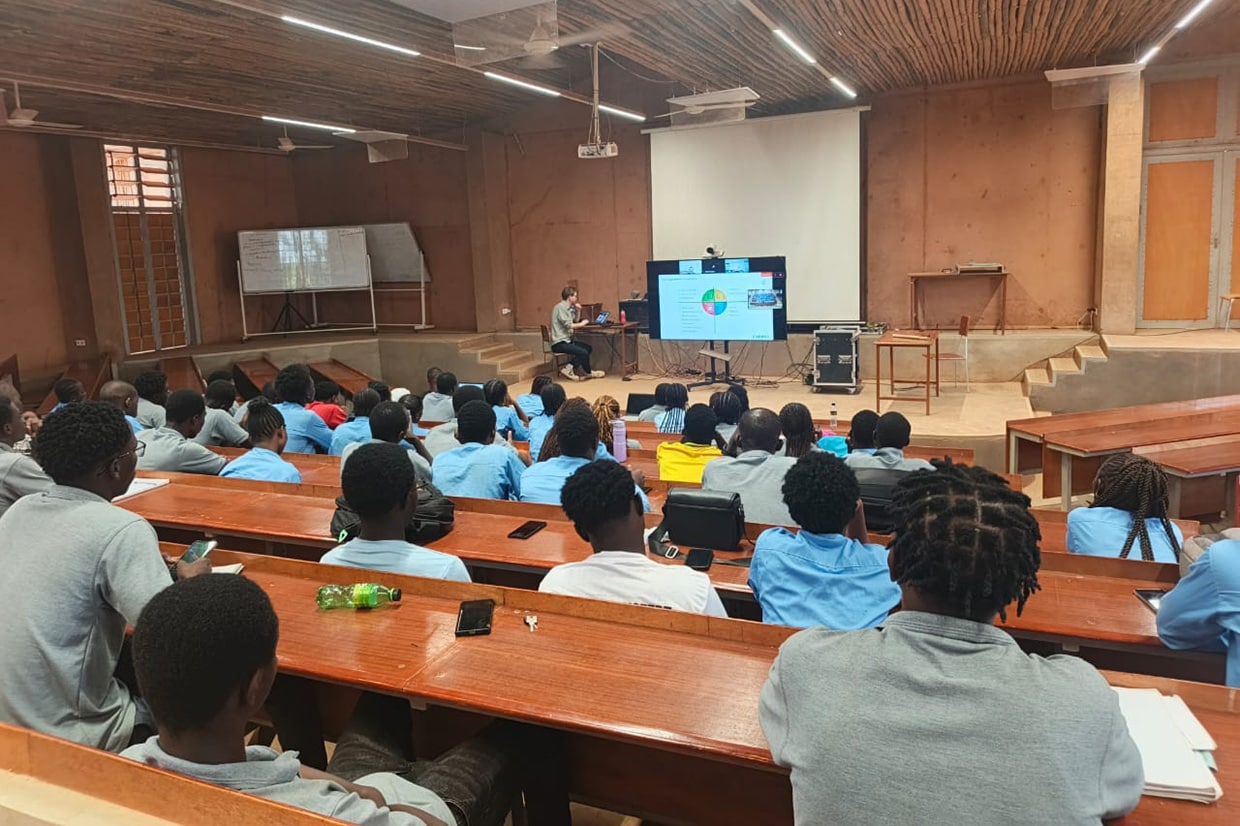
As part of a project entitled “Challenges and System Realities of Beverage Packaging in (West) Africa”, a total of 67 students at the Burkina Institute of Technology (BIT) considered the question of how different beverage packagings function under the conditions prevalent in West Africa. Over a number of weeks they analysed a range of packaging systems, conducted surveys and discussed their findings with experts from the Krones network.
The key outcome of the investigation was that whether any particular packaging is sustainable does not depend solely on the material. Just as important are functioning collection and return systems, transport routes, local infrastructure and the consumer habits of the local population.
Experts talking about how glass can be kept in the cycle through reuse and recycling
Glass: a proven returnable system with potential
The analysis of the glass bottle systems reveals that a returnable mechanism basically works in Burkina Faso. Especially in the catering and restaurant trade, bottles are regularly returned, cleaned and reused. Nevertheless, the system is reaching its limits: High temperatures, intensive UV radiation and challenging transport conditions put strains on the bottles in everyday use. When returnable bottles are damaged or break, they leave the cycle. Furthermore, many places have only limited facilities in place for collecting and recycling glass. The students therefore see potential primarily lying in better consumer education and an expansion of collecting and recycling infrastructure.
Sachets and PET: in conflict
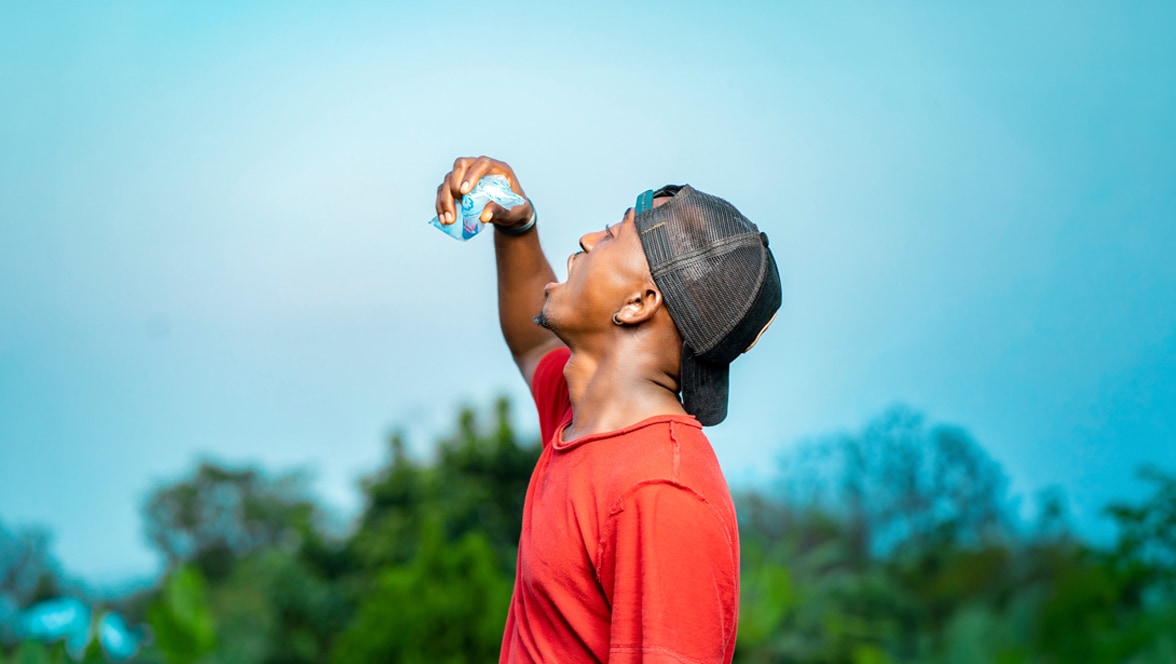
Small plastic beverage pouches, known as sachets, are part and parcel of everyday life in many parts of West Africa. A survey of 43 people in Burkina Faso suggests that sachets are the preferred form of beverage packaging in that region. They enable low-cost access to drinking water and other beverages, but are criticised for their contribution to environmental pollution.
One possible alternative is to use PET bottles. However, their widespread adoption is hampered by higher costs and the need to build the corresponding production and recycling capacities. The results thus highlight the conflict between environmental aspects and affordability: What appears problematic from an ecological point of view fulfils an important social function for many people.
Pulp bottles: growing interest
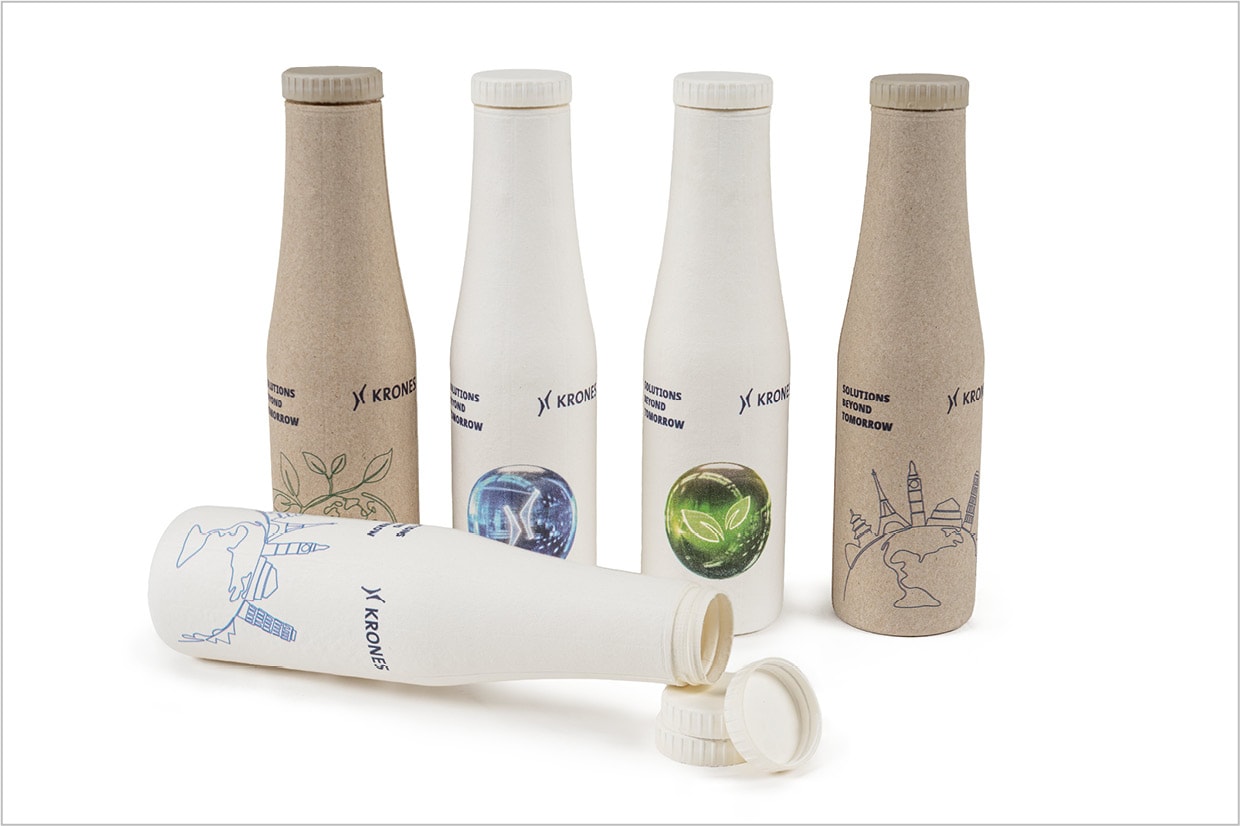
The analyses looked at fibre-based bottles, too. Many interviewees had a fundamentally positive view of this form of packaging and see potential for its use in Burkina Faso. At the same time, however, it was evident that these pulp bottles, as they are called, are not yet very well known: Many respondents were unable to say for sure how the packaging can be disposed of properly after use. There was also considerable uncertainty as to how resistant the bottles are to heat, humidity and the stresses of transport – factors that play a decisive role given the climatic conditions in West Africa.
Paper-based pulp bottles developed by Krones
Valuable input for research and development
The results supply valuable information for the refinement of packaging, reuse and recycling solutions in different markets. The case study also shows just how important international dialogue with local stakeholders is.
The key message is that there is no such thing as universally sustainable packaging. It is only the interplay of materials, infrastructure and recycling systems that determines the actual environmental impact. That is precisely why the findings obtained are so valuable – for research, development and the international exchange of knowledge.
Did you know?
The climate in Burkina Faso is marked by long dry seasons and high temperatures. In many regions average temperatures are well above 20 °C, and in the Sahel frequently between 30 and 40 °C. These conditions impose particular requirements on packaging, recycling processes and logistics.