Close
Search
Searching...
No results
    Backstage

    “We’ve never regretted anything”

    You need to accept cookies to use this functionality.
    25. June 2026
    10:55 min.
    A look back at the defining moments in Krones’ technology history – with Volker Kronseder and Matthias Wahl.
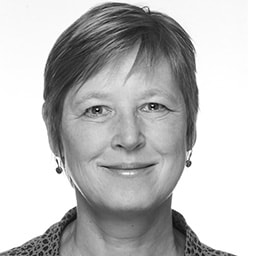
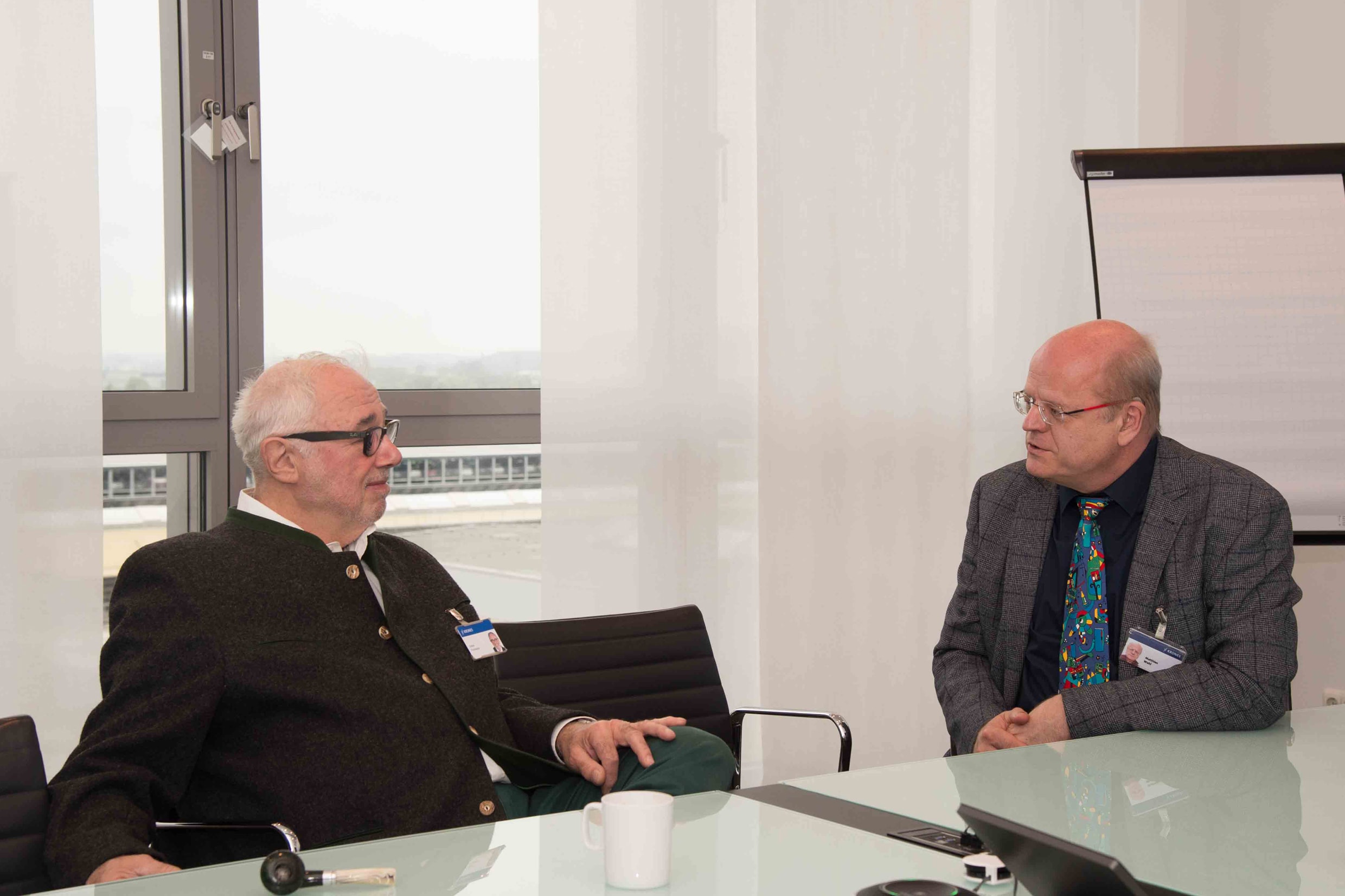
    • In the interview: Volker Kronseder, Chairperson of the Supervisory Board and son of the company's founder, and Matthias Wahl, Head of the Patent department (right)

    An inventive workforce, a culture of curiosity, the courage to put new ideas into practice and bold customers have – time and again – ensured that Krones remains at the forefront of technological progress. We look back with Volker Kronseder, Chairperson of the Supervisory Board and son of the company's founder, and Matthias Wahl, Head of the Patent department, on key moments in the history of Krones technology.

    Mr Kronseder, Mr Wahl, who needs to be braver: Krones when it wants to bring a bold idea onto the market, or customers who are the first to implement it?

    Kronseder: What sets us apart is our courage. And we need to understand our customers’ circumstances face well enough to assess our options and capabilities. Of course, courage alone does not deliver success. However convinced I am of the merits of my idea, the market and customers often come to a different conclusion.

    Wahl: At the trade fair in Munich in 1997 we introduced the Roundpac, a continuous-motion packer and unpacker that was revolutionary for the time. Two brewmasters took a look at it. One of them said, “That’s something completely new – I wonder if it’ll actually work”, to which the other replied, “You can safely buy it, because Kronseder won’t leave you high and dry with a new machine. He’ll keep working at it until it goes.” 

    Kronseder: We are known for seeing things through until everything is ready. In that regard, customers who put their trust in us do not bear the risk on their own. The Dynafill is a good example of this: Customers certainly need courage to purchase such a completely revolutionary filling system. The benefits of the system are clear to see, but it hasn’t yet proved itself hundreds of times over. Generally speaking, we have had – and continue to have – some very courageous customers whose high standards help drive us forward.
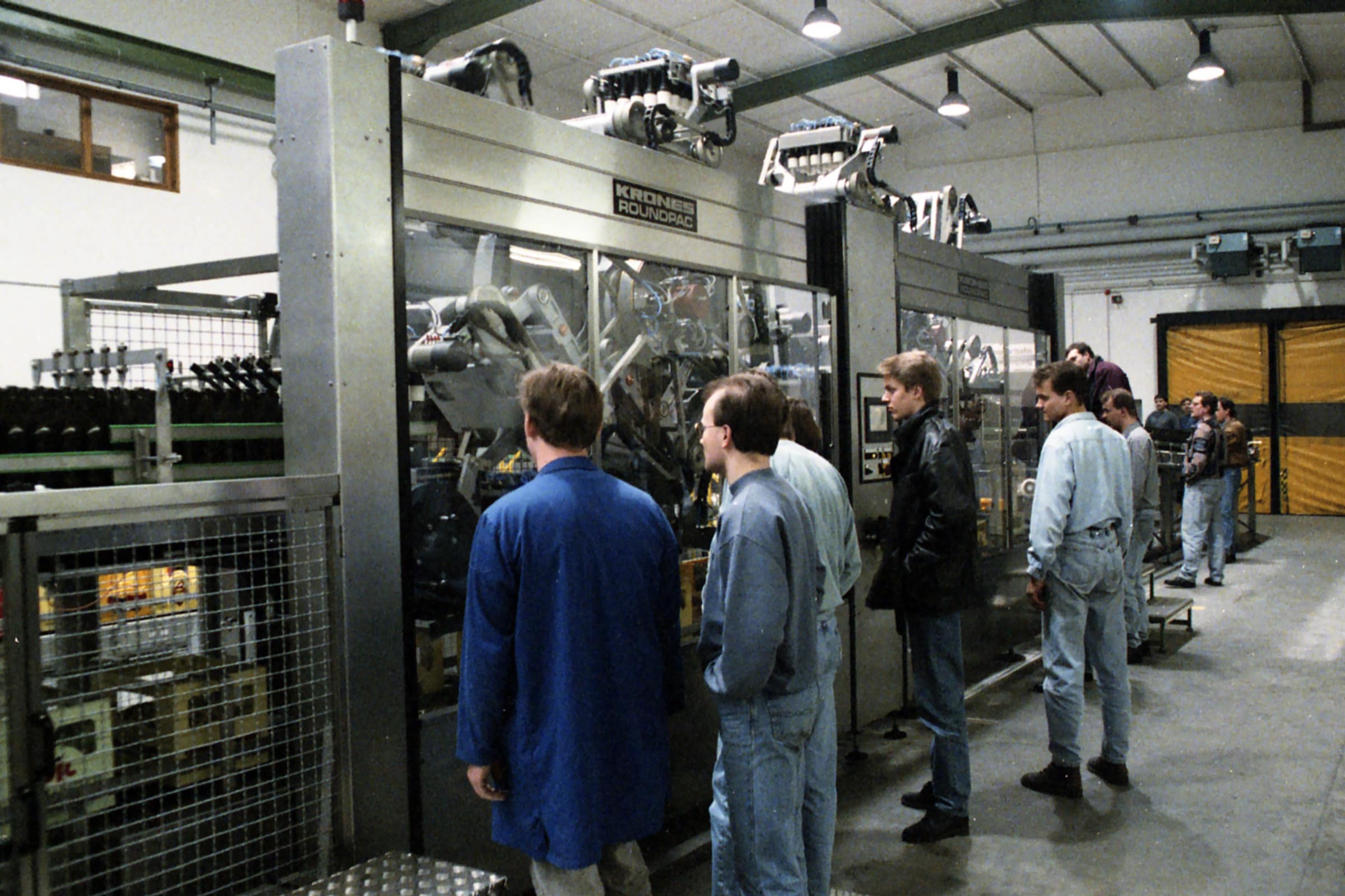
    Image 54518
    The Roundpac at an internal information event in the mid-1990s

    What inventions, in your view, have been the most important for Krones?

    Kronseder: One of the most important was the high-performance labelling station at the start of the 1970s. Before then the labeller was the machine with the most faults in bottling operation. Our development made it the most reliable. For a long time no one else could compete with it, and this experience led to customers putting a lot of trust in us. They said, “If Krones were to make a filler, we would buy it because Krones knows what it is doing.”  

    Wahl: Without this high-performance labelling station for cold glue labelling, no one at the time would have been able to develop a block – and block technology continues to define us to this day.  

    Kronseder: For a long time we were also the only ones to make an automatic empty bottle inspector. At the time people used to inspect every single bottle visually. Our first inspectors used scanners with rotating mirror elements. They allowed you to inspect the bottle base and the neck finish and spot dirt, glass splinters or damage. At the end of the 1980s we were early adopters of camera technology. Today a digital camera costs almost nothing and many suppliers offer inspection technology, but for many years we really were largely on our own in this market.  

    Wahl: In the 1970s there were already companies supplying complete bottling lines with a wet and dry end. Their product range included everything except labellers and inspectors. In the high-performance, those were offered exclusively by Krones. We were the specialists there. That was what it was like then.  

    And what happened next? 

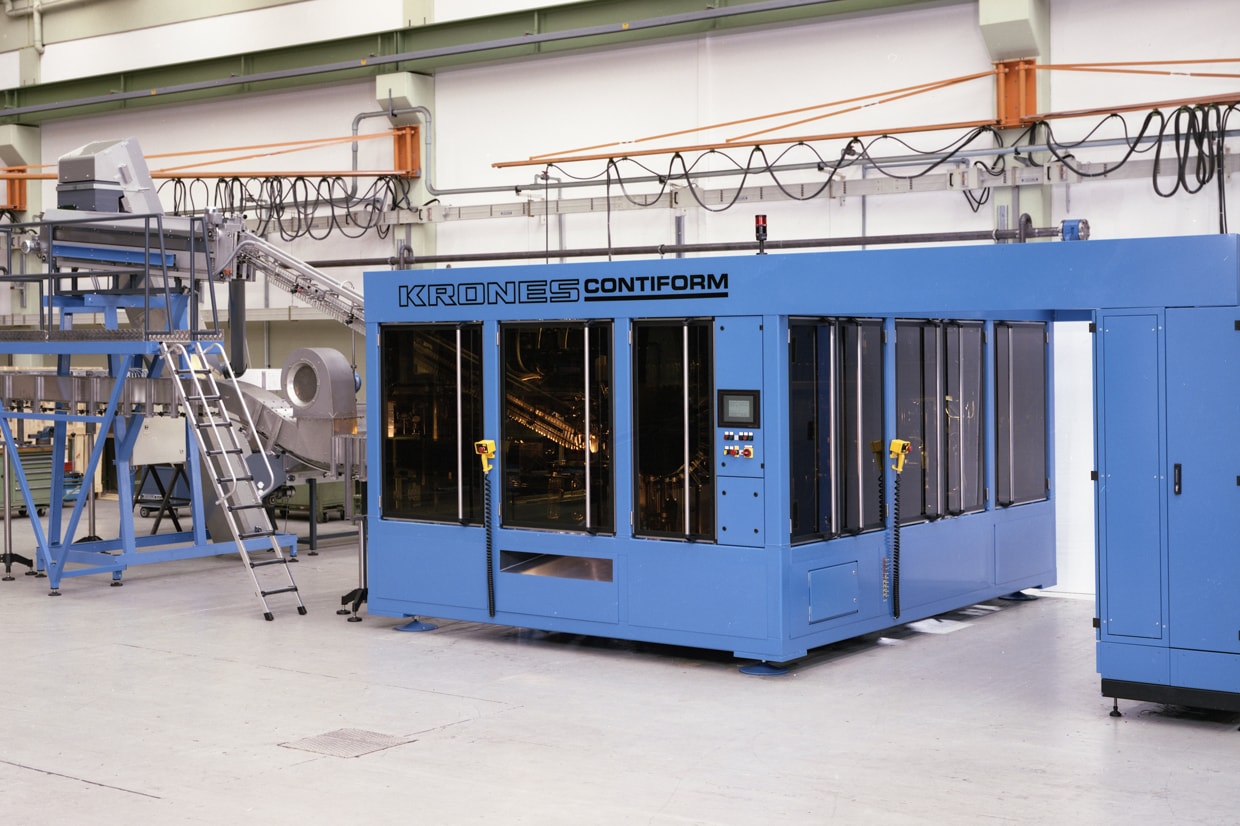
    Kronseder: One of my first and most important decisions as CEO was to establish the Plastics Technology department. At that time there were essentially two suppliers for stretch blow moulders making bottles from PET in the upper performance range. When we were developing our first stretch blow moulder we wanted to do something different, so we came up with a two-level solution with a compact footprint. We presented the Contiform at drinktec in 1997. Our competitors were stunned.  

    Wahl: Straight after the trade fair they took us to court – but they failed. One of them had a patent for a centre-free blowing wheel. But we had an older brochure in our archive in which you could clearly see a centre-free blowing wheel. This was evidence that the centre-free design had already been the state of the art before the patent application was made. Then an unbelievable coincidence came to my aid. Travelling home on the shuttle service from the airport, it turned out that a colleague knew someone in the plastics industry who knew about these older machines. I later asked this specialist whether the machines had always been centre-free. He confirmed that they had and told me where such a machine could be found. We went there with the heads of the plaintiff's and Krones’ patent departments and took a look at it. That put an end to the matter.

    One of my first and most important decisions as CEO was to establish the Plastics Technology department. We presented the Contiform at drinktec in 1997. Our competitors were stunned. Erwin HächlVolker Kronseder

    Kronseder: Another highlight of the 1990s was aseptic filling. You could fill glass hot or put it through the pasteuriser. But PET bottles start to deform at temperatures of 80 degrees Celsius. Microbiology was uncharted territory for us at the time, and a specialist suggested we heat the air to 80 degrees and then start filling. But that wasn’t the end: It was followed by cold sterile filling in the clean room with sterilised bottles and caps. That was a complex operation because you had to prevent any germs from entering from outside. Today we sterilise the preforms, which is a lot simpler.  

    Wahl: We were the first to achieve a compact, ring-shaped clean space around the moulds in the blow moulder. That meant our machine could be reliably sterilised in the microbiologically relevant range – no one else at the time could do that.  

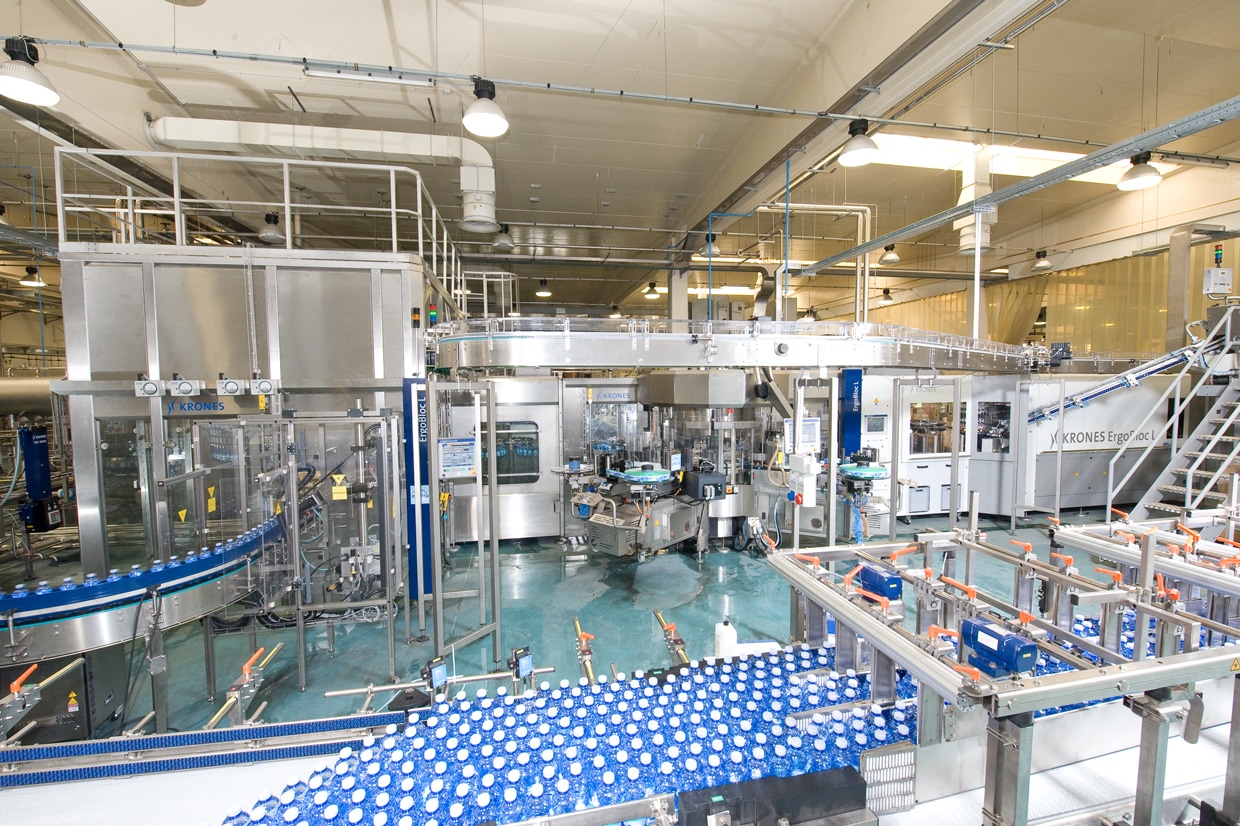
    Kronseder: The ErgoBloc L was a massive development. In my opinion it is still a unique selling point today. When I saw the concept for the first time, I said, “That’ll never work.” Because every single machine has weak points that can lead to faults, and these susceptibilities are only multiplied in a block. Our developers actually managed to eliminate all these weak points. We shipped the hundredth ErgoBloc L a couple of years ago – a remarkable achievement in the PET segment.  

    The ErgoBloc L was a massive development. In my opinion it is still a unique selling point today. Erwin HächlVolker Kronseder

    Wahl: I would like to highlight one internal innovation at the end of the 1990s: the switch to SAP for order processing. There was massive debate about this, with some convinced that all processes would have to be done using software in the future and others fearing that the cost would ruin the company. Looking back, though, it was a huge success story.  

    Kronseder: Another key development in the 2000s was the F1 filler. Instead of gear wheels, it had separate electronic drives for each station. This meant you could build modular starwheel columns with synchronised servo drives and eliminate the machine table that was customary until then, allowing spilt beverage and cleaning agents to run off freely. That was a huge step forward in terms of hygiene.   

    Has Krones ever regretted an idea?

    Kronseder: We’ve never regretted anything. We’ve always learned something. (Both laugh) 

    Wahl: A colleague once had the idea of palletising continuously with the Roundpac, which would have been revolutionary. We actually built a test version, but it didn’t function properly, so Hermann Kronseder had to say to him, “Put it away. We’ve tried it out and now we know that it’s not going to work.” 

    Is there any decision that you are particularly happy about now?

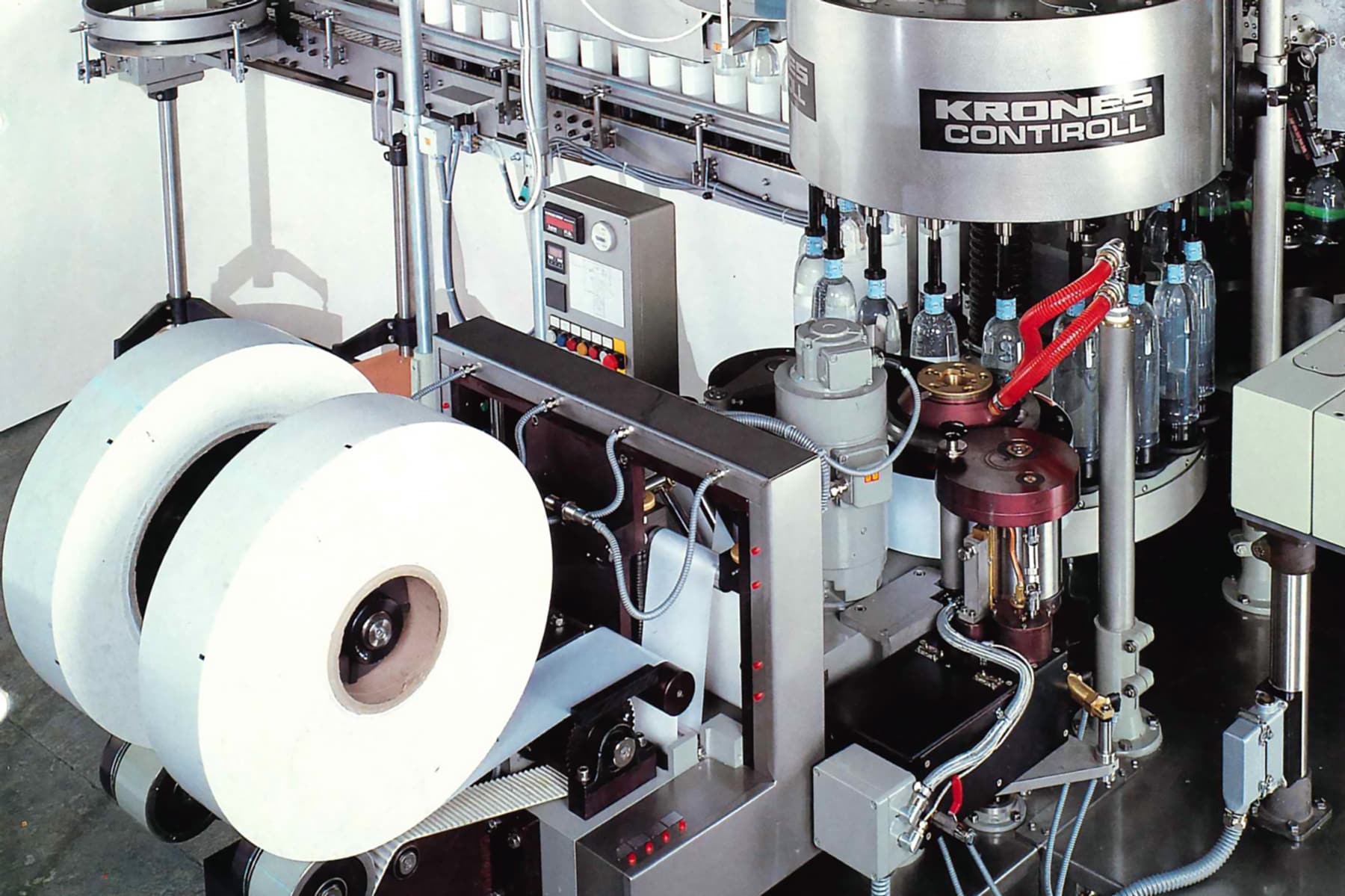
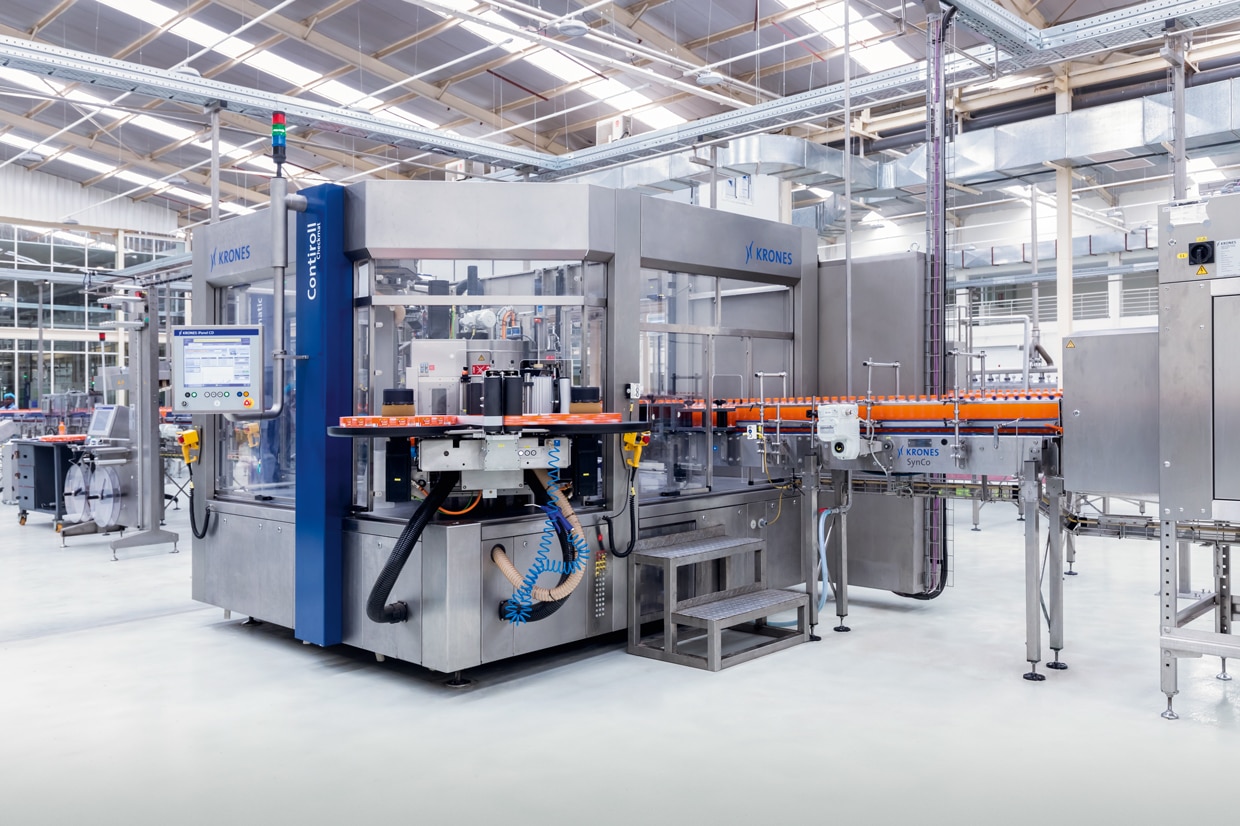
    Kronseder: The Contiroll was a completely new kind of labeller. The first PET bottles initially had paper labels and later increasingly film labels. With the predecessor machines, the film labels were cut to size beforehand and were relatively thick so that they would stand in the label magazine. I thought to myself that if we had the labels on a roll and only cut them once they were inside the machine, they could be thinner. That costs less and allows transparent films. This idea developed into the Contiroll, which we introduced in 1985. It took a while for customers to recognise the benefits, but it's now a bestseller.   

    25. June 2026
    10:55 min.

    Want to read more Krones stories?

    You can easily send a request for a non-binding quotation in our Krones.shop. 

    Request new machine
    kronesEN
    kronesEN
    0
    10
    1