
Close
Search
Searching...
No results
    Innovation

    More oil from every olive – How Olivance increases oil yield in the decanter

    You need to accept cookies to use this functionality.
    07. October 2026
    6:25 min.
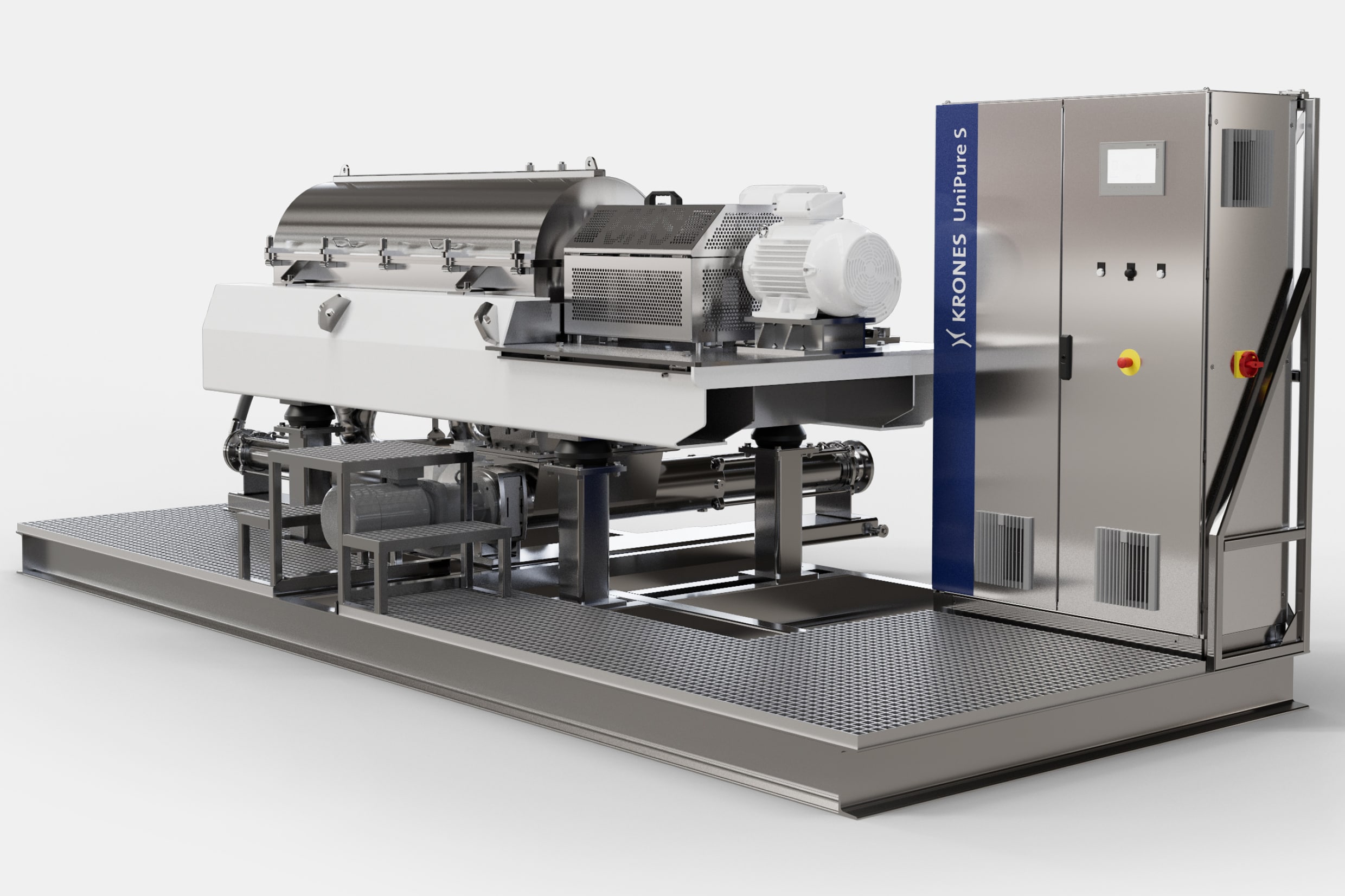
    The UniPure S decanter centrifuge with Olivance technology features an optimized screw conveyor that increases yield without negatively affecting the quality of the oil.
    • How can the oil yield per ton of harvested olives be increased further without negatively impacting quality? The answer lies in Olivance technology.

    Every olive counts. Olive oil is among the most popular edible oils the world over, but factors such as climate change are increasingly putting pressure on its cultivation, making efficiency all the more important for producers. And that is precisely where UniPure S comes in: The new decanter with Olivance technology from Krones features an optimized screw conveyor that increases oil yield without negatively impacting the quality of the oil.  

    It is flavorful, versatile and healthy to boot: olive oil is a pantry staple in kitchens all around the world. However, in recent years, olive cultivation has come under intense pressure. In particular, the spread of pests and the effects of climate change in important olive-growing regions have caused significant declines in oil production worldwide. For example, according to the International Olive Council (IOC), Spain – the biggest producer country by far – made only around 650,000 tons of olive oil in the 2022/2023 season – less than half the previous annual average. As a result, consumer prices for olive oil have risen appreciably. 

    Oil yield: efficiency as an important economic factor 

    Although the situation has improved a bit recently, efficiency has become a major focus for oil mills, cooperatives and large agricultural operations alike. They all want to know how they can further increase the amount of oil extracted per ton of harvested olives without negatively impacting the oil’s quality. 

    This question was also the focus of a two-and-a-half-year research collaboration between Professor Johannes Lindner of Rosenheim Technical University of Applied Sciences (TH Rosenheim) and GHS GmbH, which was launched in early 2023. Headquartered in Landshut, in the German state of Bavaria, GHS specializes in developing and building technology for separating solids and liquids. The Krones Group acquired a 60 percent ownership stake in the company in June 2025. GHS manufactures equipment for various industrial applications including decanter centrifuges for separating solids and liquids. This technology is frequently used in modern cold-extraction of olive oil. 
    “The collaboration came about because we were considering developing a decanter that could achieve higher oil yields and larger throughputs,” explains GHS Managing Director Günter Haider. Although centrifugation has been an established method for olive oil extraction for decades, even the slightest improvements in efficiency can provide substantial financial benefits in a strained market like today’s. That is particularly true when it comes to the highest quality grades, “virgin” and “extra virgin” olive oil, which can only be extracted in the first pressing. “At current market prices, even a two percent increase in oil yield would cover the entire cost of the new decanter within a single four-month harvest season,” says Haider.

    From a digital simulation…  

    Food-grade olive oil is extracted purely by mechanical means. Once they are harvested, the olives are immediately washed and then crushed into a paste, pits and all. The paste is then malaxated, that is, stirred slowly, thus gently allowing the tiny oil droplets to merge into larger ones which are easier to extract. The paste is then spun at high speeds in the decanter, where centrifugal force separates the olive oil from the solids and other liquid constituents.

    The research collaboration focused on the heart of the device: the screw conveyor, also known as the scroll, which rotates inside the centrifuge bowl of the decanter and continually transports the separated solids out of the system. To start the process, the GHS project team identified areas with potential for optimization: Besides the position and size of the inlet opening for the olive paste, they also examined the basic structure of the screw conveyor itself and the oil outlet openings.  

    In the next step, students at the TH Rosenheim used these points to generate digital models for which they then ran flow simulations using software tools. “The computer simulation made it clear which optimizations would result in higher oil yields,” explains Günter Haider. 

    …to a 3D-printed prototype 

    The screw conveyors that promised the greatest results in the simulation were then tested under real conditions on a test decanter with a bowl diameter of ten centimeters. Although the equipment used in actual production is typically two to eight times that size, this device was nevertheless capable of processing real olives.

    “Screw conveyors are highly complex components,” explains Simon Kropp, who is responsible for separation technology within the Krones Processing sales team. “The 3D printer gave the development team an inexpensive means to produce a series of prototypes, which they could then test in the miniature decanter, and thus continually improve the design.”  

    The result of this iterative development process was Olivance, an optimized screw conveyor that improves on the long-proven basic principle of the decanter centrifuge and, according to the TH Rosenheim’s analyses, can increase oil yield by two to three percent.

    Rendering UniPure S
    Olivance technology has been integrated into the UniPure S decanter.

    Cake disrupters and reverse paddles increase oil yield

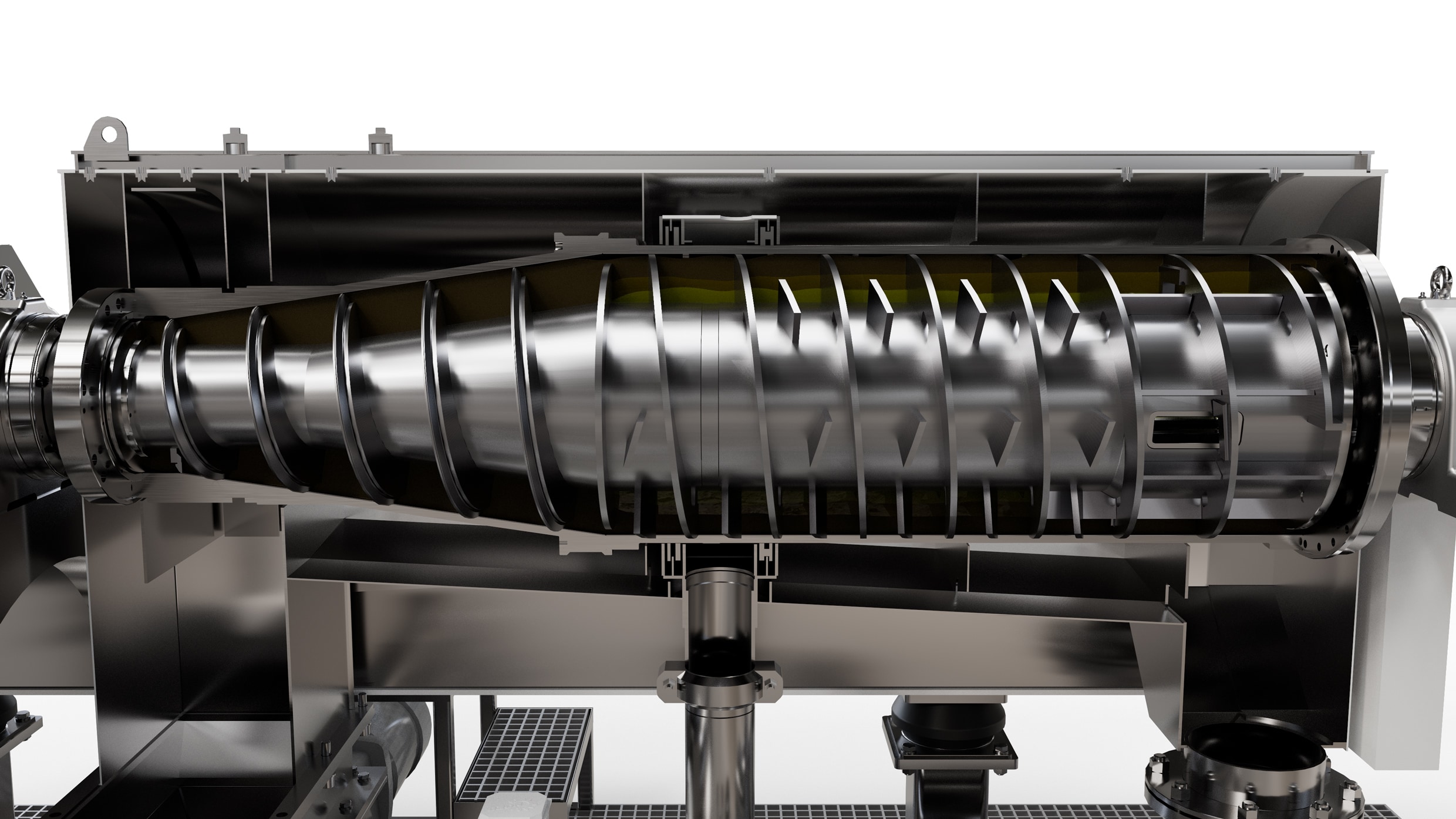
    The innovation that made Olivance is a combination of newly developed and upgraded elements. For example, the screw flight, which ensures the continuous removal of solids, was fitted with additional elements at regular intervals, which the GHS project team has dubbed “cake disruptors”. Similar to the blades of a plow, they loosen the cake of solids again and again as it moves along and compresses to the interior wall of the centrifuge’s bowl as a result of the enormous centrifugal force. 

    “The centrifuge reaches up to 5,100 revolutions per minute and generates at least 3,000 G of force,” says Günter Haider. Thanks to the cake disruptors repeatedly loosening the solids during centrifugation, more oil can be extracted from the solids during the first pressing. 

    Supporting the cake disruptors are specially designed “reverse paddles” that push the cake of solids backward slightly at various points along the way, thus allowing more time for the oil to drain from them. “The cake stays in the machine longer and is broken up over and over again,” explains Haider. “Together, that results in more oil being extracted.”

    Abb. Schnecke
    Screw conveyor design in the new and innovative Olivance technology for improved olive oil extraction

    More throughput thanks to two separated oil phases

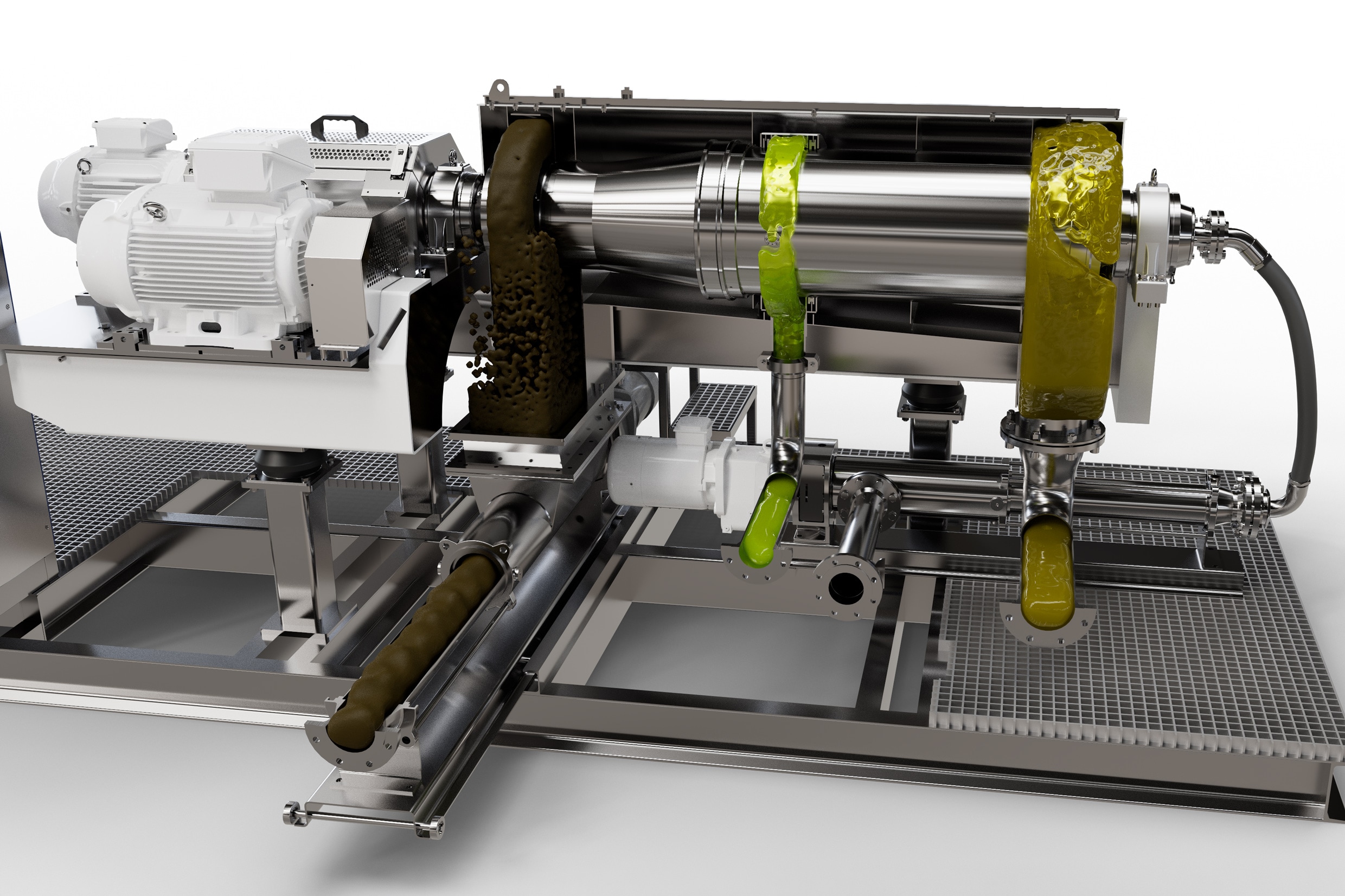
    As another innovation, the designers added a second oil outlet to the decanter, which allows a majority of the separated olive oil to be drawn off at an earlier point along the centrifuge bowl than was previously possible. As a result, less olive oil has to pass through the entire unit and more space is available within the bowl to handle more olive paste.  

    At the same time, the earlier outlet reduces re-mixing of the oil with water or solids. And so, the decanter can produce two separate oil phases of different quality grades.

    06 - Image with Hotspots 61281
    Standard grade olive oil
    Extra virgin or virgin olive oil
    Solids
    Representation of the different outlets on the decanter

    Robust technology for the time-sensitive olive harvest

    One of the key challenges in the development of UniPure S was the fact that olive oil decanters must be able to run reliably on a continuous basis throughout the harvest season. “Once the olives are harvested, they must be processed as quickly as possible,” says Simon Kropp. “The longer they sit, the more free fatty acids are generated.” For olive oil, when it comes to these fatty acids, less is more. The lower their content, the higher the quality grade. “So if a machine goes down during the season, it can have direct economic consequences.” 

    Therefore, one of the project’s goals was to design a maximally sturdy unit, able to withstand the stress and strain of day-in, day-out production. To ensure this, Günter Haider and his team drew not only on the extensive expertise from the development of their own separation equipment but also on their many years of experience maintaining and repairing systems built by other manufacturers. “Our team have first-hand knowledge of the best details of all the machines on the market,” says GHS’ Managing Director. “They brought it all together and put it into the development of Olivance.”

    Olivance and UniPure S 

    Olivance is the very heart of the new UniPure S model, with which Krones Processing is expanding its UniPure product family to include powerful decanters for a variety of applications in food and beverage production. With a fully hygienic design, zero dead space and bowl diameters ranging from 220 to 800 millimeters, the UniPure S is highly versatile. The various sizes make possible hydraulic throughputs of up to 120 cubic meters and the processing of up to 25 tons of olives per hour. The UniPure S is designed as a compact plug-and-play unit and contains all required feed and discharge pumps.

    07. October 2026
    6:25 min.

    Want to read more Krones stories?

    You can easily send a request for a non-binding quotation in our Krones.shop. 

    Request new machine
    kronesEN
    kronesEN
    0
    10
    1